

More news on this day
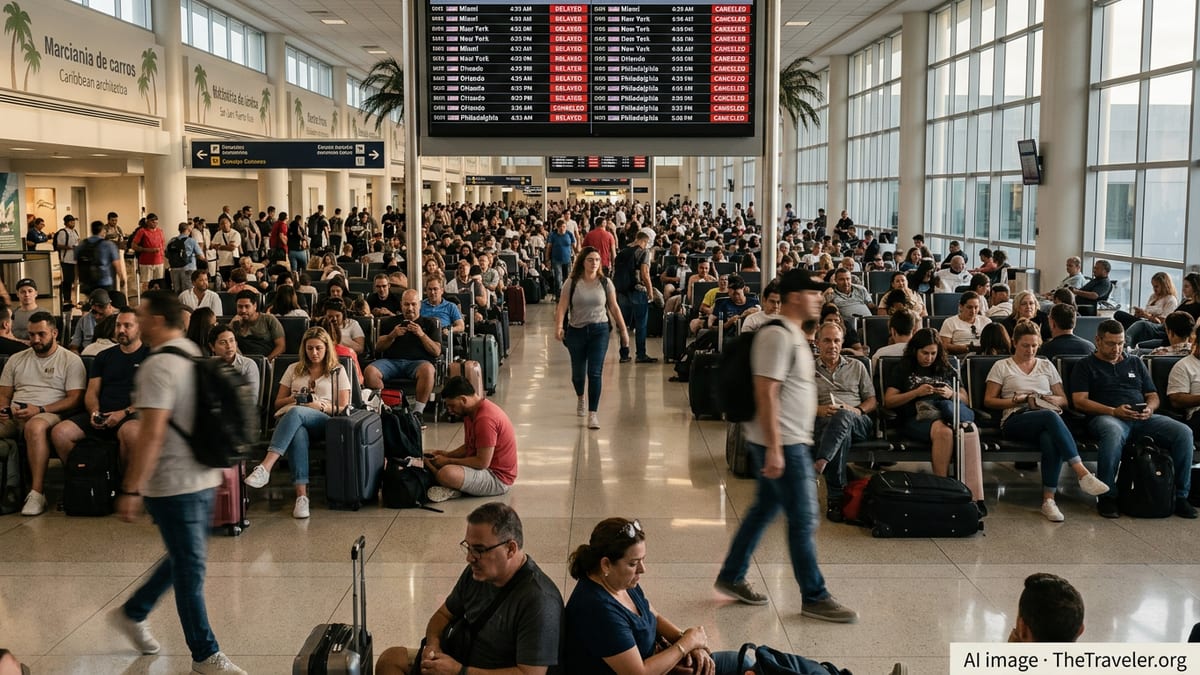
Hundreds of passengers were left stranded at San Juan’s Luis Muñoz Marín International Airport after a wave of disruptions saw 105 flights delayed and 15 canceled, snarling travel plans for people heading to major U.S. destinations including Miami, New York, Orlando, and Philadelphia.
Get the latest news straight to your inbox!
Wide-Ranging Disruptions at Puerto Rico’s Busiest Airport
Publicly available flight-tracking data for San Juan’s Luis Muñoz Marín International Airport on Tuesday showed extensive schedule disruption, with more than 100 flights experiencing significant delays alongside a cluster of outright cancellations. The impact was concentrated on heavily traveled routes linking Puerto Rico to the U.S. mainland, especially services to Miami, New York City, Orlando, and Philadelphia.
Reports indicate that departure boards in San Juan filled with rolling delay notices as the day progressed, with some flights pushed back repeatedly before eventually departing late, while others were scrubbed entirely. The resulting bottleneck quickly spilled into gate areas and concourses as passengers waited for updated departure times or alternative itineraries.
Airport operations remained technically open, but the combination of delayed turnarounds, aircraft and crew availability constraints, and knock-on congestion across carriers created a patchwork of irregular operations rather than a normal schedule. Travelers connecting onward from Miami, New York, Orlando, and Philadelphia to other U.S. and international destinations faced some of the most acute uncertainty.
Published coverage of recent disruptions across the Caribbean and U.S. East Coast suggests that even a relatively contained set of cancellations at a regional hub such as San Juan can cascade across airline networks, especially during busy travel periods when spare seats and backup aircraft are limited.
Passengers Bound for Miami, New York, Orlando, and Philadelphia Hit Hard
The bulk of affected travelers in San Juan were booked on flights to four key continental gateways: Miami International Airport, New York area airports, Orlando International Airport, and Philadelphia International Airport. These routes serve as vital links for Puerto Rico-based travelers, tourists returning to the mainland, and passengers connecting onward across North America and Europe.
For Miami-bound passengers, delays of several hours translated into missed evening connections and last-minute changes to hotel and ground transportation plans. Miami’s status as a major hub for Latin America and the Caribbean increased the stakes for those with long-haul itineraries that could not easily be rebooked the same day.
Travelers heading to New York and Orlando, many of them families and vacationers, reported via social media that they faced crowded gate areas, limited seating, and lines at airline service counters as they attempted to secure new flights. In some cases, only later departures with indirect routings were available, adding travel time and uncertainty.
Philadelphia-bound passengers encountered particular frustration where late departures from San Juan risked arriving well past midnight on the U.S. East Coast. With relatively fewer daily nonstop options on that route compared to Miami or Orlando, cancellations or long delays left some travelers facing overnight stays or multi-stop reroutings through other hubs.
Knock-On Effects Across Airline Networks
While the disruption centered on San Juan, schedule data and recent aviation analyses show how issues at a single airport can echo across entire airline systems. Aircraft arriving late into Puerto Rico were often scheduled to operate subsequent legs back to the mainland, so initial delays quickly spread to later flights serving Florida and the Northeast.
Publicly available information indicates that airlines sometimes prioritize keeping long-haul and hub-to-hub routes on time, which can leave shorter regional services, including some Caribbean and East Coast flights, more vulnerable to disruption when irregular operations arise. As delays mounted, carriers had to juggle crews nearing duty-time limits and aircraft out of position for their next rotations.
Past studies of U.S. air travel have highlighted the role of major hubs like Miami, New York, Orlando, and Philadelphia in amplifying delays that originate elsewhere. When an inbound flight from a place like San Juan arrives several hours late, the same aircraft may then depart late again to another city, or be substituted entirely, shifting the delay onto a different group of passengers.
Because many of the routes between Puerto Rico and the mainland are heavily booked, especially during peak leisure periods, disruption on even a modest number of flights can leave few open seats for re-accommodation. This can prolong the recovery period, with some travelers unable to depart until the following day.
Stranded Travelers Confront Long Waits and Limited Options
For travelers already at Luis Muñoz Marín International Airport when the disruptions intensified, the practical consequences included long waits at ticket counters, customer service desks, and baggage areas. With 15 flights canceled in addition to widespread delays, many passengers had to join queues to seek hotel vouchers, travel credits, or rebooked itineraries.
Images and descriptions shared publicly from inside the terminal showed passengers clustered on the floor near power outlets, children sleeping across rows of chairs, and improvised workspaces at crowded gates. Limited availability of last-minute hotel rooms in the San Juan area added another layer of difficulty for those who unexpectedly needed to stay overnight.
Travelers attempting to salvage their plans by purchasing same-day tickets on competing airlines or alternate routes to Miami, New York, Orlando, and Philadelphia encountered higher fares and limited inventory, a pattern seen in prior large-scale disruptions elsewhere in the United States and Caribbean. In some cases, people turned to regional ferries, inter-island flights, or extended family networks to arrange interim lodging and transportation.
Consumer advocates frequently note that while passengers on canceled flights are generally entitled to refunds for the flight portion of their trip, compensation for meals, ground transportation, and hotels varies significantly depending on the airline, the cause of the disruption, and the carrier’s published policies.
What Travelers Can Do When Flight Disruptions Hit
The latest turbulence in San Juan serves as another reminder for travelers across the region to prepare for unexpected interruptions, particularly during peak seasons when flights are more likely to go out full. Travel experts consistently recommend that passengers monitor their flight status through airline apps and airport information boards, rather than relying solely on original itineraries.
Having backup options in mind, such as alternate departure times, nearby airports on the mainland, or flexibility of a day or two on either side of key travel dates, can help reduce the risk of becoming stranded for extended periods. In hubs like Miami, New York, Orlando, and Philadelphia, multiple daily departures to many destinations may provide more room for rebooking if an initial flight is disrupted.
Published guidance from regulators and consumer groups also underscores the importance of understanding airline contract-of-carriage rules, as well as the coverage offered by travel insurance or credit card benefits. These can influence whether travelers receive refunds, credits, or assistance with hotels and meals during irregular operations like those seen in San Juan.
As airlines and airports continue working to restore normal operations after the latest wave of delays and cancellations in Puerto Rico, passengers planning upcoming trips through Luis Muñoz Marín International Airport are likely to keep a close eye on schedules, seeking reassurance that their long-awaited journeys to and from Miami, New York, Orlando, and Philadelphia will proceed as planned.