

More news on this day
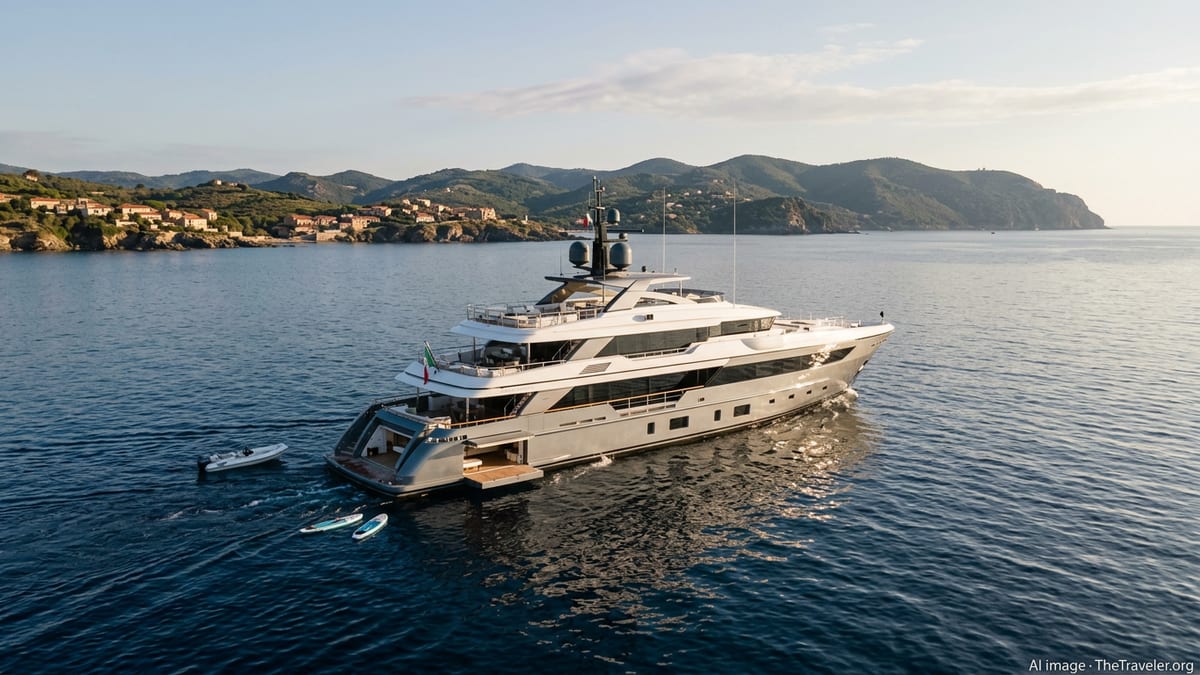
Sanlorenzo’s 50-metre superyacht CONTIGO has entered the charter market as what industry coverage is describing as the world’s first fuel-cell powered superyacht available for private hire, positioning the Italian-built 50Steel class as a flagship for low-impact luxury cruising and ocean-focused adventure itineraries.
Get the latest news straight to your inbox!
A New Milestone for Sustainable Superyacht Charter
Publicly available information indicates that CONTIGO is one of the initial hulls in Sanlorenzo’s 50Steel series, the first superyachts to integrate a reformer fuel-cell system using green methanol to generate electricity for onboard services. The technology, developed with Siemens Energy and certified by Lloyd’s Register on the 50Steel platform, is designed to provide silent, emissions-free power to the yacht’s hotel load without relying on conventional diesel generators.
Industry and corporate reports on the 50Steel project describe this configuration as a turning point for large-yacht design, allowing extended periods at anchor with dramatically reduced local emissions and noise. By bringing the platform into the charter market as CONTIGO, Sanlorenzo and its charter partners are effectively opening fuel-cell yachting to guests who want to experience next-generation propulsion and power systems without commissioning a custom build.
Comparisons with other alternative-fuel projects suggest that while hydrogen fuel-cell demonstrators and hybrid concepts have already appeared in the superyacht sector, CONTIGO’s methanol reformer system and availability for private charter differentiate it as a commercially accessible, fuel-cell enabled yacht. For charter clients, that translates into the ability to book a week or more on board a vessel built around low-impact operations rather than merely adding optional eco features.
Inside the 50Steel Platform: Design, Space and Quiet Technology
The 50Steel series has been promoted by Sanlorenzo as a blend of traditional steel displacement architecture with contemporary Italian design, generous volume and integrated sustainability features. Layout descriptions highlight a five-deck profile, expansive exterior decks and an interior that prioritizes panoramic views, soft natural tones and tactile materials that echo the sea and coastal landscapes.
The fuel-cell installation remains largely invisible to guests, tucked within the technical spaces of the hull, but its benefits are experienced directly in the atmosphere on board. Reports on the first 50Steel units note that the methanol-based system can power hotel services with the main engines and traditional generators switched off, allowing guests to enjoy anchorages with lower vibration, minimal exhaust and reduced ambient noise compared with conventional yachts of similar size.
By decoupling much of the hotel load from diesel generation, the system also supports more flexible anchoring choices and a closer connection to nature. At night, lighting, air conditioning and entertainment systems can remain active while the surrounding bay stays calm and quiet. For guests booking CONTIGO, this creates a charter experience that feels closer to a remote eco-lodge at sea than to a traditional engine-dependent vessel.
Charter Experiences Focused on Ocean Adventure
Early charter marketing for CONTIGO emphasizes itineraries that combine classic Mediterranean cruising with more immersive, ocean-oriented experiences. Potential routes referenced in regional coverage include island-hopping in the western Mediterranean, slow exploration of marine parks and longer passages that showcase the yacht’s efficiency and hotel-mode endurance.
The low-noise profile of the fuel-cell hotel mode aligns naturally with water-based activities. Guests can spend extended time swimming, snorkeling or stand-up paddleboarding around the yacht without the constant background hum of generators. Tenders and toys launched from the beach club or stern platforms can operate from a mothership that feels noticeably quieter and cleaner than conventional diesel-powered charter vessels.
Operators are also positioning CONTIGO for charterers who want to use the yacht as a base for diving, wildlife watching and coastal hiking. The combination of long-range capability, stable steel hull and reduced local emissions can be attractive in regions where regulators and local communities are paying closer attention to vessel impact in sensitive bays and marine reserves.
Fuel-Cell Technology and the Path to Greener Yachting
The methanol reformer fuel-cell system installed on the 50Steel platform represents one phase of Sanlorenzo’s broader research and development around alternative fuels. Company strategy documents and sustainability reports describe a multistep roadmap that begins with powering onboard services via fuel cells, advances toward bi-fuel or methanol-capable main propulsion, and ultimately aims for superyachts that can operate largely on low-carbon methanol derived from renewable sources.
Green methanol, produced using renewable electricity and captured carbon, is being explored across the maritime sector because it can be stored as a liquid under relatively normal conditions, unlike compressed or liquefied hydrogen. On CONTIGO and other 50Steel units, onboard reformers convert methanol into hydrogen, which then feeds fuel cells to generate electricity without storing large quantities of gaseous hydrogen on board.
Analysts following the yachting and maritime industries note that this approach addresses both emissions and practical constraints around storage and safety, while still relying on an emerging supply chain for low-carbon methanol. As more ports and bunkering points introduce alternative fuels, charter yachts such as CONTIGO may be able to operate a growing share of their hotel and, eventually, propulsion loads on methanol-derived energy rather than marine diesel.
Italian Craftsmanship Meets Changing Traveler Expectations
From a design perspective, CONTIGO continues Sanlorenzo’s reputation for understated, architectural interiors and clean exterior lines, pairing technical innovation with the brand’s focus on bespoke detailing. Available imagery of the 50Steel class shows large windows, integrated terraces and a beach club that opens directly onto the water, elements that are increasingly standard in the top end of the charter market.
Travel trend reporting suggests that high-net-worth charter guests are seeking experiences that reconcile indulgence with environmental responsibility, particularly in destinations where climate impacts and local conservation efforts are highly visible. A vessel like CONTIGO, marketed as a fuel-cell equipped superyacht, offers a tangible demonstration of lower-impact technology without abandoning the comfort, privacy and service level associated with traditional luxury charter.
As the northern summer approaches and the Mediterranean season builds, CONTIGO’s entry into the charter fleet places Sanlorenzo’s fuel-cell initiative directly in front of clients and brokers. Its performance in bookings and guest feedback is likely to serve as an early indicator of how ready the charter market is to embrace fuel-cell systems as a desirable feature, not only for environmental reasons but also for the quieter, more immersive style of ocean adventure they make possible.