

More news on this day
Santo Domingo has opened its long-awaited Metro Line 2C extension, a 7.3-kilometer expansion that slashes cross-city travel times and promises faster, easier movement for visitors exploring the Dominican capital.
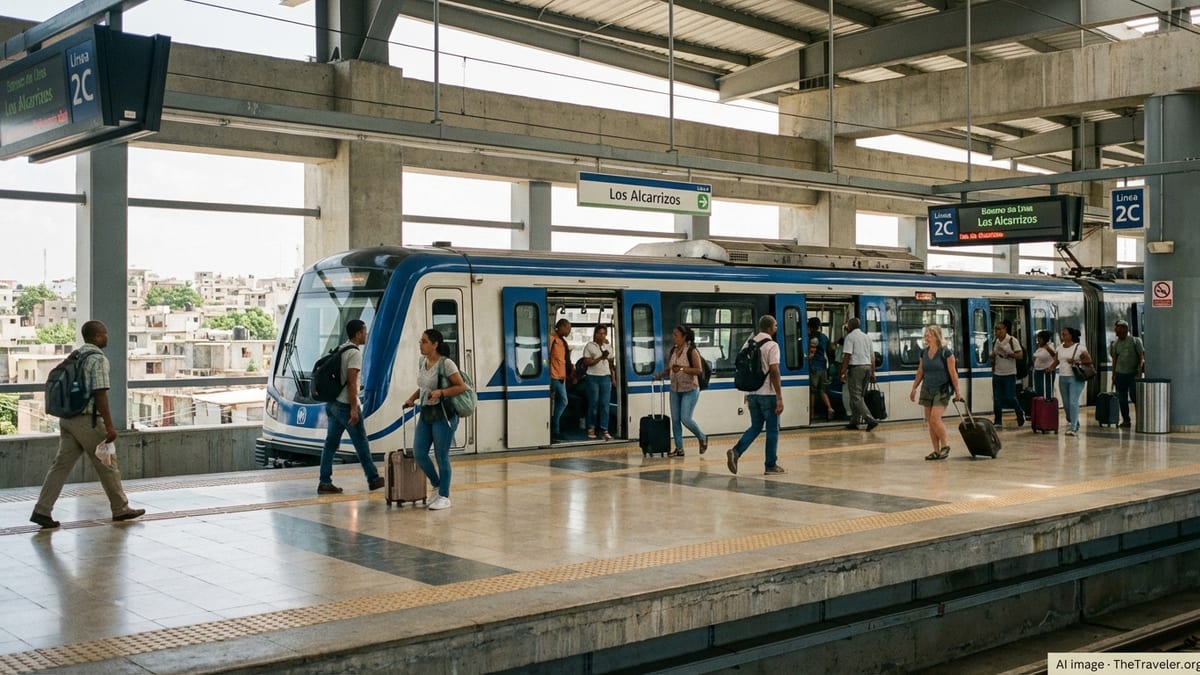
New Line 2C Brings West Santo Domingo Closer to the City Core
President Luis Abinader officially inaugurated the new Line 2C extension on February 25, marking one of the most significant mobility upgrades in Santo Domingo in recent years. The line adds 7.3 kilometers and five stations to the existing Metro network, stretching from María Montez to Pablo Adón Guzmán in the municipality of Los Alcarrizos, in the densely populated western corridor of the city.
The extension connects 14 communities that historically faced heavy congestion and long commuting times, benefiting an estimated one million residents and the growing number of international visitors staying in western Santo Domingo. For tourists lodging in these districts or arriving through overland routes, the line offers a direct, modern rail link into the capital’s business and cultural areas.
Line 2C combines a largely elevated alignment with a 900-meter tunnel segment, designed to navigate the built-up urban fabric while minimizing disruption at street level. Operated by the Office for the Reorganisation of Transport, the extension integrates seamlessly with the existing metro network, allowing visitors to transfer onward toward the Colonial Zone, waterfront avenues and hotel districts via Line 2 and Line 1.
To encourage adoption, authorities have made journeys on Line 2C free from opening day until Easter week, giving both residents and international travelers an incentive to test the service during the busy late winter and Easter travel period.
Travel Times Cut From 90 Minutes to 10
Before the inauguration of Line 2C, travelers moving between Los Alcarrizos and central Santo Domingo routinely spent up to an hour and a half on congested surface routes. According to the government, the new metro journey between key stations can now be completed in around 10 minutes, with potential time savings of up to two hours per day during peak periods for frequent commuters.
For visitors, the impact is immediate. Hotels, guesthouses and short-term rentals in western Santo Domingo can now market notably shorter transfer times to central attractions, museums, plazas and waterfront promenades. Tour operators guiding city tours, cultural excursions and nightlife outings are also expected to adjust itineraries to incorporate metro travel, cutting time spent in traffic and improving schedule reliability.
The faster rail connection supports the broader trend of tourists seeking to move beyond resort areas and explore local neighborhoods and everyday urban life. With Line 2C in service, it becomes easier for travelers to include west-side markets, street-food hubs and residential districts in their plans while still returning quickly to central Santo Domingo or the airport corridor.
By offering predictable, high-frequency service independent of surface congestion, the extension also provides a practical alternative during adverse weather or major events that typically paralyze road traffic. This reliability is particularly valuable for cruise passengers and short-stay visitors who have limited time to see the city.
Connection With Cable Car Network Enhances Multimodal Access
A key feature of Line 2C is its new multimodal connection in Los Alcarrizos, where the metro links directly with Santo Domingo’s urban cable car system. This pairing of high-capacity rail and aerial cable technology is designed to stitch together neighborhoods located on hillsides and in hard-to-reach zones with the broader metropolitan transport grid.
For tourists, the multimodal hub opens an additional, scenic way of entering or leaving the dense western suburbs, while also easing access to local viewpoints and commercial areas. The cable car’s overhead perspective on everyday city life has already proved a draw for some visitors in other parts of Santo Domingo, and the new interchange is expected to extend that appeal to additional districts.
The integration between metro and cable car also improves resilience in the face of disruptions. While the country’s recent nationwide blackout demonstrated the vulnerability of transit systems to power failures, transport planners are emphasizing coordinated investments in infrastructure and operations to restore and maintain reliable service. As upgrades continue, the combined network positions Santo Domingo as a regional example of how mass transit and urban cable cars can be used together in fast-growing cities.
By simplifying transfers and widening the geographic reach of high-capacity transport, the Line 2C and cable car connection offer visitors more flexibility in how they move through the capital, making it easier to incorporate off-the-beaten-path experiences into standard tourism circuits.
Metro Expansion Aligns With Record Tourism Growth
The opening of Line 2C comes as the Dominican Republic consolidates its status as one of the Caribbean’s strongest tourism performers. In recent years the country has repeatedly broken annual visitor records, surpassing 11 million international arrivals when air and cruise passengers are combined and positioning tourism as a key engine of economic growth.
Officials highlight that tourism receipts represent a substantial share of national output, with the sector ranking among Latin America’s leaders when measured as a percentage of gross domestic product. Continued investment in transport, utilities and public space in Santo Domingo is viewed as essential to sustaining that growth, particularly as the capital competes with beach destinations for time and spending from international travelers.
With more visitors choosing multi-stop itineraries that combine resort stays with time in the capital, the metro’s expansion is expected to ease pressure on road networks that link Santo Domingo with airports and coastal areas. Travel agencies report growing interest in city breaks, gastronomy experiences and cultural tours anchored in the historic center, and robust urban mobility is seen as a prerequisite for maintaining positive visitor feedback.
By offering faster, more comfortable public transport, Line 2C also strengthens the case for additional meetings, incentives, conferences and events in the capital, where delegates increasingly expect citywide mobility to match international standards.
Benefits for Sustainable Urban Tourism and Local Communities
Beyond pure convenience, Line 2C carries implications for the environmental and social footprint of tourism in Santo Domingo. By shifting a portion of trips from private cars, taxis and informal minibuses to electric metro trains, the extension can help reduce local emissions and traffic congestion, particularly during high season when visitor numbers peak.
For local communities in the west of the city, improved connectivity means better access to jobs in hotels, restaurants, cultural venues and service industries concentrated in the center, without the prohibitive time and cost that lengthy commutes once imposed. This dynamic supports a more inclusive tourism economy, in which the benefits of visitor spending and employment opportunities reach a wider share of residents.
City planners and tourism officials are already positioning the metro as a backbone for more walkable, transit-oriented districts around new stations, with potential for small businesses, cafes and guesthouses to cluster near Line 2C stops. If managed carefully, this station-area development could offer visitors a more diverse portfolio of accommodations and experiences while generating new income streams for local entrepreneurs.
As Santo Domingo looks ahead to another busy travel year, the launch of Line 2C signals a strategic bet on integrated mobility as a competitive advantage. Faster, more reliable public transport is set to become a core part of how the city hosts the growing number of travelers drawn to its colonial heritage, music and dynamic urban life.