


More news on this day
Scandinavian Airlines is sharpening its focus on long-haul leisure and high-growth city markets in 2026, adding Dubai alongside Phuket, Krabi, Mumbai, Marseille and Visby in a network expansion that signals a new phase in the carrier’s global strategy.
Get the latest news straight to your inbox!
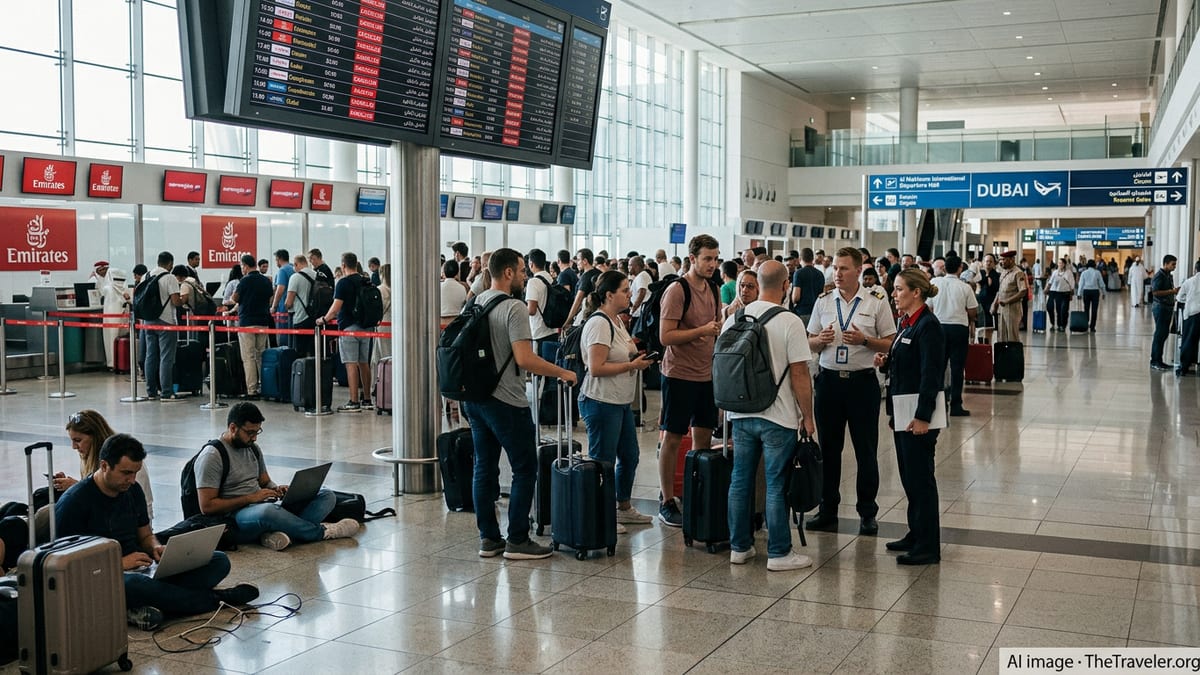
Dubai Returns to the SAS Map as a Key Winter Sun Gateway
Dubai is set to rejoin the Scandinavian Airlines network in the 2026 winter season, positioned as a flagship long-haul leisure destination from Copenhagen. According to published schedules and route announcements, the carrier plans nonstop services from the Danish capital to Dubai, aligning departures with peak Nordic winter demand for warm-weather escapes.
Industry data and booking system information indicate that SAS has opted to operate into Dubai World Central rather than Dubai International. That choice reflects both slot availability in the Gulf region and the growing role of secondary airports as full-service and hybrid carriers chase new long-haul opportunities. For travelers in Denmark, Sweden and Norway, the new link provides a direct alternative to hub connections on Middle East competitors.
Travel analysts note that Dubai’s appeal extends beyond beach holidays and shopping breaks. The city serves as a powerful connecting point into the wider Middle East, Indian Ocean and Africa, and SAS’s move underscores how European airlines are seeking a larger share of that connecting traffic. The combination of charter-style leisure demand and onward connectivity potential positions Dubai as a cornerstone of the airline’s winter 2026 strategy.
The new Dubai route also lands at a time when European carriers are recalibrating long-haul networks in response to shifting fuel costs and airspace restrictions. Publicly available commentary from SAS on fuel and sustainability trends suggests that each new intercontinental route is being designed with aircraft efficiency and load factors front of mind, making Dubai a test case for profitable growth in a more constrained operating environment.
Phuket and Krabi Strengthen Thailand as a Nordic Favorite
Alongside Dubai, SAS is reinforcing its presence in Thailand with new long-haul routes to Phuket and Krabi from Copenhagen in the 2026 to 2027 winter season. An official route document from the airline outlines the launch of these services as part of a broader intercontinental expansion tailored to winter sun demand from Scandinavia.
Phuket and Krabi have long featured among the most popular long-haul holiday choices for Nordic travelers, offering reliable weather, competitive on-the-ground prices and a well-developed hotel sector. By scheduling direct flights from Copenhagen, SAS is positioning itself to capture passengers who might otherwise route via Gulf or Asian hubs, simplifying itineraries for families and package-tour customers.
Travel industry coverage indicates that the new Thailand services will rely on widebody aircraft capable of serving both package and independent travelers. The routes are expected to operate several times per week during the core winter months, aligning seat capacity with tour-operator programs from Denmark, Sweden and Norway. This approach mirrors the airline’s established pattern on long-standing leisure routes to destinations such as the Canary Islands.
The focus on Phuket and Krabi also illustrates how European legacy carriers are shifting more capacity toward point-to-point leisure travel. With premium corporate demand slower to rebound in some markets, airlines like SAS are using established Scandinavian brand recognition and loyalty programs to compete directly with low-cost and charter operators in Thailand’s booming tourism regions.
Mumbai Deepens SAS Links With High-Growth India Market
In India, SAS is preparing to launch a new route between Copenhagen and Mumbai in 2026, expanding its footprint in one of the world’s fastest-growing aviation markets. A dedicated route announcement details plans for multiple weekly services operated by Airbus widebody aircraft, aimed at both business and visiting-friends-and-relatives traffic.
Mumbai’s status as India’s commercial and entertainment capital, combined with large Indian diaspora communities in Scandinavia and northern Europe, provides a solid base of demand for direct flights. Travel trade reports suggest that the route will also offer convenient onward connections from Copenhagen across Scandinavia and to selected European destinations inside the SAS network.
The new Mumbai service fits into a wider trend of European airlines recalibrating India capacity to balance traditional Delhi operations with growing interest in southern and western Indian gateways. For SAS, the route supports a two-way flow of travelers: Nordic tourists drawn to India’s cultural and coastal attractions, and Indian travelers seeking efficient one-stop access to Scandinavian cities.
Analysts point out that adding Mumbai also diversifies SAS’s long-haul portfolio beyond North America and East Asia. Combined with Dubai and Thailand, the India expansion underscores a pivot toward markets with strong underlying demographic and tourism growth, where competitive nonstop options can command a fare premium over more complex connecting routings.
Marseille and Visby Highlight SAS Focus on Niche European Demand
Closer to home, Marseille in southern France and Visby on the Swedish island of Gotland are emerging as notable additions in SAS’s 2026 European network. Seasonal and niche continental routes of this type are increasingly important as the carrier responds to demand for shorter, experience-led trips rather than traditional two-week holidays.
Marseille offers Scandinavian travelers access to Provence and the French Mediterranean, areas that have seen steady growth in city-break and coastal tourism. According to European travel coverage, airlines across the continent are boosting capacity into secondary French gateways to spread demand away from the most crowded hubs and resort towns. SAS’s presence on the route taps into that shift, providing a direct link from Nordic cities to one of France’s most dynamic port regions.
Visby, by contrast, represents a strengthening of domestic and intra-Nordic tourism. The medieval town, a UNESCO-listed destination, has become a favored summer escape for Swedish and regional travelers seeking heritage streetscapes, coastal scenery and festivals. Additional SAS capacity to Visby in the 2026 season reflects broader trends reported by tourism boards across Scandinavia, where travelers are seeking shorter-haul, high-experience trips that are easier to combine with hybrid work patterns.
By balancing Mediterranean gateways such as Marseille with high-season Nordic favorites like Visby, SAS is positioning its short-haul network to be more agile. This mix allows the airline to shift capacity between domestic, regional and cross-border routes as demand patterns evolve, rather than relying solely on a fixed set of major European capitals.
A Game-Changer in a Volatile Global Aviation Landscape
The combined impact of new routes to Dubai, Phuket, Krabi, Mumbai, Marseille and Visby points to a structural shift in how SAS intends to compete in the second half of the decade. Network planners are concentrating on routes where the airline’s strong Nordic customer base, loyalty program and brand identity can underpin year-round or seasonal profitability despite higher fuel costs and environmental constraints.
Recent SAS analysis of sustainable aviation fuel markets and European climate policy highlights the pressures airlines face when adding long-haul flying. Publicly available reports indicate that limited supplies of green fuel and rising carbon-related costs are forcing carriers to be selective about which intercontinental routes they pursue. Against that backdrop, each of the 2026 additions appears targeted at markets with robust demand and a clear value proposition for Scandinavian travelers.
For global travelers, the expanded SAS network offers new one-stop options between the Nordics and a growing list of key leisure and business destinations. For the airline, the 2026 schedule represents a test of a more diversified, leisure-forward strategy that leans into Dubai’s hub connectivity, Thailand’s enduring appeal, India’s growth prospects and a richer mix of European gateways. How successfully these routes perform will help shape SAS’s long-term role in an increasingly competitive international aviation landscape.