

More news on this day
Thousands of air travelers across northern and western Europe faced disrupted journeys today as SAS and Icelandair scrubbed 26 flights and delayed 34 more, causing widespread knock-on disruption from Scandinavia’s main hubs to major capitals including London and Paris.
Get the latest news straight to your inbox!
Major Disruptions at Key Scandinavian Hubs
The latest wave of flight cancellations hit hardest in Scandinavia, where Oslo, Copenhagen and Stockholm all reported clusters of grounded and heavily delayed services linked to SAS and its codeshare operations. Publicly available airport data and industry tracking sites show a concentration of cancellations on short haul routes connecting Norway, Denmark and Sweden with the wider region, amplifying an already difficult start to the spring travel period.
At Copenhagen Airport, one of SAS’s primary hubs, disruption fed into already strained operations, with additional cancellations and rolling delays forcing many passengers into long queues at service desks. Recent coverage of flight statistics from Denmark indicates that SAS has been among the most affected carriers at the airport in recent days, with services to cities such as London, Manchester, Stavanger and Gothenburg particularly exposed.
Oslo Gardermoen, another key hub for SAS, has also seen a spike in cancellations and schedule changes over the weekend and into Monday, affecting links to the UK, Spain, the Netherlands and other European destinations. Reports from Norwegian media and travel outlets describe travelers stranded in the terminal or redirected onto later departures, with some connections missed as delay minutes accumulated across the network.
In Sweden, the impact has been felt at Stockholm Arlanda and regional airports, where a combination of cancellations and delays has left many journeys starting or ending significantly behind schedule. Flight disruption reports from Sweden highlight that SAS and its regional affiliates continue to feature prominently in daily statistics, underscoring the vulnerability of Nordic connectivity during this period of operational strain.
Ripple Effects in the UK, France, Germany and Beyond
The disruption has not been contained within Scandinavia. Services operated by, or in partnership with, SAS and Icelandair connect the Nordic region to major European capitals, and today’s cancellations quickly produced knock-on effects in the UK, France, Germany, Italy and Denmark.
In London, travelers on flights to and from Scandinavian hubs faced last minute changes, with some departures scrubbed entirely and others subject to long delays. According to aggregated flight tracking data, services linking London with Copenhagen, Oslo and Stockholm experienced irregular operations, leaving passengers uncertain about onward connections across Europe and North America.
Paris and key German gateways have also seen a share of the disruption as SAS and Icelandair adjusted schedules. Flights between Copenhagen or Stockholm and Paris Charles de Gaulle, as well as routes linking Scandinavian hubs with German cities, were among those affected. Travel-focused publications tracking European punctuality trends report that cancellations and extended delays have become more common across the region’s main corridors as airlines respond to cost pressures and capacity constraints.
In Italy and other southern markets, the effect was felt primarily through missed or rebooked connections, particularly for passengers relying on SAS itineraries that feed into larger European or transatlantic networks. With each cancellation, the pool of available seats on alternative services tightens, increasing the likelihood that travelers will be forced to overnight or reroute through less direct paths.
Icelandair’s Role and Pressure on Reykjavik Transfers
Icelandair, which operates a key transatlantic bridge via Reykjavik, also contributed to today’s disruption totals. Flight history and schedule data show that selected services between Reykjavik and mainland Europe, including Copenhagen, have been affected by cancellations and delays, squeezing an already time-sensitive transfer model used by many passengers connecting between North America and Europe.
The Reykjavik hub is particularly vulnerable when even a small number of flights are taken out of the schedule, as many journeys rely on tight banks of arrivals and departures within a narrow time window. When Icelandair cancels or significantly delays a flight to a European city such as Copenhagen, London or Paris, it can trigger a cascade of missed onward connections and overnight stays for travelers attempting to cross the Atlantic in one day.
Recent accounts from passengers on consumer forums illustrate how rebookings between SAS and Icelandair are sometimes used to keep itineraries intact when one carrier cuts capacity or alters schedules. While such cooperation can help some travelers reach their destination, it can also introduce additional complexity, particularly when seat availability is limited or when different service standards and cabin layouts are involved.
Today’s combination of cancellations and delays at Reykjavik, when added to the strain already visible at Oslo, Copenhagen and Stockholm, has created a multi-layered disruption pattern that stretches from the Nordic region into major European capitals and onward long haul routes.
Fuel Costs, Capacity Choices and a Difficult Spring
The latest operational problems for SAS come against a backdrop of rising fuel prices and aggressive capacity adjustments across the airline’s network. In mid-March, European media reported that SAS planned to cancel at least one thousand flights in April following a sharp jump in jet fuel costs linked to conflict in the Middle East. Those planned cuts focused heavily on Scandinavian domestic and regional services, but the broader effect on staffing, aircraft utilization and rotations appears to be feeding into day to day reliability.
Industry analysis suggests that when airlines trim schedules at short notice to manage fuel and operational expenses, the remaining flights can become more vulnerable to disruption. Any technical issue, crew shortage or air traffic constraint has fewer alternative departures into which disrupted passengers can be moved. The picture emerging across Nordic airports indicates that this thinner margin is now being felt by travelers in the form of longer delays and more frequent last minute cancellations.
Icelandair has also been navigating operational challenges, including weather-related interruptions on North Atlantic routes and tight fleet utilization. Publicly available data from earlier this year shows that when services from the UK or mainland Europe into Reykjavik are cancelled or heavily delayed, the airline typically attempts to rebook passengers on later departures, but this is not always possible on the same day. As with SAS, any reduction in spare capacity limits the room to absorb unexpected problems.
The result for travelers this spring is a less predictable experience on some of Europe’s key northern routes. While many flights are still operating normally, today’s figures for cancellations and delays underscore how quickly conditions can deteriorate once cost pressures and operational constraints converge on the same set of airlines and hubs.
What Stranded Passengers Are Facing on the Ground
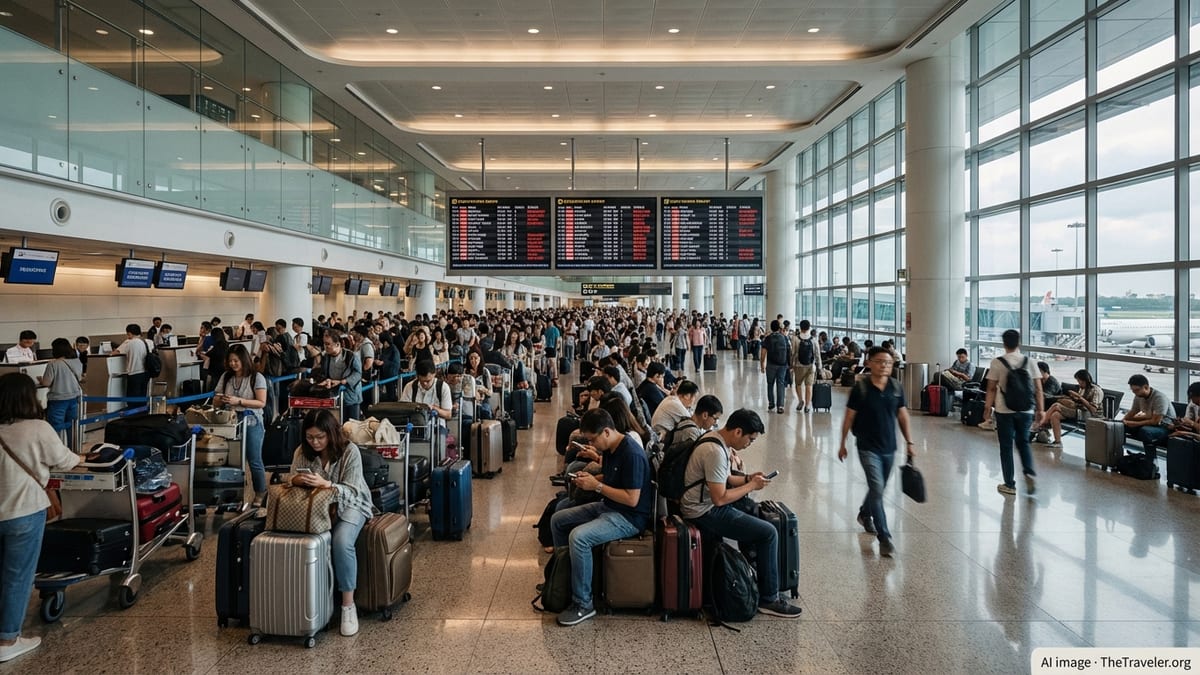
Across Oslo, Copenhagen, Reykjavik, Stockholm, London, Paris and other affected cities, stranded passengers have been dealing with a familiar mix of uncertainty, long waits and complex rebooking options. Airport information screens have shown clusters of SAS and Icelandair codes marked cancelled or delayed, while check in and customer service areas have grown crowded as travelers seek clarity on new departure times.
Reports from travel media and passenger testimonies on public forums describe missed family events, disrupted business trips and holiday plans thrown into disarray. Some passengers have been offered hotel accommodation and meal vouchers in line with European air passenger protection rules, while others have reported difficulties securing prompt assistance when call centers and service desks became overwhelmed during peak disruption periods.
Consumer advocates note that travelers on affected flights within, into or out of the European Union and the United Kingdom may have rights to care, re-routing and, in some circumstances, financial compensation, depending on the cause and length of the disruption. However, securing those entitlements can take time, especially when airlines and passengers disagree over the reasons behind a cancellation or extended delay.
As of late Monday, schedules across the Nordic region remained fragile, with further adjustments possible as SAS continues to reshape its April operations and Icelandair manages its own network challenges. Travelers with upcoming journeys through Oslo, Copenhagen, Reykjavik or Stockholm are being advised by travel industry commentators to monitor their bookings closely and to prepare for potential last minute changes as the busy spring travel period unfolds.