

More news on this day
Flight disruption continues to ripple through Saudi Arabia’s key airports, with Riyadh, Dammam and Jeddah experiencing dozens of cancellations and delays as regional instability keeps airline schedules in flux.
Get the latest news straight to your inbox!
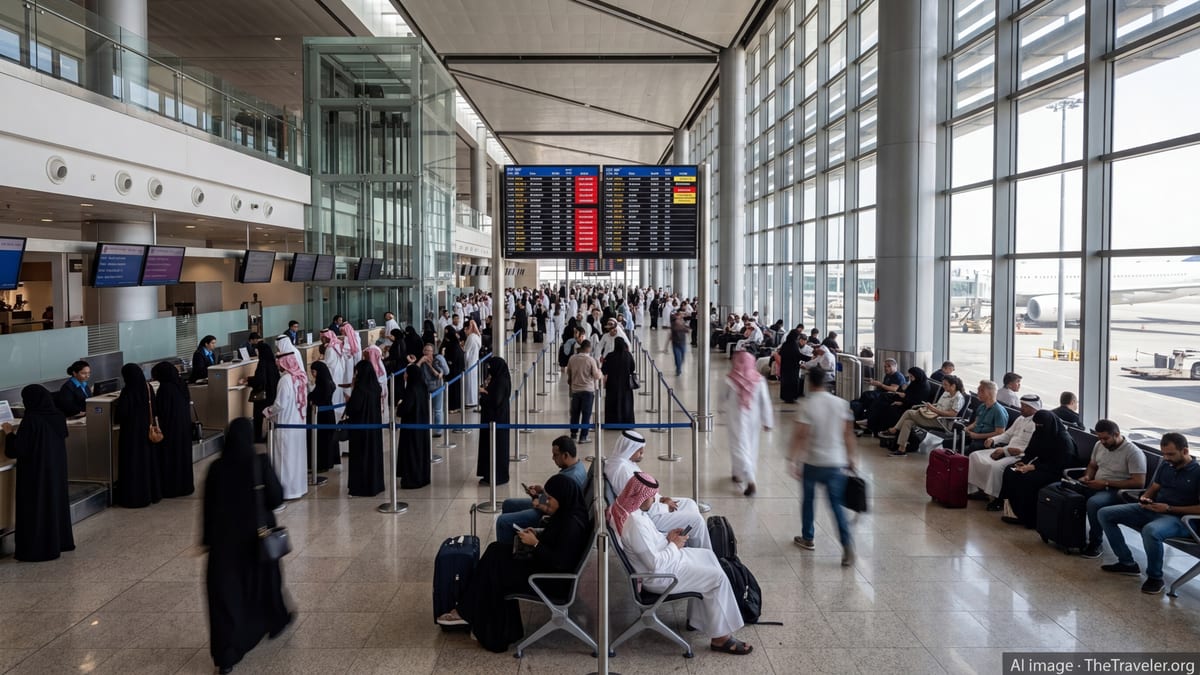
Persistent Operational Strain at Major Saudi Hubs
Publicly available flight-tracking data and recent travel updates indicate that Saudi Arabia’s three primary international gateways in Riyadh, Dammam and Jeddah remain under sustained operational strain. While airports are open and core infrastructure is functioning, airlines are still trimming schedules and consolidating services in response to wider Gulf airspace uncertainty.
Across these three hubs, reports point to around 38 flight cancellations and at least six notable delays in the latest round of disruption, affecting both domestic and international services. The numbers fluctuate throughout the day as airlines adjust capacity, but the pattern underscores that travel through Saudi Arabia, although more stable than in some neighboring states, is far from returning to pre-crisis normality.
Travelers are encountering a mixed picture on the ground. Some departures leave broadly on time, while others are cancelled with relatively short notice or retimed into narrow operational windows. This uneven experience is creating congested departure halls at peak periods, especially when multiple flights to the same regional destination are withdrawn simultaneously.
Industry observers note that Saudi Arabia’s position as a remaining East–West corridor has drawn additional transit traffic. That role, beneficial for connectivity, also heightens sensitivity to any further shifts in regional security conditions or neighboring airspace restrictions, making schedule stability harder to guarantee.
Saudia Adjusts Network Amid Regional Suspensions
Saudi flag carrier Saudia has been central to keeping passengers moving, but it has also had to reshape its network rapidly. According to airline advisories and operational summaries, Saudia previously suspended or reduced services to several Gulf and regional destinations following the escalation of tensions and intermittent airspace closures earlier in March 2026.
In recent days, the carrier has focused on reinforcing core domestic and strategic international routes through Riyadh and Jeddah, while selectively restoring links that can be operated without transiting higher-risk airspace. Public information shows that some passengers whose original journeys were routed via now-constrained Gulf hubs have been rebooked onto Saudia connections that remain viable through Saudi airports.
At the same time, late-notice cancellations continue to appear in departure boards when operational risk thresholds or routing constraints tighten. This contributes to the running tally of more than three dozen cancellations across Riyadh, Dammam and Jeddah, as aircraft and crew are repositioned to routes considered more resilient.
For travelers, the impact is most visible in longer connection times and restructured itineraries. Pilgrims, business travelers and expatriate residents are all finding that routings which once relied on multiple Gulf transfer points are now increasingly concentrated on the Saudi domestic network and a smaller set of regional gateways that remain reliably accessible.
Gulf Air and Other Carriers Rework Bahrain-Linked Schedules
Gulf Air’s operations, closely tied to Bahrain’s airspace and hub structure, have been especially sensitive to the recent upheaval. According to published coverage and airline customer updates, the carrier has repeatedly revised its schedule, at times suspending services through Bahrain and offering enhanced flexibility to passengers booked on affected routes.
Travel forums and passenger accounts describe multiple Gulf Air cancellations impacting journeys that would normally route through Bahrain from Saudi cities. In response, some travelers departing from Jeddah or Dammam have reported being rebooked on alternative carriers or redirected to operate via Saudi domestic connections before proceeding internationally on different airlines.
The knock-on effect is felt at Saudi airports, where ground handlers, check-in teams and immigration counters must accommodate sudden surges of disrupted passengers. With flights to certain Gulf hubs reduced, demand has shifted toward any remaining corridors, amplifying the pressure on services that are still operating from Riyadh, Dammam and Jeddah.
Other international airlines serving Saudi Arabia have also trimmed or reshaped their schedules in light of higher war-risk assessments in parts of the Gulf. This has contributed to the cluster of cancellations recorded in the latest reporting period, as carriers balance safety considerations with the need to maintain essential connectivity for residents, visitors and transit passengers.
Passenger Experience: Long Queues, Rolling Updates and Costly Alternatives
For passengers, the most tangible signs of disruption are long check-in lines, rolling departure board updates and rising last-minute fares on remaining seats. Accounts posted by travelers over the past two weeks describe journeys that once required a simple one-stop connection through a Gulf hub now involving multiple rebookings, overnight waits and alternative routings through Saudi cities.
Some travelers report being informed of cancellations only a few hours before scheduled departure, prompting hurried rearrangements and additional accommodation or ground transport costs. Others describe relatively smooth experiences when flights operate as scheduled, underscoring how uneven the situation remains from one airline or route to another.
The financial impact is also becoming more apparent. Passengers who manage to secure alternative flights at short notice sometimes face significantly higher fares than their original bookings, especially on popular routes linking Saudi Arabia with South Asia, Europe and other Middle Eastern destinations. While some carriers are offering fee waivers or expanded change options, publicly available information suggests that these policies vary by airline and route.
Travelers heading to or from Riyadh, Dammam and Jeddah are increasingly advised by travel agents and airline notices to monitor flight status frequently, arrive early at the airport and prepare for potential schedule changes even after check-in. For those with onward connections, building in generous layovers is emerging as a pragmatic, if inconvenient, response to continuing uncertainty.
Outlook: Gradual Stabilization, But Volatility Remains
The outlook for Saudi air travel through late March 2026 remains cautiously uncertain. Operational briefings and aviation sector analyses suggest that, while Saudi airspace is open and its main airports are functioning, the broader regional context continues to shape what airlines can reliably operate.
Some carriers have begun extending flexible booking and cancellation policies, including into late March, which indicates expectations of at least short-term volatility. Others are experimenting with temporary routings, such as operating select long-haul services from alternative Saudi gateways or adjusting flight times to avoid peak congestion periods at overstretched regional hubs.
Analysts following the situation note that a return to more predictable schedules will depend on a sustained reduction in regional security risk and clearer timelines for the full normalization of neighboring airspaces. Until then, the pattern of daily cancellations and delays at Riyadh, Dammam and Jeddah is likely to persist, even if the absolute numbers gradually decline.
For now, Saudi Arabia continues to function as one of the few relatively stable aviation corridors in a disrupted Gulf region, but the experience for passengers remains fraught with uncertainty. The latest count of around 38 cancellations and six delays across the country’s major hubs is a snapshot of a wider, still-evolving adjustment in regional air travel.