

More news on this day
Travel across Saudi Arabia and the wider Gulf region has been thrown into fresh turmoil as more than 70 flights involving major carriers such as Saudia, Gulf Air and EgyptAir have been cancelled, disrupting links between key hubs including Jeddah, Riyadh and international cities such as Kuwait, Cairo, Karachi, Dhaka, Istanbul, Kuala Lumpur and Amsterdam.
Get the latest news straight to your inbox!
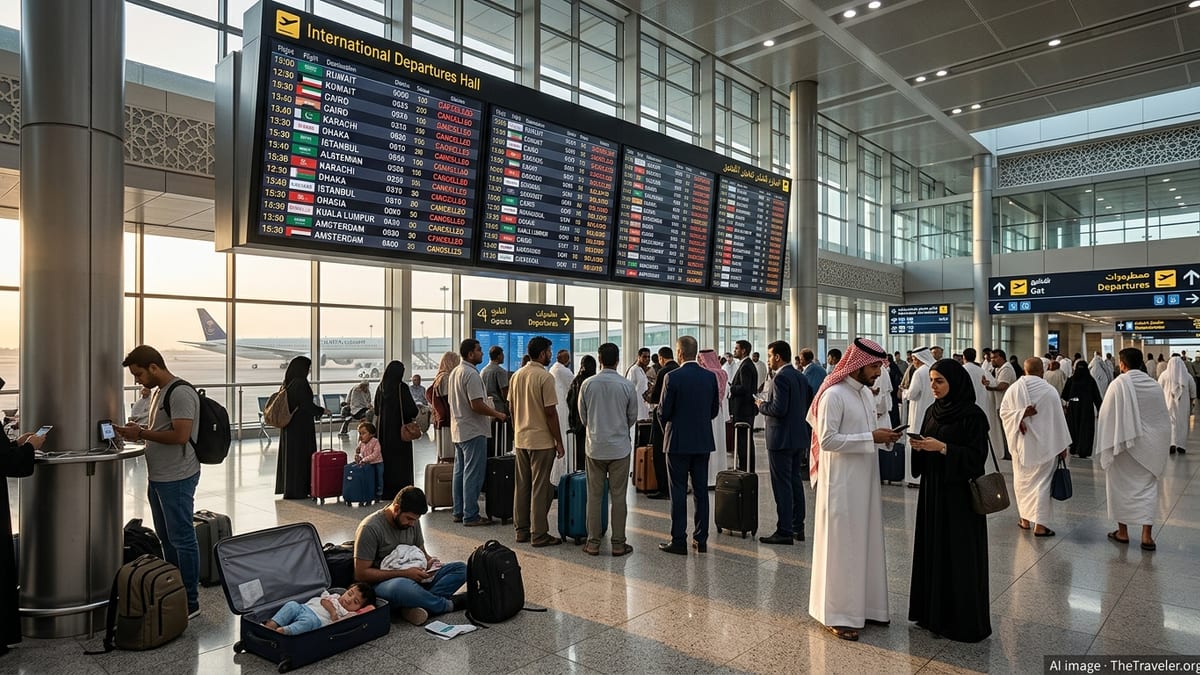
Wave of Cancellations Hits Saudi Hubs and Key Regional Routes
Published flight data and regional media coverage indicate that Saudi Arabia’s main international gateways in Jeddah and Riyadh are experiencing sustained disruption, with dozens of departures and arrivals scrubbed or heavily delayed over recent days. The cancellations span both domestic and international services and involve a mix of national and foreign carriers operating through Saudi airspace.
While operational details continue to shift throughout each day, reports point to more than 70 flights linked to Saudi airports being cancelled or removed from schedules in a short window, as airlines adjust to changing airspace restrictions and security assessments across the wider Middle East. The affected services include high-demand routes to Kuwait, Cairo, Karachi, Dhaka, Istanbul, Kuala Lumpur, Amsterdam and other major cities that typically feed Saudi Arabia’s role as a regional transit and pilgrimage hub.
These flight cuts sit within a broader pattern of instability across Middle East and Gulf networks, where airspace closures and reroutings have already triggered thousands of cancellations regionwide and forced airlines to rapidly redraw schedules. Passengers using Saudi gateways find themselves caught at the intersection of national safety decisions, regional security dynamics and the commercial limits of airline contingency planning.
Major Carriers Including Saudia, Gulf Air and EgyptAir Adjust Operations
Saudi flag carrier Saudia has been among the airlines most directly affected, with publicly available schedules showing selective cancellations and frequency reductions on certain regional routes, even as other services continue to operate from Jeddah and Riyadh. The pattern reflects a shift from broad shutdowns to more targeted, route-by-route adjustments as the situation evolves.
Gulf Air, EgyptAir and other regional airlines have also trimmed their Middle East operations, particularly on corridors that rely on overflying or connecting through heavily constrained Gulf airspace. Coverage from regional travel and business outlets notes that EgyptAir has temporarily suspended or pared back selected flights to multiple Middle Eastern destinations, while maintaining operations on other trunk routes where airspace and capacity allow.
Additional disruption has come from international airlines serving Saudi Arabia that have opted to cancel or reroute flights to Jeddah and Riyadh, or to suspend operations to nearby Gulf hubs altogether. In several cases, carriers have concentrated limited capacity on a smaller number of evacuation-style or repatriation flights, with priority given to passengers already holding tickets and those who had earlier services cancelled.
Key International Cities Affected, From Kuwait and Cairo to Amsterdam
The current wave of cancellations stretches far beyond Saudi borders, affecting passengers in a chain of cities across the Middle East, Asia and Europe. Routes connecting Saudi airports with Kuwait and Cairo have seen multiple cancellations or schedule changes, reflecting both local airspace constraints and the knock-on effects of wider regional closures.
South Asian gateways such as Karachi and Dhaka have also been caught up in the upheaval. Airlines that typically funnel large volumes of migrant workers, family visitors and religious travelers between these cities and Saudi Arabia have been forced to consolidate operations, sometimes combining services or operating ad hoc departures in place of regular schedules.
Further afield, high-traffic links to Istanbul, Kuala Lumpur and Amsterdam have experienced a mix of cancellations, one-off recovery flights and irregular operations. Flight tracking platforms and independent schedule snapshots highlight days when only a fraction of usual services operate on these routes, often at short notice, leaving travelers with limited options and long waiting times for rebooking.
Passengers Face Rebookings, Extended Layovers and Rapidly Changing Schedules
For passengers, the most immediate impact has been uncertainty. Reports from travelers and airline communications describe itineraries that change multiple times within a matter of hours as flights move from scheduled to delayed to cancelled status. In some cases, passengers connecting via Saudi Arabia or neighboring Gulf hubs have faced extended layovers or overnight stays while waiting for scarce onward seats.
Airlines have been urging travelers to monitor flight status closely through official apps and websites and to avoid heading to the airport until their departure is clearly confirmed as operating. Where possible, carriers are rebooking affected passengers onto remaining services or routing them through alternative hubs outside the most restricted airspace, although limited capacity has meant that some travelers wait several days for a confirmed seat.
Flexible ticket policies and fee waivers have become a critical tool for managing the disruption, with many airlines allowing date changes or rerouting for journeys involving Saudi Arabia and neighboring states. However, the pace of operational changes, combined with pressure on call centers and airport desks, has left some travelers struggling to secure timely assistance, particularly those with complex multi-stop itineraries.
What Travelers Passing Through Saudi Arabia Should Do Now
Travel industry guidance and airline advisories suggest that anyone planning to transit Saudi Arabia, or to fly between Saudi cities and affected destinations such as Kuwait, Cairo, Karachi, Dhaka, Istanbul, Kuala Lumpur or Amsterdam, should treat their plans as provisional until very close to departure. Same-day checks on flight status and any fresh travel alerts are increasingly important.
Travelers are being encouraged to keep contact details up to date in airline bookings so that any schedule changes, cancellations or rebookings are communicated as quickly as possible. Those with urgent travel needs may wish to explore alternative routings that bypass the most heavily constrained corridors, even if that involves longer travel times or additional connections.
Industry observers note that while airlines serving Saudi Arabia are demonstrating a growing ability to operate limited, carefully routed services amid the disruption, the outlook remains fluid. As airspace restrictions, security assessments and regional dynamics evolve, further adjustments to flight schedules into and out of Jeddah, Riyadh and other key cities are likely, prolonging the current period of uncertainty for travelers across multiple continents.