

More news on this day
Saudia Group has marked a major milestone in its human-capital strategy, celebrating the graduation of more than 1,000 aviation trainees in Jeddah in what the company describes as the largest commencement in its history and a pivotal step in meeting Saudi Arabia’s fast-rising demand for skilled aviation professionals.
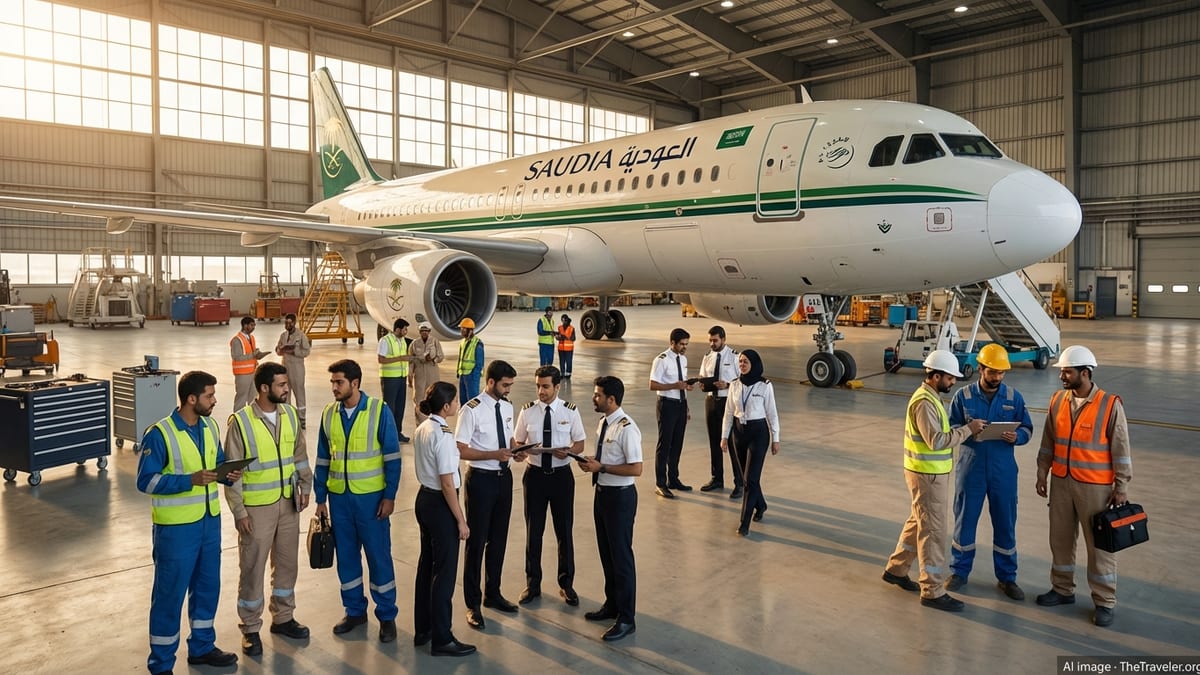
Landmark Ceremony Signals New Era for Saudi Aviation Talent
The unified graduation ceremony, held in mid-February in Jeddah, brought together more than 1,000 Saudi men and women completing specialized aviation programs across the Saudia Group. Local media reports indicate that the total number of graduates approached 1,200, underscoring the scale of the initiative and its significance for the Kingdom’s transport sector.
Graduates are set to join a wide spectrum of Saudia Group entities, including Saudia Airlines, low-cost carrier flyadeal, Saudia Academy, Saudia Technic, Saudi Ground Services, SAL Logistics Services and catering specialist CATRION. The intake spans roles ranging from pilots and cabin crew to aircraft maintenance engineers, ground operations staff and logistics specialists.
For Saudia Group, the event represents a visible outcome of multi-year investments in training infrastructure, digital learning platforms and international partnerships. It also reflects a broader policy push by Saudi authorities to place citizens at the center of the aviation workforce as the Kingdom ramps up its ambitions to become a global air connectivity hub.
The ceremony drew senior officials from across the Saudi aviation ecosystem, highlighting how workforce development has become a shared national priority rather than the responsibility of any single airline or institution.
Saudia Ties Graduate Push to Massive Fleet and Network Expansion
Saudia Group’s graduation milestone is closely linked to its aggressive expansion plans. The company has outlined a pipeline of 185 new aircraft to be delivered over the coming years, a move that is expected to generate more than 12,000 jobs across the aviation ecosystem as new routes, frequencies and services are added.
In public remarks at the ceremony, the group’s leadership framed the surge in training output as essential to sustaining profitability, operational self-reliance and service quality as the fleet grows. By emphasizing locally trained professionals for key operational roles, Saudia is positioning human capital as a strategic asset rather than a cost center.
The group’s expansion dovetails with Saudi Arabia’s broader National Aviation Strategy, which seeks to triple annual passenger traffic, transform the country into a key transfer hub between East and West and stimulate tourism and logistics sectors. Achieving those targets will require a deep pool of pilots, engineers, air traffic professionals and service staff who are both technically proficient and aligned with international safety and regulatory standards.
Saudia’s executives have previously highlighted that the airline’s job-creation roadmap supports national targets, with commitments to create more than 10,000 specialized aviation roles over the medium term. The latest cohort of graduates is an early sign that this pipeline is beginning to take tangible shape.
Localizing Aviation Jobs at the Heart of Vision 2030
The graduation milestone arrives as Saudi Arabia accelerates the localization of aviation professions in the private sector. Authorities have rolled out phased requirements to increase the share of Saudi citizens employed in licensed roles such as pilots, flight attendants and aircraft maintenance technicians at companies above certain size thresholds.
Officials from the Ministry of Transport and Logistic Services, along with the Ministry of Human Resources and Social Development, have stressed that localization is not merely about quotas. Instead, it is framed as a long-term effort to build a competitive national workforce capable of supporting complex, safety-critical operations in line with international aviation standards.
By graduating more than 1,000 trainees in one intake, Saudia Group is effectively demonstrating that aviation localization can be scaled while maintaining quality. Many of the graduates progressed through internationally accredited programs, simulator-based training and structured on-the-job learning that align with global best practice.
This approach also helps ensure that localization contributes to productivity rather than constraining growth. With passenger demand climbing and new airports and terminals under development, the Kingdom’s carriers and service providers will need to add thousands of new positions without sacrificing safety, punctuality or customer experience.
Saudia Academy Scales Up With New Centers and Digital Platforms
Central to Saudia Group’s training push is Saudia Academy, also known historically as Prince Sultan Aviation Academy. The institution has significantly upgraded its capacity in recent years, blending classroom instruction, flight simulators and digital training tools to support a wider range of disciplines and a larger number of trainees.
Working with technology partners, the academy has deployed advanced training management systems that automate scheduling, track progress and optimize the use of simulators and instructors. Industry case studies describe how these systems have boosted efficiency, reduced conflicts and expanded training capacity by several multiples, enabling the academy to serve thousands of students within tight timeframes.
Saudia Academy is also expanding its physical footprint. Construction is under way on a state-of-the-art aviation training center in Riyadh, where the first phase is planned to include multiple simulator bays and purpose-built classrooms. The facility is expected to open around 2026, adding to the academy’s long-established base in Jeddah and giving the Kingdom dual hubs for advanced aviation training.
Combined, these investments mean that Saudia Group is increasingly able to train pilots, cabin crew, engineers and ground staff domestically rather than relying heavily on overseas partners. This reinforces national goals to build sovereign capabilities in critical transport sectors while also shortening the time it takes to bring new recruits from classroom to cockpit or ramp.
International Partnerships Strengthen Skills Pipeline
The surge in Saudia Group graduates is taking place against a backdrop of broader collaboration between Saudi stakeholders and global aviation bodies. The International Air Transport Association has signed multiple training agreements with Saudi airlines, airports and universities, aiming to deliver industry-aligned skills to more than 1,000 graduates and employees in an initial phase.
These partnerships cover a broad curriculum, including airport development, airline management, ground operations, safety, regulatory compliance and specialized subjects such as dangerous goods handling. By embedding internationally recognized certifications and best practices in local training programs, Saudi institutions seek to ensure that graduates are competitive in both domestic and global job markets.
For Saudia Group, such collaborations complement its in-house academies by providing access to updated course content, instructor training and benchmarking against global peers. Graduates entering the airline’s ranks benefit from exposure to both local operational realities and international standards, making them well positioned to support the Kingdom’s aspirations to become a preferred global transfer hub.
The broader effect is the emergence of Saudi Arabia not only as a large aviation market but also as a regional skills hub. As training centers in Jeddah, Riyadh and other locations build capacity, there is growing potential to attract students and professionals from neighboring countries, turning the Kingdom into an exporter of aviation expertise.
Human Stories Behind the Numbers
While the headline figure of more than 1,000 graduates underscores the scale of Saudia Group’s achievement, the ceremony in Jeddah also showcased personal stories of ambition and social mobility. Among the cohort were young Saudi women taking up roles as pilots, flight attendants, engineers and logistics specialists, reflecting the rapid shifts in workforce participation seen across the Kingdom in recent years.
Graduates interviewed by local media described the opportunity to join the aviation sector as transformative, offering exposure to international environments, clear career progression paths and the chance to contribute directly to national goals. For some, the journey included years of intensive study, overseas scholarships and demanding simulator assessments before securing a place in the group’s operational teams.
Family members attending the event highlighted the symbolic importance of seeing their children enter a sector long associated with national pride. Saudia, founded in the mid-20th century, has grown alongside modern Saudi Arabia, and its workforce has often been seen as an ambassadorial corps, representing the Kingdom to travelers around the world.
By foregrounding these human stories alongside statistics, Saudia Group aims to position aviation careers as attainable and attractive for the next generation of students considering their options in science, technology and service-oriented professions.
Strategic Impact on Tourism, Logistics and the Wider Economy
The influx of more than 1,000 newly trained aviation professionals is expected to have knock-on effects beyond Saudia Group’s immediate operations. As the Kingdom rolls out major tourism initiatives and large-scale destination projects, reliable air connectivity and high-quality service will be essential to meeting ambitious visitor targets.
In the logistics sphere, SAL Logistics Services and other group entities are expanding their capabilities to capture a larger share of regional cargo flows. This requires specialized skills in warehouse operations, cargo security, cold-chain management and freight handling, many of which are represented within the latest graduating class.
At a macro level, industry bodies estimate that aviation and related activities already contribute a significant share of Saudi Arabia’s gross domestic product and support well over a million jobs. With continued investment in fleet, airports and training, policymakers expect that contribution to increase, helping to diversify the economy away from hydrocarbons and toward services and high-value tourism.
The scale of Saudia Group’s latest graduation suggests that workforce planning is increasingly aligned with these strategic objectives. Rather than reacting to short-term labor shortages, the group and its partners are building a long-term pipeline designed to match projected demand over the rest of the decade.
Next Steps: From Graduation Stage to Operational Frontlines
For the more than 1,000 new graduates, the Jeddah ceremony marks the beginning rather than the end of their journey. Most will now transition into line operations, mentorship schemes and recurrent training cycles intended to cement classroom learning with practical experience in real-world environments.
Saudia Group officials have indicated that new hires will be integrated across the organization, from flight decks and cabin crews to maintenance hangars, control centers and customer-facing airport roles. Many will undergo type-rating courses, safety refreshers and on-the-job coaching before assuming full responsibilities, reflecting the highly regulated nature of aviation work.
The group’s leadership has also emphasized that investing in continuous professional development will be essential to keeping pace with emerging technologies, sustainability requirements and evolving customer expectations. As digital tools, alternative fuels and new aircraft types enter the fleet, today’s graduates will be among those tasked with implementing and managing these innovations.
With more aircraft on order, additional training centers under construction and a clear emphasis on national workforce development, industry observers expect that this year’s cohort of over 1,000 Saudia Group aviation graduates will be the first of many large-scale classes to play a central role in shaping the Kingdom’s rapidly transforming aviation landscape.