

More news on this day
Recent operational disruptions at Savannah–Hilton Head International Airport are triggering wider delays and missed connections across key Southeast hubs, underscoring the fragility of regional flight networks during periods of stress.
Get the latest news straight to your inbox!
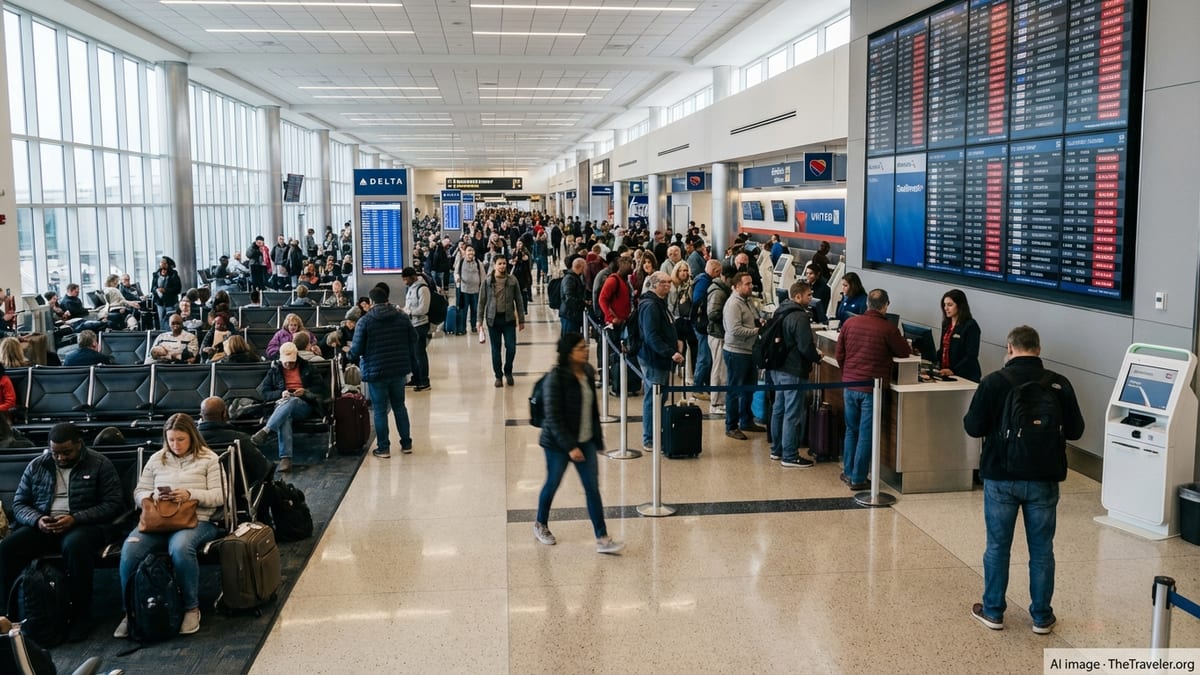
Local Incidents Spark Systemwide Delays
Operational data and media coverage indicate that Savannah–Hilton Head International Airport has faced a cluster of recent disruptions, ranging from weather-related cancellations to airfield incidents. While each event has been short in duration, their combined effect has been magnified by the airport’s heavy reliance on connections through Atlanta and Charlotte.
During a powerful winter storm earlier this year, tracking services logged close to 70 cancellations at Savannah within a 24-hour period as airlines pared back schedules. Reports noted that the most affected airports were major hubs across the Southeast that handle a significant share of Savannah’s connecting traffic, including Atlanta and Charlotte. As aircraft and crews fell out of position, delays quickly spread along popular corridors linking Savannah with cities across the country.
More recently, regional outlets and passenger accounts have pointed to operational complications tied to an engine issue on a departing flight that was followed by a grass fire near the runway. Although the fire was contained at the airfield perimeter, departures and arrivals were temporarily paused while emergency teams secured the area. The interruption forced some aircraft to hold and others to delay pushback from gates, creating a knock-on effect for flights scheduled to connect through larger hubs.
Industry monitoring suggests that even brief stoppages at a growing regional airport such as Savannah can trigger hours of schedule recovery, especially when they intersect with already tight hub operations or seasonal weather patterns elsewhere in the Southeast.
Atlanta, Charlotte and Jacksonville Feel the Strain
The network design that makes Savannah an easy jumping-off point for destinations nationwide also means that problems at the coastal airport rarely remain local. According to widely used flight-tracking and aviation planning tools, Savannah is deeply integrated into the banks of connecting flights through Atlanta and Charlotte, as well as secondary connections via Jacksonville and Orlando.
When storms or local ground holds have slowed departures from Savannah, aircraft scheduled to feed Atlanta and Charlotte have tended to arrive late or depart out of sequence. That disruption complicates gate assignments and crew rotations at the hubs, where airlines run finely tuned schedules intended to connect hundreds of passengers in tight windows. Travelers bound for cities in the Midwest, Northeast and West Coast have reported missed connections or rebookings after relatively minor late departures from Savannah.
Jacksonville and other nearby airports have occasionally acted as pressure valves. Coverage of recent schedule changes in North Florida highlights that carriers are shifting some regional capacity and adjusting routes among Jacksonville, Savannah and other coastal airports in response to evolving demand and operational constraints. While this can create new options for some travelers, it can also reroute disruption when weather or airspace congestion affects a wide swath of the Southeast.
As carriers and airports attempt to balance demand, hub congestion and staffing, flight schedules linking Savannah with major Southeast nodes remain sensitive to any disturbance along the chain, particularly during peak travel periods.
Wildlife, Weather and Infrastructure Challenges
The Southeast’s coastal environment introduces additional variables for flight planners and airport managers. Recent coverage of an alligator briefly delaying a Delta departure at Savannah illustrated how wildlife can intrude on airside operations. In that case, a reptile resting near a runway area prompted a short delay while ground crews ensured the taxiway and takeoff path were clear.
Though such wildlife encounters are typically resolved quickly, they highlight the interplay between local geography and aviation safety. Savannah sits amid wetlands and waterways that are home to alligators and migratory birds, conditions that require constant monitoring and coordination between airfield operations and wildlife management teams.
Weather exerts an even more consistent pressure. Storm systems sweeping across Georgia and the Carolinas this year have repeatedly forced airlines to thin schedules, hold aircraft on the ground, or reroute flights away from turbulent corridors. When those weather events line up with already tight connection times in Atlanta, Charlotte or other hubs, even passengers whose flights technically operate on time can face cascading delays through missed onward connections.
At the same time, published planning documents show that Savannah is in the midst of infrastructure expansion, including new security lanes and additional gates to handle rising passenger volumes. Construction work must be carefully staged so that essential operations can continue, but any unplanned incident during busy building phases has greater potential to cause systemwide ripples.
Travelers Weigh Options as Networks Adjust
Publicly available guidance and traveler forums indicate that passengers are increasingly factoring Savannah’s network sensitivities into their trip planning. Some are opting for earlier departures in order to build extra connection time into Atlanta or Charlotte, while others are choosing to drive to alternative airports such as Jacksonville or Charleston when forecasts point to severe weather or regional disruptions.
Consumer advisories from government and aviation groups emphasize that the Southeast’s interconnected airport system can amplify small disruptions into broader delays. Passengers departing smaller but fast-growing airports like Savannah are encouraged to monitor their flight status frequently, pay close attention to rebooking options, and consider overnight connections at hub airports when traveling on time-sensitive itineraries.
Airlines, for their part, continue to adjust schedules and fleet assignments throughout the region. Industry circulars and planning updates describe ongoing efforts to add resilience through additional spare aircraft, modified bank structures at hubs, and infrastructure upgrades that can help airports clear backlogs more quickly after weather or technical interruptions.
As Savannah’s passenger numbers climb and more travelers rely on the airport as a gateway to the Southeast coast, the recent spate of disruptions has underlined how closely its fortunes are tied to the performance of the region’s largest hubs.