

More news on this day
Travelers racing to fix last minute flight problems are increasingly being diverted to fraudulent airline call centers, losing thousands of dollars in bogus fees before they realize the number they called never belonged to the airline at all.
Get the latest news straight to your inbox!
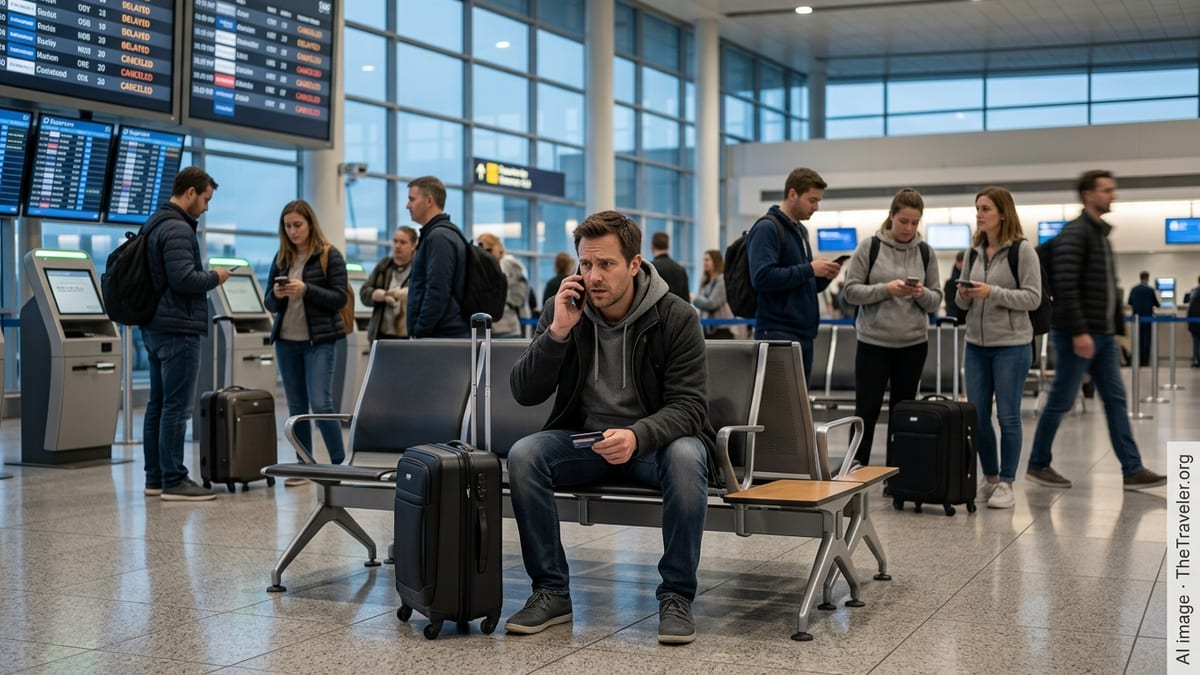
A Quiet Surge in Airline Call Center Impostor Scams
Reports indicate that fake airline customer service operations have quietly multiplied across the internet, targeting passengers who search online for help with cancellations, schedule changes, or refunds. Instead of reaching an airline, many travelers are unknowingly routed to third party call centers and outright fraud operations that mimic official helplines, complete with logos, brand names, and search engine ads.
Consumer advocates and nonprofit travel ombuds services describe a growing volume of complaints from people who believed they were speaking with major carriers but later discovered they had been charged inflated rebooking fees, phantom ticket costs, or “processing” charges for services that should have been free. In some cases, travelers only discover the deception when they contact the real airline and find that no changes were made to their reservation at all.
Publicly available complaint data from the Better Business Bureau and consumer forums shows patterns that repeat across airlines: the victim searches for a phone number, dials the first listing, and is urged to act quickly to avoid losing a seat or missing a connection. By the time the call ends, the traveler has supplied full credit card details and sometimes passport information to a business that has no relationship with the airline.
Regulators and consumer protection groups have also warned of a related tactic in which scammers send fake flight cancellation texts or emails that direct passengers to call a spoofed support line. Once on the phone, the same pressure tactics and high fees are used to separate travelers from their money.
How Travelers Are Losing Thousands to Fake “Agents”
Case reports collected by consumer advocates show that losses in these schemes often run into the hundreds or thousands of dollars per traveler. A typical pattern involves a passenger trying to rebook after a disruption, calling a number found through an online search, and being told that the only available replacement seats are significantly more expensive than the original fare.
In one frequently cited scenario, a traveler attempting to change an international itinerary is told that their ticket must be canceled and reissued at a much higher fare, plus additional “agency fees.” The caller pays several thousand dollars believing they are settling a legitimate balance. When they later confirm with the airline using an official channel, they discover that their original ticket could have been modified for a relatively modest change fee, or at no cost under the airline’s own policies.
Other travelers report being charged to access services that airlines typically provide at no extra cost, such as seat assignments, infant bassinets, or assistance with special accommodations. After paying with a credit card over the phone, some victims receive confirmation numbers that do not match any record in the airline’s system, or they find that only part of their reservation was changed while the rest was left at risk.
There are also accounts of passengers who avoided direct financial loss but had their personal information exposed. By sharing booking references, full names, dates of birth, and card details with impostor agents, these travelers face the added risk of identity theft or future unauthorized charges, even if they manage to reverse the initial payment.
How Some Victims Are Getting Their Money Back
While many travelers assume their losses are permanent, publicly available success stories indicate that a portion of victims have managed to recover funds through persistent follow up with banks, card networks, and consumer protection organizations. Several reports describe people who initially lost chargeback disputes because the scammer processed the payment as a legitimate travel agency transaction, only to later prevail after submitting detailed documentation.
Consumer advocates recommend that victims start by contacting their card issuer as soon as they suspect fraud, emphasizing that they did not receive the promised service or that the charges were misrepresented. Supporting documents can include emails, screenshots of the number called, recordings or notes from the conversation, and statements from the real airline confirming that it does not recognize the fees or booking.
Some travelers have also obtained help by filing complaints with the Federal Trade Commission, the Better Business Bureau, and state consumer protection offices. These filings do not guarantee reimbursement, but they create official records and can prompt businesses processing payments for the scammer to take a closer look. In some instances described in published coverage, banks have reopened investigations after regulators or mediators highlighted patterns of similar complaints tied to the same call center.
Specialized consumer advocacy sites and travel ombuds services have played a role in resolving disputes as well. By analyzing paper trails and corresponding with card issuers, these organizations have helped demonstrate that victims were misled into believing they were dealing directly with an airline, which strengthened the case for reversing charges.
Red Flags That Signal a Fraudulent Airline Call Center
Public guidance from regulators and nonprofit organizations highlights several warning signs that a supposed airline representative may actually be part of a scam operation. A key red flag is the request for large upfront payments or unusual “rebooking,” “refundable,” or “seat assignment” fees that are presented as mandatory. Travelers are urged to be skeptical when a call center claims that the only solution to a routine problem is to cancel and completely reissue a ticket at a far higher fare.
Another common indicator is the origin of the phone number itself. Many reports involve numbers that appear at the top of search engine results or in sponsored listings rather than on the airline’s official website or app. Consumer advocates caution that fraud operations invest heavily in search marketing and search engine optimization to push their bogus numbers above legitimate contacts, making them the first option stressed travelers may see.
Travelers also describe suspicious behavior around identity and payment. Impostor agents may discourage callers from using airline apps or websites, insist on handling everything over the phone, or refuse to send confirmation emails from official airline domains. They may push for payment by direct bank transfer or insist that the caller read out full card numbers and security codes, rather than directing them to a secure, branded payment page.
Finally, the way the call is structured can be telling. Official airline lines typically use recorded disclosures, menu trees, and call queues. Reports of scam lines describe quick pick ups, immediate access to a live person claiming to represent multiple airlines, and a lack of standard identity checks or references to an existing customer profile.
How Travelers Can Safely Get Help With Their Flights
Consumer protection agencies and travel experts encourage passengers to take a few practical steps to protect themselves when they need airline assistance. The most important is to obtain contact information only from trusted, first party sources such as the airline’s own mobile app, the official website, or the phone number printed on a ticket or booking confirmation. Saving those numbers before a trip can help travelers avoid hasty searches when plans change unexpectedly.
Travelers are also urged to handle straightforward changes and cancellations through self service tools whenever possible. Many airlines now allow customers to modify itineraries, request refunds, or use travel credits directly online. Using these channels reduces the need to call third parties and lowers the chance of being diverted to an impostor line.
If a situation requires speaking to a person, experts advise double checking any number encountered in a search result by cross referencing it against the airline’s official site or app. Passengers can also be cautious with any unsolicited message claiming that a flight is canceled or a seat is in jeopardy. Instead of calling the number in a text or email, travelers can log in to their airline account to verify the flight status and contact options from within that secure environment.
For those who suspect they have already reached a fraudulent call center, the guidance is to end the call, contact their bank immediately, and then notify the airline through verified channels. Filing a complaint with consumer agencies not only improves the chances of individual redress but also helps build a broader picture of how and where scammers are targeting travelers, making it easier for others to avoid the same trap.