

More news on this day
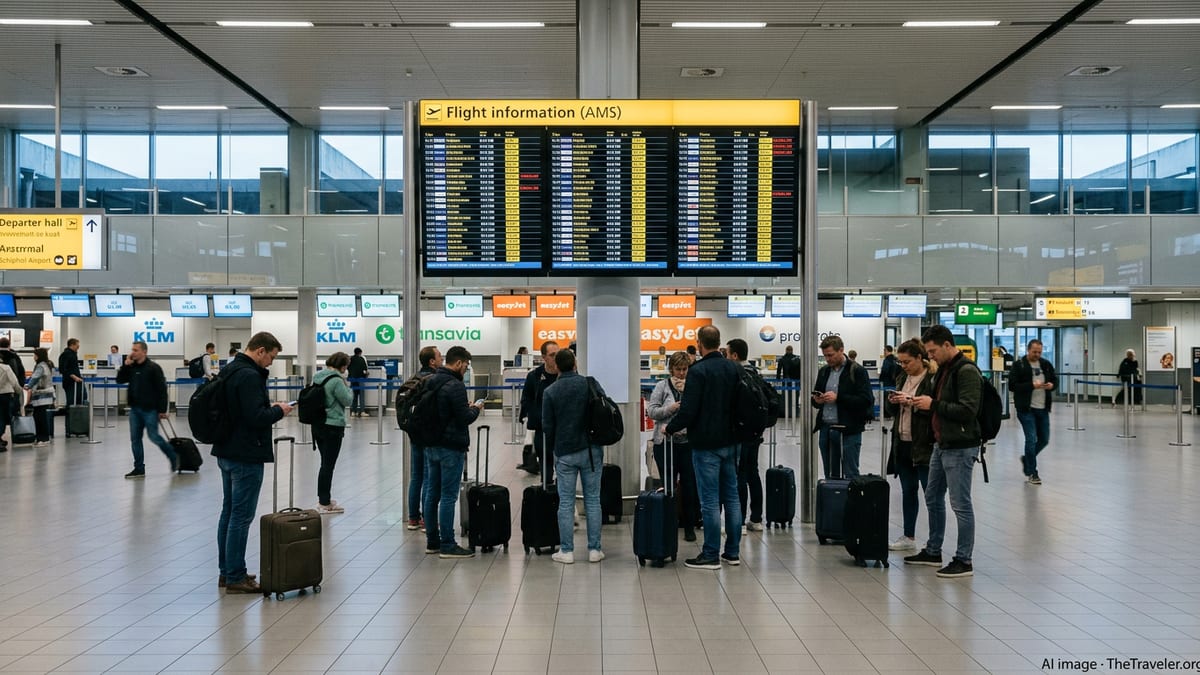
Hundreds of passengers traveling through Amsterdam Schiphol Airport on April 5, 2026 faced significant disruption as 320 flight delays and 19 cancellations were recorded, affecting services operated by KLM, easyJet, SAS and several other European carriers.
Get the latest news straight to your inbox!
Amsterdam Hub Struggles With Fresh Wave of Delays
Publicly available flight-tracking and aviation data for April 5 indicate that Amsterdam Schiphol, one of Europe’s busiest transfer hubs, recorded 19 cancellations and around 320 delayed departures and arrivals. The figures place Schiphol among the most affected airports in Europe on Sunday, following several weeks of heightened operational strain across the continent.
The disruption comes on top of a difficult winter and early spring season for the Dutch hub, where weather-related problems and congestion have already led to multiple days with elevated cancellation and delay levels. Industry monitoring over recent months has repeatedly highlighted Schiphol’s vulnerability when runway capacity is reduced or turnaround times are stretched, especially during peak connection banks.
On April 5, the latest disruption did not appear to be driven by a single severe weather event or security incident, but rather by a combination of heavy traffic, knock-on delays from earlier rotations and tight scheduling on short-haul European routes. As a result, late-running aircraft arriving in Amsterdam often translated directly into delayed onward departures, creating cascading knock-on effects across the network.
Operational alerts published by KLM over recent weeks have acknowledged ongoing challenges at Schiphol and advised travelers to monitor their bookings closely, check in early and allow additional time for connections, particularly when transferring between Schengen and non-Schengen flights.
Key Routes Affected, From Linköping and Birmingham to London and Berlin
Routes linking Amsterdam to regional and secondary European cities were among those most exposed to Sunday’s disruption. Flights between Schiphol and Linköping, a growing regional destination in Sweden, were flagged in tracking data as experiencing knock-on delays, underscoring how issues at a major hub can quickly affect smaller spokes in an airline’s network.
In the United Kingdom, services between Amsterdam and Birmingham were also impacted, with recent schedules showing cancellations and delays on this corridor in the days leading up to April 5. Passengers on these short-haul links often rely on Amsterdam for onward long-haul connections, meaning a delay of even an hour can result in missed flights and unplanned overnight stays.
High-frequency routes between Amsterdam and major capitals such as London and Berlin also experienced notable timetable disruption. Flights to London’s key airports and to Berlin were reported running behind schedule, and in some cases subject to same-day schedule changes. These city pairs are central to both business and leisure traffic flows, so even modest percentages of delayed flights can translate into substantial numbers of affected passengers.
While the overall number of outright cancellations at Schiphol on Sunday remained below the triple-digit totals seen during January’s winter storms, the scale of late departures and arrivals significantly extended journey times for customers on these core routes.
Multiple Carriers Impacted, With KLM, easyJet and SAS Prominent
Data compiled from European aviation trackers and day-of-travel monitoring shows that the brunt of the Amsterdam disruption fell across a mix of full-service and low-cost carriers. KLM, as Schiphol’s main hub airline with a dense European schedule, featured prominently among flights delayed or adjusted, particularly on short- and medium-haul sectors.
Low-cost operator easyJet, which runs a portfolio of routes from Amsterdam to UK and other European destinations, also appeared among the airlines affected. Reports from recent days show selected easyJet services between Amsterdam and Birmingham labeled as cancelled, while other departures were recorded with late pushbacks and extended turnaround times.
Scandinavian Airlines (SAS) was another carrier caught up in the broader European disruption pattern. Although some SAS flights into and out of Amsterdam operated as scheduled, the airline has been dealing with its own network-wide operational pressures in recent weeks, and delays at Schiphol added yet another complication for travelers connecting between Scandinavia and continental Europe.
Other airlines with a presence at Schiphol, including additional European flag carriers and regional operators, also reported pockets of delay. The diversity of impacted airlines highlights how congestion and schedule disruption at a major hub tends to ripple across alliance partners and competitors alike, regardless of their individual performance on a given day.
Passengers Confront Missed Connections, Rebookings and EU261 Questions
The high volume of delayed flights at Schiphol on April 5 translated into a difficult travel day for many customers, especially those relying on tight connections. Reports from recent weeks about queues, overnight stays and missed onward flights at Amsterdam provided a backdrop for Sunday’s disruptions, as travelers again navigated changing departure boards and revised itineraries.
Under European Union air passenger rights rules, travelers facing long delays or cancellations may be entitled to assistance such as meals, hotel accommodation and transport, and in some cases financial compensation. Public guidance from consumer-rights organizations notes that eligibility depends on factors including the length of delay, the distance flown, and whether the disruption was within the airline’s control.
Recent advisory material related to KLM operations at Schiphol has urged affected travelers to use digital self-service tools where possible to rebook flights, request vouchers or apply for refunds. However, high traffic volumes on busy disruption days can slow these processes, so passengers are often advised by various public information sources to document expenses carefully and keep boarding passes and confirmation emails for any subsequent claims.
Specialist claim firms across Europe have also reported increased interest this year from travelers seeking to understand whether delays associated with congestion, winter weather or staffing challenges qualify for compensation under EU261 rules. Amsterdam’s recurring place in daily delay statistics has made it a focal point in many of these discussions.
Ongoing European Strain Raises Questions About Summer Readiness
The situation at Schiphol on April 5 is part of a wider pattern of disruption affecting multiple European hubs in early 2026. Published coverage over the past week notes large numbers of delays and cancellations across airports in Spain, Italy, the United Kingdom, the Nordic region and the Netherlands, with thousands of passengers stranded or facing extended travel times.
Analysts reviewing operational data for late winter and early spring have pointed to a mix of factors, including capacity constraints at busy hubs, staffing and ground-handling pressures, aircraft availability, and residual impacts from earlier weather events. When combined with high passenger demand, these stress points can leave little margin for recovery once initial delays begin to build.
For Amsterdam, the latest figures add to existing questions about how the airport and its main carriers will manage the upcoming peak summer season. Travel industry observers note that demand for European city breaks and long-haul connections via Schiphol remains strong, meaning any continued pattern of widespread delays or rolling cancellations could quickly translate into congested terminals and strained customer-service channels.
Regular travelers through Schiphol are already being encouraged by widely available travel advisories to build in longer connection times, travel with carry-on luggage where feasible, and monitor flight-status tools closely on the day of departure. With the calendar moving steadily toward the busy summer period, further operational adjustments at Amsterdam and other key European hubs are likely to be closely watched by passengers and the wider aviation sector.