

More news on this day
Seoul has overtaken renowned high-income capitals such as Vienna, Zurich, Brussels and Ottawa in a new international comparison of rental affordability, even as the Armenian capital Yerevan confronts a rapidly worsening rent squeeze that is reshaping its housing market and straining local households.
Get the latest news straight to your inbox!
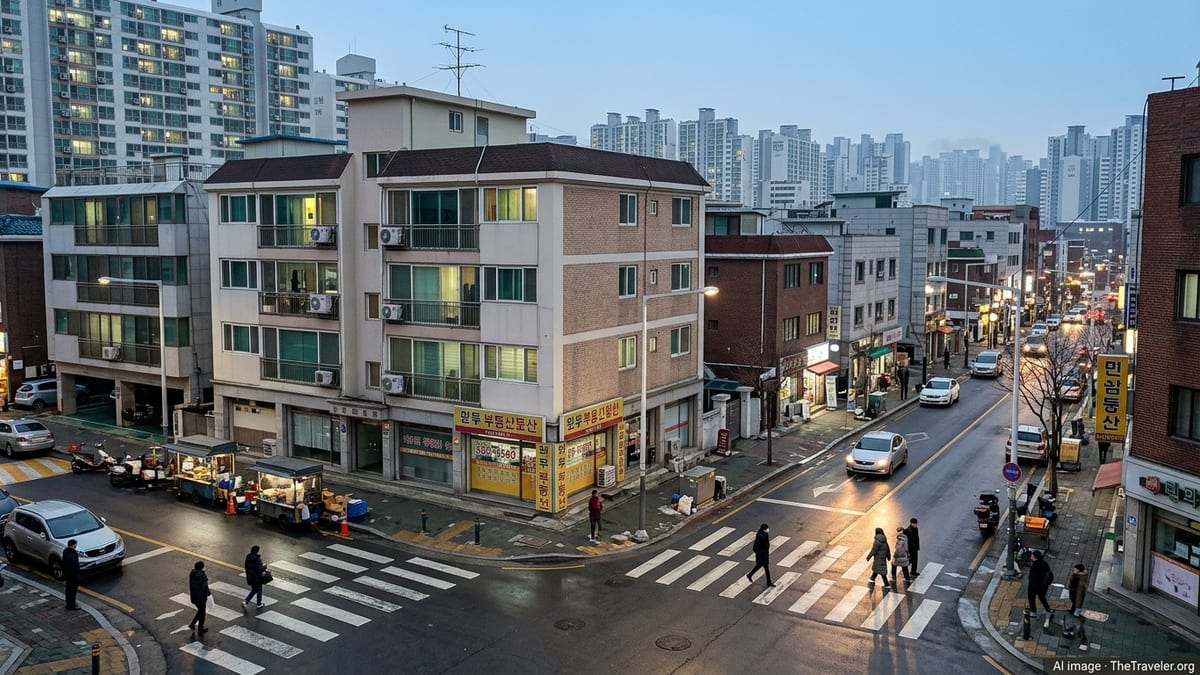
New Global Ranking Puts Seoul Ahead of Traditional European Leaders
The latest housing affordability review comparing major cities worldwide reports that Seoul now ranks as the most affordable city for rent among a basket of developed-world capitals, placing it ahead of Vienna, Zurich, Brussels and Ottawa. The update evaluates the share of household income absorbed by rent for standard apartments, alongside recent rent growth, to create a relative affordability picture rather than a simple measure of advertised prices.
In the new assessment, Seoul’s typical rent-to-income ratio for a centrally located apartment remains lower than many European and North American peers, despite strong price growth over the past few years. Capitals such as Vienna and Brussels, long seen as models for social housing and tenant protection, now show higher average rent burdens when measured against local incomes.
Vienna’s extensive social housing network and rent controls continue to moderate headline asking prices, but the latest data indicate that middle-income renters in the private market still spend a larger share of their pay on housing than comparable earners in Seoul. Zurich and Ottawa, where wage levels are relatively high, are also pushed down the affordability table because typical leases consume a greater proportion of disposable income.
Analysts behind the ranking point out that the result does not mean Seoul is “cheap” in absolute terms. Instead, it reflects the particular combination of local wage levels, relatively contained rent increases over the last decade and a structural reliance on alternative contract forms that reduce monthly outlays for a portion of tenants.
How Seoul’s Hybrid Housing System Keeps Monthly Rents Relatively Low
Seoul’s top position in the new affordability update is closely linked to the city’s hybrid housing system, which blends conventional monthly leases with the long-standing jeonse deposit model. Under jeonse, tenants pay a large upfront deposit instead of rent and recover that deposit at the end of the contract, which lowers the volume of properties competing in the purely monthly rental market.
Publicly available information from Korean housing surveys shows that, while sale prices in Seoul surged in recent years, rent growth has been comparatively moderate. Several international cost-of-living indices have highlighted that rent in the Korean capital has risen more slowly since the mid‑2010s than in many Western cities of similar economic weight, contributing to its favorable ranking in affordability tables.
Local housing market reports also note that when rent is measured as a share of disposable income, Seoul sits below many of its global peers. Although the average apartment rent has reached record highs in local currency terms, the burden is partly offset by dual-income households, widespread public transport access that allows renters to live further from the core, and a pipeline of high-density residential construction that has expanded overall supply.
However, the hybrid system has vulnerabilities. The gradual shift from jeonse to monthly contracts, following well-publicized deposit fraud cases, is increasing cash outlays for younger and lower-income renters. While this change has not yet pushed Seoul out of the “most affordable rent city” slot in the latest update, analysts caution that a further retreat of jeonse and continued interest rate pressures could erode the city’s current advantage.
Yerevan’s Rapid Rent Escalation Signals a Mounting Housing Crisis
While Seoul edges ahead of its global peers on rental affordability, Yerevan appears at the opposite end of the spectrum in the new comparison. The Armenian capital is portrayed as entering a rent crisis, with published coverage describing sharp increases in asking prices over a relatively short period and a growing disconnect between local incomes and market rates.
Market reports from Armenia over the past two years point to rapid population inflows, including foreign workers and longer-stay visitors, as a key factor behind the spike in Yerevan rents. A surge in demand for centrally located, furnished apartments has tightened supply, particularly in districts popular with newcomers, and landlords have responded by raising prices more quickly than wages.
According to publicly available listings analyses, average rents in Yerevan for modest one‑ and two‑room apartments have climbed to levels that are difficult to sustain for many local households. Domestic observers note that tenants frequently spend well above internationally accepted affordability thresholds, sometimes committing more than half of household income to rent alone.
The new update highlights that, unlike in Seoul or Vienna, Yerevan has limited social or subsidized housing stock and a relatively small pool of long-term rental protections. This leaves tenants more exposed to sudden price hikes, short-notice contract changes and conversion of residential units into higher-yield short-term rentals targeting visitors.
Contrasting Policy Frameworks: Why Comparable Cities Diverge
The affordability contrast between Seoul and Yerevan underscores how different policy frameworks and economic structures shape rental markets in cities that are otherwise comparable in size or regional importance. Seoul combines high-density zoning, substantial public transport investment and a long history of alternative leasing contracts, which together have kept a portion of rents from escalating in line with sale prices.
European capitals such as Vienna and Brussels benefit from strong tenant protections and social housing but still face mounting pressure in the private market, especially for new-build and centrally located units. In Zurich and Ottawa, a combination of constrained supply, strong population growth and elevated construction costs has pushed market rents higher even as incomes rose, eroding affordability over time.
In Yerevan, housing market monitoring indicates that policy adjustments have lagged behind rapid demand shifts. While construction activity has picked up in certain districts, the pace has not been sufficient to fully balance the inflow of tenants. At the same time, mortgage access remains limited for many lower- and middle-income households, keeping sustained pressure on the rental sector.
Observers note that without targeted interventions, such as incentives for long-term leases, safeguards around sudden rent increases and support for vulnerable households, Yerevan risks further entrenching a two‑tier housing system in which desirable districts are effectively priced out of reach for residents on local wages.
What Travelers and Expats Can Expect in Seoul and Yerevan
For travelers and short‑term residents, the new ranking offers a nuanced message. In Seoul, visitors can still expect relatively competitive rents compared with many Western capitals, particularly in outer districts well connected by metro and bus networks. Budget-conscious arrivals often find better value in neighborhoods just beyond the central business districts, where new mid‑rise developments and smaller multi-family buildings continue to add units.
However, the perception on the ground can differ from aggregate data. Surveys of residents and expatriates frequently describe Seoul as expensive overall once broader living costs, such as dining out and entertainment, are included, even if rent itself compares favorably with other global hubs. Prospective movers are advised to factor in deposits, agency fees and the specifics of Korean lease contracts when evaluating total housing costs.
In Yerevan, by contrast, published rental market snapshots suggest that newcomers may confront tight supply and rapidly shifting asking prices, especially in central districts and areas marketed to international tenants. While day‑to‑day expenses for food and local transport can remain relatively modest by European standards, securing stable, long‑term accommodation at an affordable rent is increasingly challenging.
The diverging trajectories of Seoul and Yerevan captured in the latest update illustrate how quickly a city’s position in global rankings can change. For policymakers and residents alike, the findings reinforce that rental affordability is shaped less by headline price tags than by the complex interaction of wages, contract structures, planning rules and the speed at which housing systems adapt to economic and demographic shocks.