

More news on this day
Airports across Australia and New Zealand are experiencing major disruption after widespread technology and operational problems led to cascading flight delays and cancellations, stranding thousands of travelers and putting pressure on already stretched aviation networks.
Get the latest news straight to your inbox!
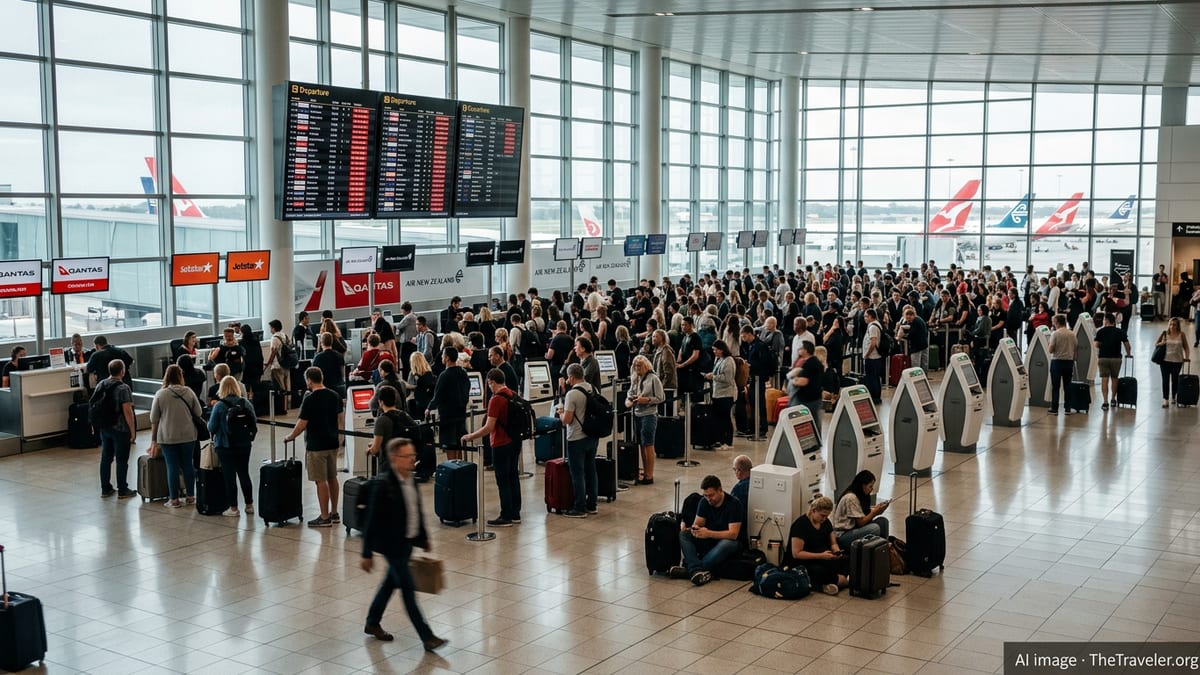
What Is Happening Across Major Airports
Airports in Australia and New Zealand have reported significant disruption to check in, boarding and departure operations following a combination of technology outages and knock on operational challenges. The problems are concentrated at major hubs, including Sydney, Melbourne, Brisbane, Perth, Auckland and Wellington, but secondary airports have also been affected as delays ripple through domestic and trans Tasman networks.
Published reports indicate that airlines and airport operators are dealing with intermittent failures in passenger processing and departure control systems, forcing some flights to be checked in manually and boarded using backup procedures. When these systems slow or go offline, turnaround times lengthen sharply, which then causes later services to depart behind schedule or be canceled entirely.
As the day progresses, disrupted aircraft and crews are arriving late into their next destinations, creating a rolling wave of delays. Aviation analysts note that the region’s schedules are operating close to full capacity at the tail end of the southern summer travel season, leaving limited slack in the system to recover quickly when a major outage or cluster of disruptions occurs.
Travelers at several airports have described long queues at check in halls and security screening points, along with crowded departure lounges as passengers wait for updated departure times. Digital departure boards and airline apps have in some cases lagged behind actual changes, adding to confusion over gate assignments and boarding calls.
Where Disruptions Are Most Severe
The heaviest impacts are being reported at the busiest international gateways. Sydney and Melbourne, which handle a large share of long haul services to Asia, North America and the Middle East, have seen a mix of delayed departures, aircraft swaps and outright cancellations. Domestic travelers connecting through these hubs are experiencing missed onward connections and extended layovers.
In New Zealand, Auckland Airport has emerged as a particular pinch point. Publicly available information shows elevated levels of cancellations and schedule changes on both domestic routes and regional international links, including services to Australia and the Pacific. Wellington and Christchurch have also reported delays as airlines reroute aircraft and crews to cover priority routes.
Regional airports in both countries are feeling secondary effects. When long haul or trunk domestic flights arrive late or are canceled, aircraft that ordinarily operate short haul legs to smaller cities may not be available, resulting in last minute timetable changes. This can be especially disruptive in areas with limited daily frequencies, where a single cancellation can remove the only practical same day option.
The disruptions have also affected cargo operations, with some freight carried in the belly holds of passenger aircraft delayed or rebooked. While dedicated freighter flights appear to be less affected, businesses relying on time sensitive shipments are being cautioned to expect slower than usual transit through the affected hubs.
How Airlines Are Responding for Impacted Passengers
Airlines operating in the Australia and New Zealand markets are deploying standard disruption management measures as they attempt to stabilize schedules. These include consolidating lightly booked services, prioritizing routes with the highest passenger demand, and using larger aircraft on some flights so more travelers can be re accommodated at once.
Passengers whose flights are canceled are generally being offered rebooking on the next available service, subject to seat availability. In some cases, airlines are adding extra sectors or operating late night recovery flights once systems stabilize, though this is constrained by crew duty time limits and local airport curfews. Travelers on multi segment itineraries may find that only part of their journey can be rebooked immediately, requiring overnight stops or alternative routing.
Accommodation and meal support policies vary by carrier and by the cause of the disruption. Where delays are linked to internal operational or technical problems, airlines are more likely to provide hotel vouchers and food allowances, particularly for passengers stranded away from their home city. When weather or air traffic restrictions compound the delays, assistance may be more limited and focused on rebooking rather than compensation.
Customer service channels are under strain, with high call volumes and long waits reported on some airline phone lines and messaging platforms. Aviation analysts recommend using multiple channels, such as airline apps, websites and airport information desks, while avoiding repeated calls unless travel plans have materially changed, in order to reduce congestion on support lines.
What Travelers Should Do If They Are Flying Soon
For those with imminent travel in or through Australia and New Zealand, trip preparation is especially important. Travelers are being advised to monitor their flight status closely in the 24 hours before departure, using official airline channels and airport information rather than relying solely on generic flight tracking tools or third party apps, which can lag during fast moving disruption.
Allowing extra time at the airport is critical. Given reports of long lines at check in and security, passengers are encouraged to arrive earlier than usual, particularly for international flights where document checks and baggage drop may be slowed by manual processing. Packing essential medications, chargers and a change of clothes in carry on luggage can help if bags are delayed or overnight stays become necessary.
Flexible planning can also reduce stress. Where possible, travelers with non essential trips are being urged to consider shifting dates or times, or routing through less congested airports. Those with connections should aim for longer layovers to provide a buffer against upstream delays. Travel insurance that covers disruption and additional expenses may offer some financial protection, but policy terms differ and usually exclude purely consequential losses such as missed events.
Passengers already at the airport who experience a cancellation should head promptly to the airline’s customer service desk or self service kiosks, while also checking rebooking options in their airline app. Some carriers automatically reassign new flights during major disruption, but seats may be limited, making early action valuable.
How Long the Disruptions Could Last
Industry observers note that even after core technology systems are stabilized and immediate issues are resolved, it can take several days for airline networks to fully recover. Aircraft and crews are often in the wrong place after a major disruption, and schedules may be temporarily thinned out while operators rebuild reliability.
In the short term, travelers can expect ongoing knock on delays, especially in the mornings when aircraft and crews are repositioning, and during peak travel periods when airport infrastructure is under the greatest strain. Same day schedule changes, including additional cancellations or aircraft swaps, remain possible while airlines adjust their operations.
Over the medium term, the current events are likely to intensify scrutiny of technology resilience and contingency planning across the region’s aviation sector. Recent global outages in airline and airport systems have already prompted calls from passenger advocacy groups and consumer bodies for clearer standards on notification, assistance and redress when travelers face widespread disruption.
For now, anyone planning to fly to, from or within Australia and New Zealand in the coming days should keep a close eye on official updates and build extra flexibility into their itineraries, recognizing that conditions may improve unevenly across different airports and routes as the system slowly returns to normal patterns of operation.