

More news on this day
Fresh bands of severe weather and stubborn low clouds have unleashed another wave of aviation chaos across China, with more than 41 flights canceled and over 1,100 disrupted on Friday at major hubs in Beijing, Shanghai and Chengdu, leaving thousands of passengers stranded and ripples of delay spreading across East Asia’s already stretched air network.
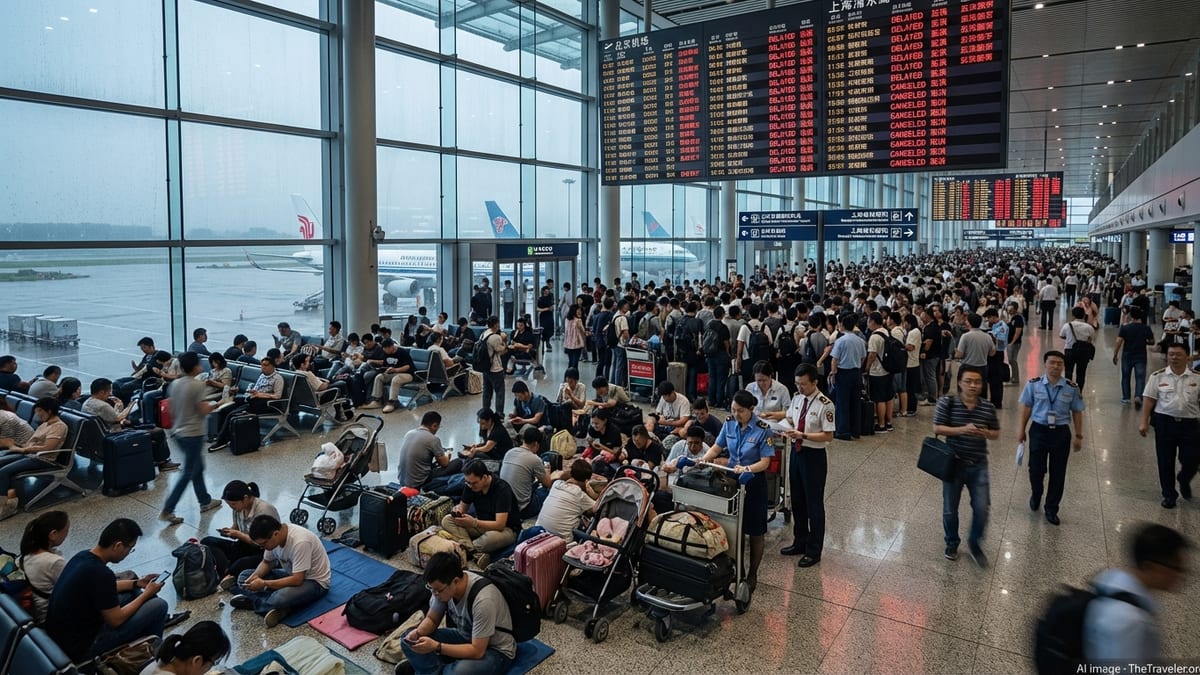
Major Hubs Choke Under New Round of Weather Disruptions
The latest round of cancellations and delays comes just days after China’s record Spring Festival holiday travel rush, compounding pressure on airport and airline operations. Meteorological agencies reported persistent rain in Shanghai, rain turning to low cloud around Beijing, and thick overcast skies in Chengdu, conditions that have narrowed landing windows and forced repeated ground holds and go-arounds.
On Friday, operations at Beijing Capital International and Beijing Daxing were hit by a mix of low visibility and congestion as carriers juggled diverted traffic and late-arriving aircraft from other parts of the network. In Shanghai, both Pudong and Hongqiao reported waves of arrival and departure delays radiating into popular domestic and regional routes, including services onward to Japan and Southeast Asia.
Further inland, Chengdu’s twin airports saw departures stacked up on taxiways as controllers spaced out traffic during bursts of reduced visibility. Airlines responded by trimming frequencies and consolidating lightly booked services, a move that kept some aircraft and crew in position but left affected travelers rebooked on later flights or rerouted through alternative hubs.
While headline numbers of canceled flights remain modest relative to the thousands of daily operations across China, the concentration of disruption at three of the country’s busiest hubs has magnified the impact. With aircraft and crew rotations planned tightly around the peak travel period, each additional weather hold now cascades into missed connections and last-minute schedule changes.
Passengers Stranded, Tempers Tested in Crowded Terminals
Inside the terminals, the human cost of the disruption was evident in long queues snaking from check in counters and service desks. At Beijing and Shanghai in particular, passengers reported waiting more than an hour just to reach airline staff, only to find remaining seats on same day departures extremely limited. Families returning from Spring Festival reunions, business travelers racing to meetings and transit passengers heading to other Asian cities all found themselves competing for scarce alternatives.
Social media posts from travelers showed departure boards lit up with red delay notices and repeated audio announcements citing “weather and air traffic control” as the cause. Some passengers described scrambling to secure high speed rail tickets as a fallback, though popular routes between major cities were also heavily booked in the post holiday surge.
Ground handling staff and cabin crews, already stretched by the holiday peak, faced another stressful shift organizing hotel rooms, meal vouchers and rebooking options. While reports of serious confrontations remained limited, growing frustration was evident as travelers questioned why flights in apparently normal conditions were still unable to depart, highlighting the gap between what passengers can see through the terminal windows and the stricter visibility and spacing rules imposed in the tower.
For elderly travelers and those with young children, the uncertainty proved particularly draining. With many flights pushed back into late evening, families tried to find quieter corners of the terminal to rest, charging phones and watching for push notifications as they waited to see whether their aircraft would actually depart.
Airlines Struggle to Restore Schedules Across East Asia
Carriers including Air China, China Eastern, China Southern, Hainan Airlines and several regional operators have spent much of late February trying to realign schedules after successive bouts of bad weather. Earlier storms this month forced dozens of cancellations and hundreds of delays nationwide; Friday’s new disruption has added further strain just as airlines were attempting to return to normal post holiday timetables.
The ripple effects are being felt across East Asia. Delayed departures from Beijing, Shanghai and Chengdu are knocking on to flights serving Japan, South Korea and Southeast Asia, as aircraft arrive late and crews bump up against duty time limits. Some airlines have chosen to cancel lightly loaded regional sectors outright in order to protect core trunk routes, a strategy that reduces overall chaos but intensifies the impact for travelers on those specific flights.
Aviation analysts say that while severe weather is the headline trigger, the scale of disruption also reflects how close China’s aviation system is operating to its capacity limits during peak periods. High demand, dense schedules and limited slack in fleets and staffing mean there is little margin when storms, low clouds or airspace constraints emerge at multiple hubs simultaneously.
Neighboring hubs in Hong Kong, Seoul and Tokyo have begun to feel secondary pressure as diverted flights and rebooked passengers seek alternative routings. Although those airports have largely maintained normal operations, additional connecting traffic from China’s mainland disruptions has tightened seat availability on popular cross border services for the coming days.
What Travelers Need to Know Right Now
For passengers booked to fly into or out of Beijing, Shanghai or Chengdu over the next 24 to 48 hours, the situation remains fluid. Airlines are adjusting schedules throughout the day as weather bands move and air traffic control updates arrival and departure rates. Same day rebooking options may be limited on heavily traveled domestic corridors, and travelers with flexible plans are being encouraged to consider flights outside peak morning and late afternoon banks.
Long haul travelers connecting through China to other parts of Asia may face increased risk of missed connections, particularly where minimum connection times are tight. Industry observers recommend building extra buffer time into itineraries where possible and remaining alert to same day schedule changes, as some carriers continue to swap aircraft types and flight numbers to optimize utilization.
Given the combination of unsettled weather and lingering Spring Festival demand, travel planners expect irregular operations to linger even after skies clear. Aircraft and crews displaced by Friday’s disturbances will require several cycles to return to normal patterns, which means residual delays and isolated cancellations are likely through the weekend even under improving conditions.
Travelers already en route are being advised to stay close to departure gates, keep boarding passes and identification readily accessible, and check seat assignments when rebooked, as aircraft changes can alter cabin layouts. Those yet to depart may want to travel with basic essentials in carry on bags in case checked luggage does not make tight connections.
Signs of a New Normal for Weather Driven Disruptions
The latest wave of delays has revived debate within China’s aviation community about resilience in the face of increasingly volatile weather patterns. Recent seasons have brought frequent bouts of heavy rain, low cloud and fog across eastern and central China, conditions that regularly challenge airport capacity just as air travel demand continues to rise.
Regulators and airlines have been investing in upgraded navigation aids, performance based approach procedures and improved weather forecasting, all aimed at keeping more flights operating safely in marginal conditions. Yet the current disruption illustrates that technology alone cannot fully eliminate the operational pinch points at mega hubs where thousands of movements are compressed into narrow windows around curfews and runway maintenance slots.
For travelers, that may mean that episodes of widespread delay like Friday’s will be an occasional feature of peak travel seasons rather than a rare anomaly. Industry experts suggest that building flexibility into itineraries, considering alternate airports where feasible, and allowing extra time for connections will become increasingly important strategies for minimizing the impact of future weather related disruptions.
In the short term, attention remains fixed on how quickly Beijing, Shanghai and Chengdu can work through the current backlog. With more unsettled conditions in the forecast for parts of eastern China, both airlines and passengers are bracing for the possibility that Friday’s turbulence in the skies and in the terminals may not be the last such test this season.