

More news on this day
Severe weather sweeping across parts of the central United States is causing fresh disruption for air travelers this weekend, with Nashville International Airport reporting 92 delayed flights and 22 cancellations as major carriers including Southwest, SkyWest and Delta Air Lines work to stabilize their schedules.
Get the latest news straight to your inbox!
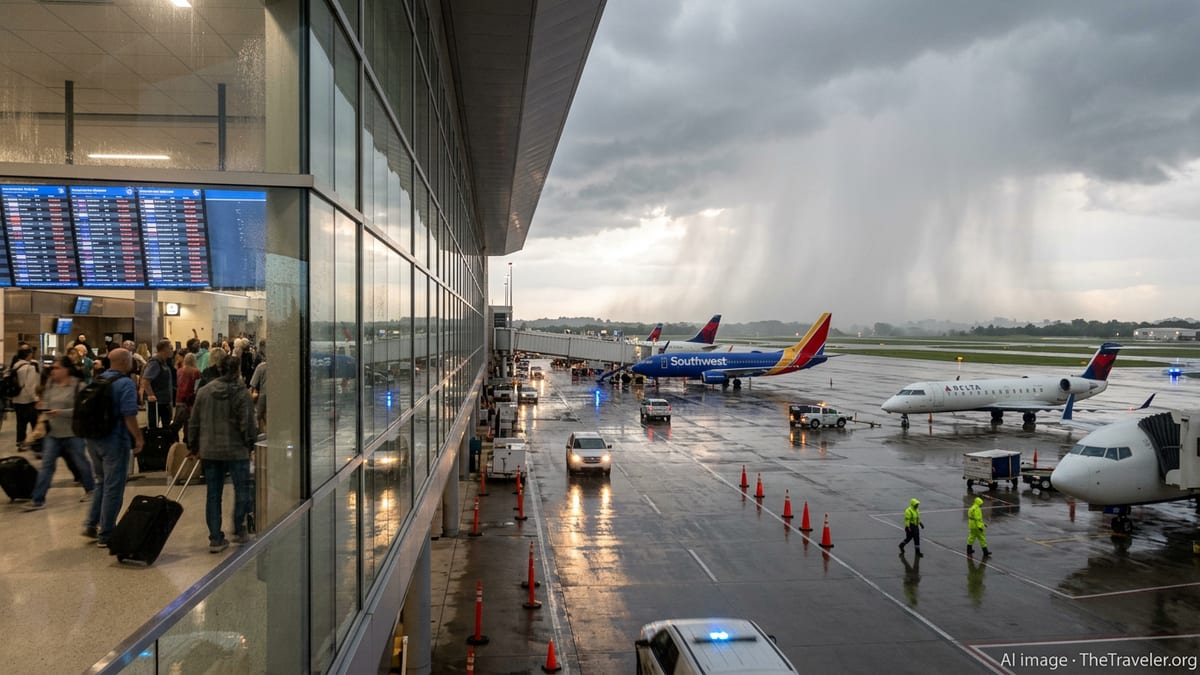
Storm System Sends Ripples Through Nashville Flight Operations
Publicly available tracking data on March 15 indicates that Nashville International Airport is experiencing a surge in flight disruptions as a line of strong storms moves across the region. The airport’s departure and arrival boards show dozens of services pushed back or scrubbed as airlines adjust operations in response to changing weather and air traffic conditions.
The 92 delays and 22 cancellations represent a significant portion of scheduled movements for the day, affecting both departures from Nashville and inbound flights from across the country. Carriers are reallocating aircraft and crews, which is contributing to knock-on delays even on routes where conditions are relatively calm.
While Nashville is no stranger to weather-related challenges, the current disruption highlights how quickly thunderstorms and low visibility can create a bottleneck in a busy regional hub. With airlines still operating tightly timed networks, a few hours of convective weather can cascade into a full day of irregular operations for passengers.
Airport operations teams are continuing to adjust gate assignments and turnaround times, and travelers are being encouraged through public channels to arrive early and check flight status frequently as conditions evolve.
Southwest, SkyWest and Delta Among Hardest Hit Carriers
Southwest Airlines, which has built Nashville into one of its key stations in the southern United States, is among the carriers most exposed to the current disruptions. Its dense schedule of point-to-point routes through the airport leaves limited room to absorb cascading delays once storms disrupt early bank departures.
SkyWest, operating regional flights on behalf of larger network airlines, is also seeing a number of schedule adjustments. Because regional flights often connect smaller cities to Nashville and onward hubs, delays or cancellations on these segments can disconnect passengers from long-haul itineraries, adding complexity to rebooking efforts.
Delta Air Lines, which maintains a strong presence in Nashville, is likewise experiencing operational pressures as aircraft and crews arrive late from other storm-affected cities. Publicly available information shows that some services are departing well behind schedule as the airline works flights into available weather and air traffic control windows.
Other U.S. carriers serving Nashville are contending with similar challenges, though impacts vary by route structure and time of day. Airlines with more hub-focused operations may be better able to consolidate passengers onto fewer flights, while point-to-point operators face more limited flexibility when weather closes in.
Knock-on Effects for Travelers Across the U.S.
The disruption in Nashville is resonating across domestic networks, as aircraft scheduled to operate onward flights depart late or are reassigned altogether. Passengers connecting through Nashville report longer-than-expected ground times and missed onward connections, particularly on evening services where options for same-day rebooking are narrower.
Because the storms are part of a broader weather pattern affecting multiple states, some flights that do not pass directly through Tennessee are still feeling indirect effects. Aircraft and crew rotations are tightly interlinked, so a delay on an early-morning departure into Nashville can echo into services many time zones away later in the day.
Travel analytics and recent performance data for U.S. flights suggest that weather remains one of the leading drivers of delays and cancellations. The current episode reinforces how exposed highly utilized airports and peak travel periods are to even short-lived bouts of severe weather.
For many passengers, the experience underscores the importance of real-time information. Airline apps, text alerts and airport display boards are playing an essential role in helping travelers navigate alternative options as schedules shift.
Advice for Passengers Navigating Disruptions at BNA
Public guidance from airlines and travel advisories emphasize a few consistent steps for travelers caught up in the Nashville disruptions. Passengers are being urged to monitor their flight status closely in the hours before departure, as schedule changes can occur repeatedly while storms move through and air traffic control adjusts flow rates.
Same-day rebooking options are often available via airline websites and mobile apps, which can be faster than waiting in line at airport counters when large numbers of passengers are affected. In some cases, carriers are publishing flexible travel policies that allow changes to nearby days or alternate airports in the same region without additional change fees.
Travelers with checked luggage may face additional delays when flights are canceled after bags have been accepted. Publicly available information indicates that baggage retrieval during major irregular operations can take significantly longer than usual, and passengers are encouraged to keep essential items such as medication, chargers and documents in carry-on bags whenever possible.
For those yet to start their trip, travel experts often recommend considering early-morning departures on storm days, as these flights are typically operated with aircraft that overnighted at the airport and may be less affected by upstream disruptions. However, when widespread weather systems are involved, even early departures can be vulnerable to changing conditions.
Broader Weather Patterns Keep U.S. Aviation on Alert
The Nashville disruption arrives amid a period of unsettled weather across parts of the Midwest and South, with meteorological outlooks highlighting continued risks of strong storms, heavy rain and localized flooding. These systems can trigger temporary ground stops, extended spacing between arrivals and departures, and diversions that add pressure to already busy airspace.
Recent seasons have underscored how quickly severe weather can upend airline schedules, prompting carriers and airports to invest in more robust forecasting tools and operational playbooks. Public reports on airline performance show that despite these efforts, days featuring organized storm systems still generate some of the most severe spikes in delays and cancellations.
For travelers, the situation at Nashville International Airport serves as a reminder that flexibility remains essential when planning trips during active weather periods. Building longer connection times, avoiding tight turns at storm-prone hubs and staying informed about regional forecasts can all help reduce the risk of significant disruption.
As conditions evolve through the remainder of the weekend, airlines are expected to gradually realign their Nashville operations, but residual delays may persist into subsequent travel days as carriers work aircraft and crews back into normal rotation.