

More news on this day
Seville Airport is set for a €235 million transformation that will modernise its terminal, ease bottlenecks and enhance comfort for millions of passengers travelling through Andalusia’s capital each year.
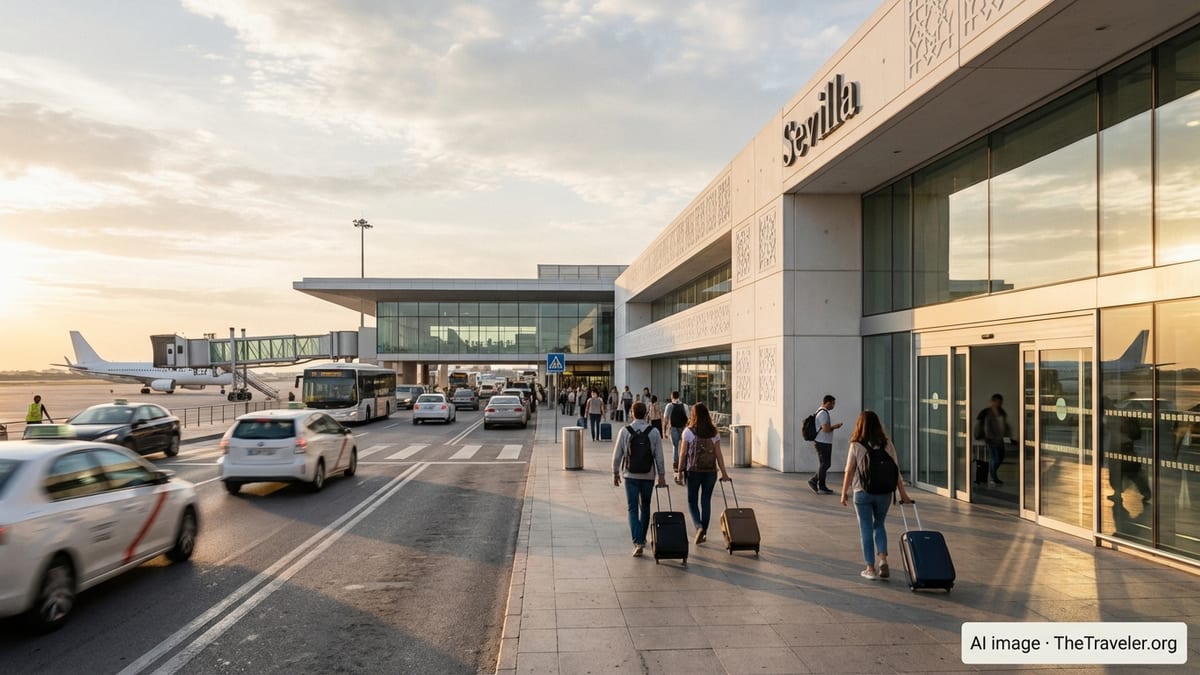
Flagship Investment in Aena’s New Expansion Wave
The €235 million package for Seville Airport forms part of a broader investment drive by Spanish airport operator Aena, which is preparing a record multibillion euro programme for 2027 to 2031 across the national network. After a comparatively modest outlay of around €55 million at Seville between 2022 and 2026, the new plan marks a sharp escalation in spending on the Andalusian hub.
The works are scheduled to run from 2027 through 2031, aligning Seville with major upgrades at other Spanish airports, from Madrid and Barcelona to Mediterranean holiday gateways such as Malaga and Alicante. For Seville, which currently handles around nine million passengers a year, the aim is not only to absorb forecast demand but to lift service levels to match the city’s growing international profile.
Airport charges will inch up as part of the financing mix, with an estimated additional 0.35 euros per passenger at Seville helping to fund the expansion. Aena has argued that moderate increases spread across its network are necessary to guarantee safety, capacity and quality while maintaining competitive fares for airlines.
Local authorities and tourism bodies in Andalusia have broadly welcomed the plan, framing it as a long overdue push to align infrastructure with the region’s booming visitor economy. Seville has emerged as a year round city break and conference destination, putting fresh pressure on airport facilities that were last overhauled at scale in the late 2010s and early 2020s.
Terminal Overhaul to Improve Comfort and Passenger Flow
At the heart of the investment is a comprehensive refurbishment of Seville’s terminal interiors, targeting everyday pain points for travellers. Among the most visible changes will be a full renovation of bathrooms, a new VIP lounge and an upgraded air conditioning system designed to cope with the city’s intense summer heat.
The project will also continue the reconfiguration of arrival and departure flows that began with earlier enlargement works. Access roads, the arrivals tunnel and pedestrian routes are set for further optimisation to reduce congestion at peak times, supported by improved wayfinding and refreshed exterior areas around the main car park.
Inside the building, Aena plans to apply lessons from recent upgrades at other Spanish airports, widening circulation spaces and concentrating commercial areas so that shops and services no longer block key routes. The objective is to shorten walking times, simplify orientation for first time visitors and give business and leisure travellers a calmer journey from check in to gate.
For premium passengers, airlines and corporate clients, the new VIP lounge is expected to be a standout feature. Positioned to capture apron views and daylight, it will offer workspaces, quiet zones and enhanced catering, reinforcing Seville’s appeal for long weekend city breaks and events that attract higher spending visitors.
Security, Boarding and Ground Access Set for Major Upgrade
One of the biggest functional changes will be at security checkpoints, where new technology aims to cut queues and reduce friction. Seville is slated to adopt advanced screening systems similar to those being rolled out in other major Spanish airports, allowing passengers to move trays more quickly and improving throughput at busy times.
Boarding will also be overhauled. Two key gates, 10 and 11, which currently often require passengers to walk across the tarmac, are due to receive new passenger boarding bridges. This will make turnarounds less weather dependent, enhance comfort for travellers and streamline operations for airlines, particularly during hot summer afternoons or winter downpours.
On the ground side, the car park will be expanded and reorganised to match rising demand from both local residents and visitors picking up rental cars. Smarter pedestrian crossings and clearer signage are expected to improve safety and reduce the conflicts between vehicles, taxis, buses and people on foot that can slow movements outside the terminal doors.
Accessibility is a core theme of the redesign. Additional vertical access points, elevators and ramps are planned to ensure that passengers with reduced mobility can move easily between arrivals, departures and parking, supporting Aena’s commitment to inclusive travel across its network.
Sustainability and Safety at the Core of the Revamp
The Seville programme also carries a strong sustainability and safety component, in line with Aena’s wider pledge to reach net zero emissions at its Spanish airports by 2030. A new solar powered energy system is planned for Seville, intended to supply a significant share of the terminal’s electricity needs and cushion the impact of rising energy prices.
Energy efficient lighting, upgraded climate control and better insulation will complement the solar installation, reducing overall consumption even as passenger numbers grow. These improvements follow earlier investments in Seville’s power plant and runway systems, which have already modernised some of the airport’s core infrastructure.
On the safety side, the project includes a new emergency services building dedicated to fire and rescue operations, as well as a fire simulator facility. This will allow emergency drills to be conducted more frequently and in more realistic conditions, strengthening the airport’s preparedness for incidents on the runway, taxiways or within the terminal.
Combined, these measures reinforce Seville’s status as a strategic asset for Andalusia, not just as a gateway for tourists but as critical infrastructure for the region’s economy. Enhanced resilience and lower emissions are becoming as important for regulators and airlines as comfort and convenience are for passengers.
Regional Impact on Andalusia’s Tourism and Connectivity
The scale of the planned investment underscores Seville Airport’s growing importance within Andalusia’s transport map. While Malaga remains the region’s busiest air hub, Seville has been catching up as a cultural, gastronomic and events destination, attracting visitors who combine city stays with trips to nearby towns and coastal areas.
Improved facilities, faster processing and better climate control are expected to help airlines sustain and expand routes, including new links to central and eastern Europe and deeper connectivity into the Mediterranean and North Africa. Announced additions such as new long range narrow body services will benefit from the more efficient boarding, security and ground operations that the upgrade promises.
Travel industry leaders in the region argue that a more capable Seville Airport will also relieve some pressure on Malaga, distributing traffic more evenly and making itineraries that combine multiple Andalusian cities more attractive. For hotels, conference centres and cultural institutions in Seville and its hinterland, better air connectivity directly supports year round occupancy and international exposure.
As the 2027 start date approaches, attention will turn to detailed phasing plans to minimise disruption. For now, the €235 million commitment signals that Seville is set to emerge from the next five year cycle as a more modern, comfortable and sustainable hub, better equipped to anchor Andalusia’s continued rise as a global travel destination.