

More news on this day
Seychelles, a high-income Indian Ocean archipelago built on beach tourism and tuna fisheries, is accelerating climate-focused investments as warming seas, stronger storms and coastal erosion threaten the foundations of its growth model.
Get the latest news straight to your inbox!
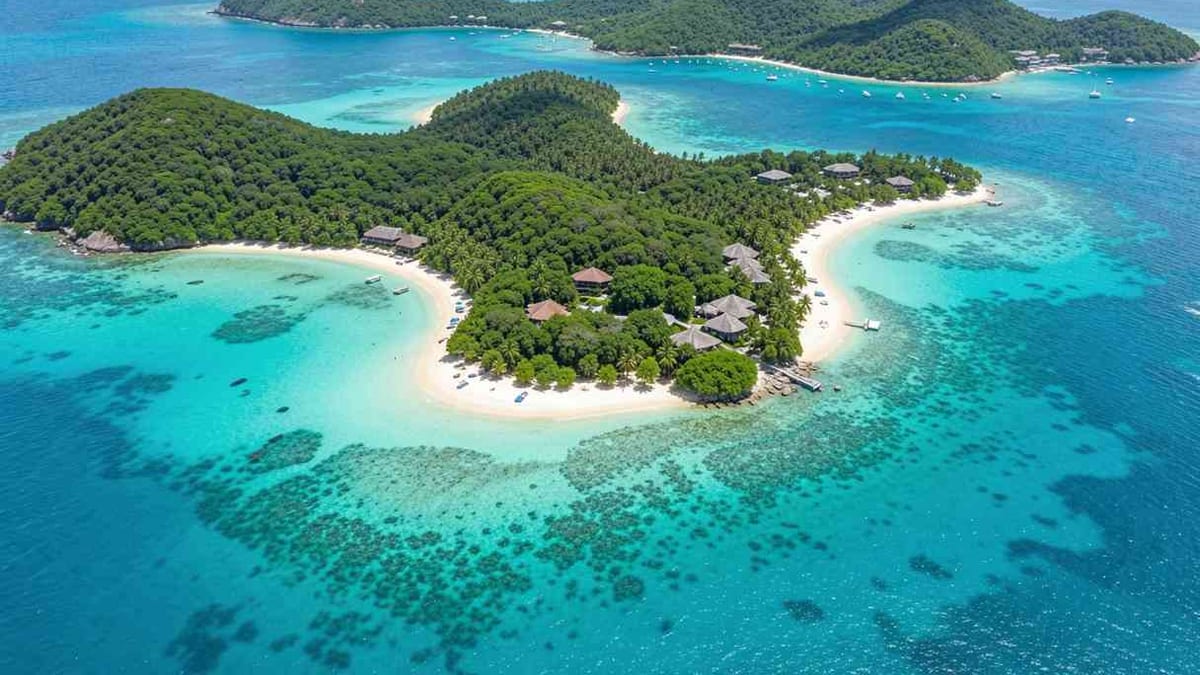
Image by Travel and Tour World – Tourism, Airline, Destination, MICE, Gobal Travel Market, Hotel news that you will find only over here.
Tourism and Fisheries at the Frontline of a Warming Ocean
Tourism and fisheries remain the twin pillars of Seychelles’ economy, underpinning jobs, export earnings and public revenue. Publicly available economic data indicate that visitor spending and tuna processing together account for a large share of gross domestic product and foreign exchange, leaving the country highly exposed to climate shocks in the marine environment.
Climate change is already reshaping those fundamentals. Rising sea temperatures in the western Indian Ocean have contributed to mass coral bleaching episodes since the late 1990s, damaging reef systems that support dive tourism and nearshore fisheries. Research and official assessments for Seychelles describe declines in reef health and changes in fish community structure following major bleaching years, with knock-on effects for catch composition and the appeal of key marine tourism sites.
Recent global analysis of a 2023 to 2025 coral bleaching event suggests that more than three quarters of the world’s reef systems have experienced significant heat stress, with the Indian Ocean among the hardest-hit regions. For Seychelles, where fringing reefs buffer shorelines and help define the postcard image marketed to visitors, the combination of ecological loss and greater coastal vulnerability represents both an environmental and an economic risk.
Fisheries face parallel pressures offshore. Regional studies and technical reports produced for the government point to shifts in tuna distribution in the western Indian Ocean linked to warming currents and ocean-atmosphere cycles. These changes have coincided with periods of lower catch rates for industrial tuna fleets that land and process their catch in Seychelles, raising concerns about the long-term security of a sector that anchors port activity, food security and export earnings.
Rising Seas, Eroding Beaches and At-Risk Infrastructure
Beyond the reefs themselves, Seychelles must contend with rising sea levels and more intense coastal flooding. A significant share of the country’s critical infrastructure, including its main international airport, ports, access roads and resort corridors, lies within a narrow coastal strip. World Bank analysis highlights that this concentration of assets leaves the economy acutely vulnerable to storm surges, shoreline erosion and the creeping impacts of sea-level rise.
Beach erosion is already visible across several of the main tourism islands, affecting hotel frontages and public beaches that are central to Seychelles’ brand as a sun-and-sand destination. Sectoral policy documents for tourism warn that continued shoreline retreat could lower the quality of the visitor experience, reduce room values and raise the cost of maintaining protective structures, especially for smaller, locally owned establishments.
Flooding and drainage problems are also gaining prominence in national adaptation planning. An ecosystem-based adaptation programme supported by international partners has documented increasing flood risk in low-lying coastal settlements and urban areas. That initiative has focused on restoring wetlands, river catchments and vegetated buffers as natural infrastructure designed to absorb heavy rainfall and stormwater, aiming to reduce future reliance on expensive grey infrastructure.
These coastal impacts do not occur in isolation. They intersect with Seychelles’ limited land area and steep topography, which constrain opportunities to relocate infrastructure further inland. The resulting “coastal squeeze” is prompting planners to integrate climate risk into decisions on future tourism developments, transport networks and public facilities, seeking to avoid locking in exposure over the coming decades.
Blue Bonds, Climate Facilities and Coral-Focused Investment
To finance its response, Seychelles is leaning on a mix of domestic reform and international climate finance instruments. In recent years the country has gained attention for issuing the world’s first sovereign blue bond, a debt instrument designed to fund sustainable ocean-based activities, including improved fisheries management, expansion of marine protected areas and pilots in climate-resilient coastal livelihoods.
International financial institutions are now aligning broader country strategies with climate resilience. A country partnership framework adopted by the World Bank Group in 2024 places climate adaptation, coastal protection and a more resilient blue economy at the core of future cooperation. That document highlights the exposure of tourism and fisheries to climate shocks and identifies investments in renewable energy, solid-waste systems and climate-smart infrastructure as priorities to safeguard growth.
Parallel engagement with the International Monetary Fund through an Extended Fund Facility and a Resilience and Sustainability Facility is intended to support macroeconomic stability while creating fiscal space for adaptation. IMF reporting notes that Seychelles faces structural limits to tourism-led expansion and substantial costs to transition toward a climate-resilient growth model, including in marine sectors.
Targeted project funding is also beginning to flow into reef protection and restoration. The Global Fund for Coral Reefs has launched an initiative in Seychelles that seeks to channel private and public capital into businesses and conservation projects built around healthy reefs. The programme aims to generate a pipeline of investments in areas such as reef-friendly tourism, regenerative aquaculture and nature-based coastal defenses, tying commercial returns to the long-term viability of coral ecosystems.
New Policy Frameworks to Green the Tourism Engine
Policy reform is advancing alongside finance. A Sustainable Tourism Policy Framework for 2024 to 2034, recently released by the national tourism administration, places climate risk and environmental carrying capacity at the centre of sector planning. The document underscores that unchecked erosion, coral loss and extreme weather events could undermine Seychelles’ hard-won reputation as a high-value, low-density destination.
The framework promotes diversification within tourism, encouraging investment in niche segments such as eco-lodges, community-based tourism and nature trails that depend less on vulnerable beachfronts. It also emphasizes energy efficiency, low-carbon transport options for visitors and better waste management across accommodation and marine recreation operators, aiming to reduce the sector’s own contribution to climate pressures.
Carrying capacity assessments for fragile sites, including coral-rich marine parks and small islands, are being incorporated into licensing and zoning decisions. According to publicly available planning documents, authorities are exploring tools such as differentiated park fees, concessions tied to environmental performance and voluntary sustainability standards to steer private investment toward lower-impact models.
At the destination-marketing level, Seychelles is increasingly positioning its “blue” credentials as an asset, highlighting conservation measures, protected areas and sustainable seafood in campaigns. The hope is that climate-aware travelers will respond to evidence of concrete action, rewarding operators that invest in reef-friendly practices and low-footprint excursions.
Safeguarding Fisheries and Coastal Communities
For fisheries, the adaptation agenda is equally urgent. Technical reports prepared for the Ministry of Fisheries and its partners point to the risk that further warming may shift the range of key tuna species away from Seychelles-adjacent waters, reducing landings and eroding the competitiveness of onshore processing facilities. Scenarios modelled for the western Indian Ocean suggest that climate-driven changes in productivity and migration could alter the geography of tuna value chains.
In response, national strategies emphasize strengthening monitoring and scientific assessment of tuna stocks, improving the resilience of port infrastructure and enhancing value addition onshore to capture more income per tonne landed. Investment in cold-chain efficiency, renewable power for processing plants and climate-proofed berthing facilities is seen as critical to keeping Seychelles attractive to fleets operating under regional management arrangements.
Closer to shore, small-scale and artisanal fisheries depend heavily on coral-associated species and nearshore habitats vulnerable to bleaching and pollution. Programmes linked to the blue bond and coral finance initiatives are backing community co-management of fishing grounds, gear changes to reduce reef damage and diversification into aquaculture where ecological conditions allow. The intention is to give coastal households more options as traditional catch patterns shift.
Regional cooperation across the western Indian Ocean is another pillar. Through organisations and frameworks focused on the blue economy, Seychelles is working with neighbouring states to improve ocean governance, align marine protected areas and seek joint access to concessional climate funds. The country’s experience with innovative instruments such as debt-for-nature swaps and blue bonds is being cited in regional forums as a potential model for scaling up investment in resilient fisheries and coastal ecosystems.