

More news on this day
Daily nonstop flights between Sharjah and Rome, launching on July 1, 2026, are set to create a powerful new tourism and trade corridor between the United Arab Emirates and Italy, giving Gulf travellers a direct gateway to the Italian capital while opening Sharjah’s cultural attractions to a wider European audience.
What the New Sharjah–Rome Service Offers Travellers
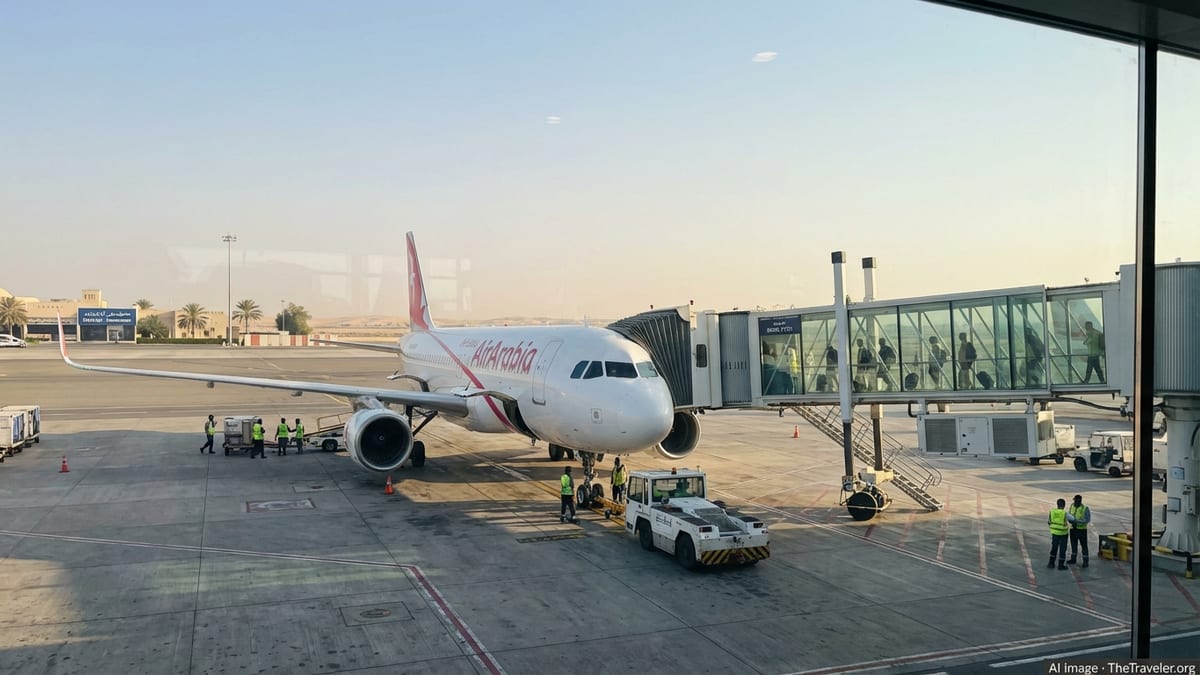
The new route, operated by Air Arabia, will run daily between Sharjah International Airport and Rome Fiumicino, Italy’s busiest international gateway. From July 1, 2026, the low-cost carrier will offer nonstop connectivity where only one-stop options via hubs such as Istanbul, Doha or Cairo were previously available, significantly cutting total journey times and simplifying itineraries for both UAE-based and Italian travellers.
The flights will be operated by Airbus A320neo aircraft, part of Air Arabia’s latest-generation narrowbody fleet. The type is known for improved fuel efficiency and reduced emissions compared with previous models, alongside a quieter cabin and refreshed interiors. For passengers, this translates into a more comfortable ride, while for the airline it supports competitive fares that are likely to appeal to budget-conscious leisure travellers and visiting friends-and-relatives traffic.
Operational details released by the airline outline a split schedule designed to maximise connectivity. On some days, flights will depart Sharjah in the morning and arrive in Rome around midday, while on alternate days an afternoon departure from the UAE will reach the Italian capital in the evening. Return services from Rome mirror this pattern, ensuring that a daily option is available in each direction and that connections can be timed with onward European and regional flights.
Rome becomes Air Arabia’s second Italian destination from Sharjah, joining the existing Milan Bergamo service launched in late 2022. Together, the two routes give UAE travellers direct access to both the country’s financial heart in the north and its political and cultural capital in the centre, while providing Italian visitors with a choice of gateways into the Gulf.
A New Tourism Bridge Between the UAE and Italy
Tourism officials and aviation executives on both sides see the Sharjah–Rome link as more than just another route on the map. For Italy, the daily service slots neatly into a broader push to attract high-spending visitors from the Gulf, tapping demand for city breaks, cultural tourism, designer shopping and coastal escapes that stretch well beyond the traditional summer high season.
Rome’s role as a gateway is central to this strategy. From Fiumicino, travellers arriving from Sharjah will be able to disperse quickly to other parts of Italy, from Tuscan hill towns and Amalfi Coast resorts to northern lakes and Dolomite ski areas, as well as to neighbouring countries across the European Union. The arrival timings of the new service have been structured to support onward connections on both full-service and low-cost European carriers.
For the UAE, the route strengthens Sharjah’s positioning alongside Dubai and Abu Dhabi as a distinct tourism and transit hub. The emirate has invested heavily in cultural and eco-tourism, with attractions ranging from museums and restored heritage districts to desert retreats and mangrove reserves. Direct access from Rome is expected to support not only leisure visitors but also school groups, cultural delegations and niche segments such as archaeology enthusiasts and art lovers.
Religious and heritage tourism flows are also likely to benefit. The link connects two cities rich in spiritual and historical significance: Rome, with its Vatican and millennia of classical history, and Sharjah, often described as the cultural capital of the UAE. Travel planners anticipate new itinerary combinations that pair Italian pilgrimage or city-heritage tours with Gulf museum circuits and desert experiences in a single trip.
Economic Upside: From Trade Missions to MICE Travel
Beyond leisure, industry analysts say the daily service could act as a catalyst for deeper economic and business ties between the UAE and Italy. Regular nonstop flights are a critical factor in attracting trade missions, corporate investment and conference organisers, particularly in sectors such as energy, logistics, design, fashion and advanced manufacturing, where both countries have established strengths.
For small and medium-sized enterprises, the availability of a daily low-cost connection between Sharjah and Rome reduces barriers to face-to-face meetings and market exploration. Italian exporters looking at Gulf Cooperation Council markets gain easier access not just to Sharjah, but via ground and short-haul air links to the wider UAE and beyond. Similarly, UAE-based firms can reach Italy’s capital for negotiations, exhibitions and trade fairs without routing through a third-country hub.
The meetings, incentives, conferences and exhibitions segment, known as MICE, is expected to be an early winner. Event planners can now consider Rome–Sharjah twin-centre programmes and design incentive trips that move seamlessly between European and Gulf destinations on fixed daily schedules. Aviation observers also point to the potential for niche traffic such as academic cooperation, joint research projects and cultural festivals, all of which rely on predictable, year-round air links.
The use of the fuel-efficient A320neo on the route may also help corporate travellers working to meet decarbonisation targets. While aviation remains a significant source of emissions, airlines and their business clients increasingly differentiate between older and newer aircraft types when planning travel policies, and the deployment of newer jets can factor into sustainability reporting.
How the Route Fits Into Air Arabia’s European Strategy
The Sharjah–Rome launch is the latest step in Air Arabia’s methodical expansion into Europe. From its Sharjah hub, the carrier already links the UAE to a growing list of European cities, including Milan Bergamo, Athens, Vienna, Prague and Warsaw. Rome adds another major capital and a high-profile tourism destination to this network, reinforcing the airline’s ambition to be a key connector between the Middle East and the continent.
By selecting Fiumicino, Air Arabia is anchoring its Italian presence at a primary hub with strong onward connectivity, rather than focusing solely on secondary airports. This should raise its visibility among European travellers who may be less familiar with the carrier but are increasingly open to combining low-cost and full-service airlines in a single trip, especially as booking platforms highlight mixed-itinerary options.
For Air Arabia’s core customer base in the Middle East, North Africa and South Asia, Rome offers a compelling new leisure choice alongside existing European options. Travellers who may previously have flown into Milan and then taken trains south, or connected via a Gulf mega-hub on another carrier, can now opt for a direct arrival in the Italian capital. Travel agents in the region are expected to respond with new package holidays, weekend city-breaks and family itineraries built around the daily service.
Industry watchers note that the move also fits a broader pattern of mid-sized Gulf carriers carving out clearly defined niches in the Europe market, complementing rather than directly mimicking the scale and network breadth of larger rivals. In Air Arabia’s case, the focus remains on point-to-point routes with competitive fares, lean operations and ancillary services such as paid seat selection and onboard dining.
Planning Your Trip: Key Details for 2026 Travellers
With the first flight set for July 1, 2026, travellers have time to plan ahead and monitor introductory fare promotions. As with many new routes, early-booking deals are likely to appear as the airline builds demand on both sides. Travel advisors recommend that passengers looking at peak European summer dates secure tickets well in advance, particularly for school holiday periods when demand for Italy soars across the Gulf.
The split schedule, with morning and afternoon departures on different days of the week, will allow travellers to choose timings that best match their onward plans. Those connecting beyond Rome into other parts of Italy or Europe may prefer midday arrivals that sync with afternoon rail and short-haul flight departures, while UAE-based residents returning from Italy may opt for late-evening Sharjah arrivals that allow a full final day in Rome before flying.
From a practical standpoint, the move to daily nonstop services simplifies visa planning and itinerary design. Travellers can now build flexible trip lengths without being constrained by limited operating days or complex transit routings. For aviation enthusiasts and frequent flyers, the deployment of the A320neo on the route also offers a chance to experience the latest generation of single-aisle aircraft on a medium-haul sector linking two culturally rich cities.
As July 2026 approaches, the Sharjah–Rome daily flights are expected to become a bellwether for how mid-market Gulf carriers can reshape regional tourism flows. If demand meets expectations, the route could encourage additional capacity, seasonal frequency boosts or even new city pairs linking secondary European destinations with Sharjah, widening the UAE–Europe tourism bridge still further.