

More news on this day
U.S. tourists in some of Mexico’s most popular beach destinations, including Puerto Vallarta and Cancun, are facing unprecedented disruption after the U.S. government expanded a shelter-in-place advisory in response to the killing of a powerful cartel leader, triggering road blockades, flight cancellations and suspended ground transport across multiple states.
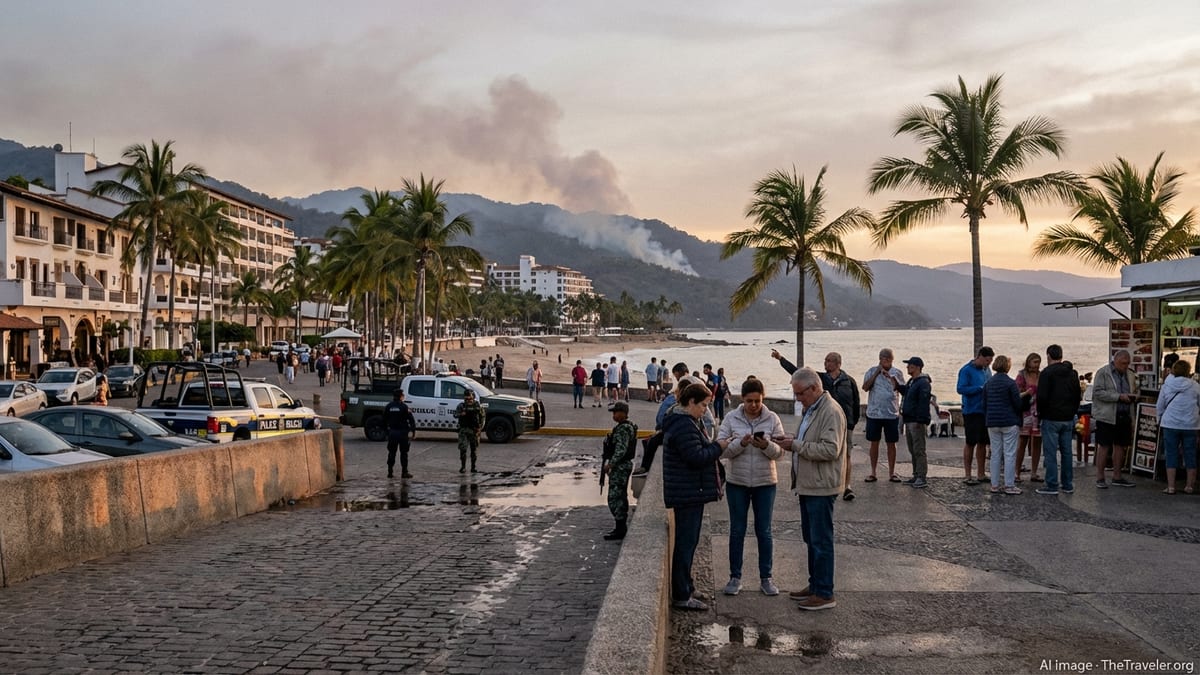
Security Alert Widens After Death of Jalisco Cartel Leader
The alert, issued over the weekend and updated on February 23, follows a Mexican military operation in Jalisco that killed Nemesio Rubén Oseguera Cervantes, known as El Mencho, the elusive head of the Jalisco New Generation Cartel. In the hours after the raid, criminal groups reportedly torched vehicles and blocked highways in and around Puerto Vallarta and Guadalajara, tactics long used to hinder security forces and sow fear among civilians.
Initially focused on Jalisco and a handful of neighboring states, the advisory has since been broadened to cover a wide swath of Mexico, including Quintana Roo, home to Cancun, Playa del Carmen, Cozumel and Tulum. U.S. officials have urged citizens in affected areas to remain inside, avoid crowds and steer clear of any law enforcement activity until further notice, warning of ongoing security operations and unpredictable flashpoints of violence.
The current guidance stops short of a blanket ban on travel to Mexico but signals a sharp escalation in concern about the short term fallout from the cartel leader’s death. It also comes just weeks before the peak spring break period, when hundreds of thousands of U.S. travelers traditionally flock to Mexican beach resorts, heightening the stakes for tourists, local communities and the broader tourism economy.
Puerto Vallarta Locked Down as Flights Cancel and Rideshares Halt
Puerto Vallarta, a major resort city on Jalisco’s Pacific coast, has emerged as one of the epicenters of the disruption. Authorities reported burning vehicles and road blockages on key routes leading to the city and its international airport. The U.S. Embassy and Consulates in Mexico said most domestic and international flights in and out of Puerto Vallarta and Guadalajara were canceled as road access to airport facilities became difficult or unsafe for staff and passengers.
Several major North American carriers, including United, Alaska, Delta and American, issued travel advisories or temporarily halted service to Puerto Vallarta as the situation unfolded, citing civil unrest and security concerns. Travelers already in the destination described quiet streets, shuttered shops and a strong security presence, even as hotel zones along the bay remained relatively calm and insulated from the worst of the blockades.
Local transport has also been severely affected. U.S. officials said all taxis and rideshare services in Puerto Vallarta have been suspended for now, complicating movement between hotels, beaches and the airport. Some local businesses have opted to close voluntarily as a precaution, adding to the sense of a tourism city partially frozen in place while authorities work to restore order.
Cancun and Quintana Roo Added to Advisory as Concern Grows
On the Caribbean coast, the expansion of the alert to Quintana Roo has put Cancun and its neighboring resort hubs on edge, even though the most dramatic images of burning roadblocks have so far emerged from Jalisco and western Mexico. The updated guidance lists Cancun, Cozumel, Playa del Carmen and Tulum among the locations where U.S. citizens are urged to shelter in place and limit unnecessary movement amid ongoing security operations.
Local authorities in Quintana Roo have emphasized that daily life in many tourist zones continues, with hotels and resorts remaining open and major beaches still accessible. However, the U.S. warning underscores concern that retaliatory or copycat unrest could emerge in other cartel contested regions, or that security operations could widen beyond Jalisco as Mexican forces pursue remaining leadership figures.
The advisory has created new uncertainty for travelers with imminent trips to Cancun and the Riviera Maya. While airports there have not seen the level of cancellations reported in Puerto Vallarta and Guadalajara, airlines and tour operators are monitoring the situation closely, with some offering free itinerary changes or waivers for passengers who prefer to postpone.
Travel Disruptions Ripple Across Mexico’s Tourism Sector
The fallout from the military operation is rippling through Mexico’s wider travel industry. In addition to Jalisco and Quintana Roo, the U.S. government has highlighted Baja California, Sinaloa, Oaxaca, Puebla, Querétaro, San Luis Potosí, Veracruz, Zacatecas and parts of Michoacán, Guerrero, Nuevo León and Tamaulipas as areas of concern linked to security operations and criminal activity.
For airlines, tour companies and cruise lines, the timing could not be more sensitive. Puerto Vallarta is a staple call on Mexican Riviera cruise itineraries, and some ships have already adjusted routes or skipped port calls as images of smoke rising near the city circulated on social media. Travel advisors report a spike in calls from worried clients, many asking whether they should cancel or reroute upcoming vacations to Mexican beach destinations.
Tourism officials in affected states have sought to project calm, noting that violence has largely targeted infrastructure and security forces rather than tourists. Still, the sight of roadblocks, burning vehicles and heavily armed patrols on or near key access routes is denting perceptions of safety, particularly among first time visitors or families considering Mexico for spring break travel.
What Travelers in Mexico and Future Visitors Should Do Now
For travelers already in Puerto Vallarta, Cancun, Jalisco or other areas named in the advisory, authorities stress that sheltering in place in a secure location, such as a hotel or resort, remains the primary recommendation. Visitors are being urged to avoid unnecessary trips off property, to stay away from demonstrations or security cordons, and to maintain regular communication with family and friends about their whereabouts.
Tourists are also being advised to stay in close contact with their airline or cruise line, which will have the latest information on schedule changes, alternative routes and rebooking options. Given reports of blocked highways and suspended taxis and rideshares in parts of Jalisco, reaching an airport or bus terminal may be challenging until authorities confirm that access roads are safe and unobstructed.
For those with upcoming trips in the next several days, travel experts recommend monitoring official alerts and local news closely and reviewing the flexibility of bookings. Many carriers and package operators are allowing date changes without penalties for affected routes, while some travelers are opting to delay vacations until the security situation stabilizes and movement restrictions are lifted.
While Mexican federal and state officials say the unrest is concentrated in certain regions and that most of the country is functioning normally, the heightened alert highlights how swiftly conditions can change after a major cartel operation. For visitors heading to Puerto Vallarta, Cancun or elsewhere in Jalisco and Quintana Roo, careful planning and up to date information will be essential in the days ahead.