

More news on this day
As Cambodia resets its tourism strategy after years of disruption, Siem Reap is emerging as a test case for how the country can move beyond Angkor Wat and build a more diversified, resilient visitor economy by 2026.
Get the latest news straight to your inbox!
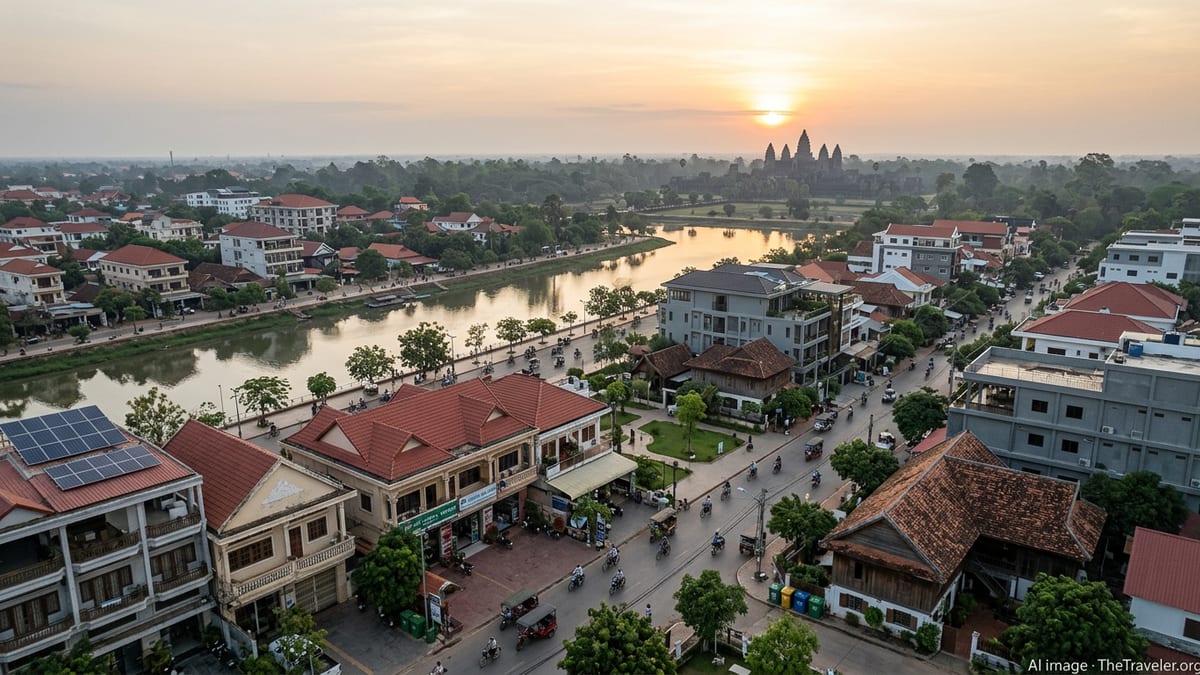
A Post-Pandemic Pivot for Cambodia’s Tourism Hub
Siem Reap has long lived in the shadow of Angkor Archaeological Park, drawing millions of visitors whose itineraries rarely extend beyond sunrise at Angkor Wat and a night on Pub Street. Publicly available data shows that tourism revenue nationwide reached more than 3.6 billion dollars in 2024 as international arrivals climbed, yet analysts note that stays in Siem Reap remain short and heavily temple focused. This dependence has left the city exposed to shocks, from the pandemic downturn to regional border tensions that disrupted overland flows of visitors in late 2025.
According to recent sector overviews, domestic travel to Siem Reap softened in early 2025, while coastal and ecotourism areas gained ground, underlining the urgency for the city to refresh its proposition. Local hospitality assessments point to a rapid expansion of hotel capacity and a growing gap between beds available and nights actually booked. Industry commentary suggests that extending the average length of stay through new cultural, nature and lifestyle products is now central to Siem Reap’s role in Cambodia’s wider tourism recovery.
This recalibration is taking place as Cambodia targets higher value, more sustainable tourism. Regional reports describe efforts to reposition the country as a green and cultural destination rather than a purely budget stopover. With its mix of heritage, creative industries and access to Tonle Sap and Phnom Kulen, Siem Reap is being framed as the nucleus of that shift, provided it can move from being just a gateway to Angkor toward becoming a standalone destination.
Master Plans, Smart City Ambitions and New Airports
The Tourism Development Master Plan for Siem Reap 2021 to 2035, published in English translation, outlines a long term vision that stretches well beyond the temple complex. The document sets goals to develop Siem Reap as a clean, green city, expand riverfront tourism, improve urban public spaces and integrate smart technologies such as waste management systems in tourist zones. It also positions Siem Reap as a testing ground for new destination branding built around culture, creativity and responsible travel.
One of the most visible changes has been in air connectivity. The Chinese financed Siem Reap Angkor International Airport began operations in 2023 around 40 kilometers from the temples, replacing the older airfield closer to town. Aviation and tourism coverage describes the facility as designed to handle larger aircraft and rising passenger numbers, linking Siem Reap more directly with regional markets in East Asia and beyond. The new Phnom Penh Techo International Airport, which opened in 2025, is expected to complement this by improving domestic and international routing through the capital.
Property and infrastructure analysis highlights plans for a so called Grand Siem Reap smart city zone near the new airport, incorporating mixed use developments, resorts and eco oriented residential areas. Investors promoting these projects emphasize environmental design and community engagement, portraying them as part of a broader move toward ethically led tourism. Observers also point to initiatives along the Siem Reap River to create green corridors, cycling paths and public spaces that could encourage visitors to spend more time in the city itself rather than commuting in and out solely for temple visits.
Beyond Angkor: Culture, Creativity and Nightlife Reinvented
As Angkor absorbs the bulk of arrivals, a growing share of promotional material and independent travel coverage is turning to the city’s cultural and creative scene. Long running craft institutions such as Artisans Angkor, which trains hundreds of craftspeople in stone carving, silk weaving and lacquer work, have become anchors for itineraries focused on living heritage. Newer galleries, design boutiques and handicraft markets are marketed as ways for visitors to support local artisans while discovering contemporary Khmer aesthetics.
Tourism guides for 2025 spotlight fresh attractions in and around Siem Reap, from expanded city tours that map street art and food alleys to curated night markets that prioritize verified local producers. Commentators note that the traditional backpacker orientation of Pub Street is gradually being supplemented by more diverse nightlife zones, including riverside venues, live music spaces and family friendly night markets designed to extend evening spending without relying solely on bar culture.
The creative industries are also gaining prominence in national tourism messaging. Regional cultural festival programs emphasize Cambodian film, fashion and performance, with Siem Reap positioned as a natural stage given its heritage appeal and growing stock of mid to high range hotels. Travel planners suggest that pairing festivals and conferences with temple visits could attract new segments, from regional weekenders to international delegates, and help smooth demand beyond the peak cool season months.
Green Corridors, Ecotourism and Life Around Tonle Sap
Environmental and conservation oriented tourism is another pillar of Cambodia’s plans, and Siem Reap stands at the junction of several flagship landscapes. Development initiatives described in regional trade publications focus on the Cardamom Mountains Tonle Sap corridor, which links Southeast Asia’s largest remaining rainforest with the vast lake system that defines much of central Cambodia. Phnom Kulen National Park in Siem Reap province, already popular for sacred sites and waterfalls, is seeing the addition of marked eco trails and community managed experiences that seek to balance access with protection.
Within the province, ethical tourism platforms encourage visitors to engage with butterfly centers, wildlife sanctuaries and agro tourism projects that channel income into conservation and rural livelihoods. These experiences typically promote small group sizes, locally owned guiding services and codes of conduct designed to minimize cultural and environmental impact. Commentators argue that if such models scale carefully, they could provide an alternative to mass coach tours while still delivering significant economic benefits.
Tonle Sap itself remains both an opportunity and a challenge. Reports on climate vulnerability warn that changing water levels, overfishing and pollution threaten the lake’s long term viability. Some community based tourism programs around floating and stilted villages are being reframed to avoid intrusive voyeurism, with operators encouraged to prioritize education, environmental storytelling and direct support for local infrastructure. As Cambodia refines national tourism policies, the degree to which Tonle Sap experiences are redesigned along these lines will be a key indicator of whether sustainability commitments translate into concrete change.
Managing Risk and Reimagining Cambodia’s Tourism Future
The events of 2025 underscored how fragile a tourism dependent economy can be. Travel trade reporting on border closures and advisories linked to tensions with Thailand detailed sharp drops in visitor numbers to Siem Reap, particularly among overland travelers. Analysts commenting on these disruptions argue that Cambodia’s reliance on a narrow set of gateways and a single anchor attraction left destinations like Siem Reap acutely vulnerable to external shocks.
Policy documents and industry commentary now emphasize diversification as a form of risk management. In practice, that means building stronger air links from a variety of markets, developing secondary products in culture and nature, and encouraging domestic tourism that can partially cushion international volatility. Efforts to lengthen stays in Siem Reap by promoting workshops, culinary experiences and regional excursions are presented as part of this strategy, broadening both the geographic and thematic spread of tourism activity.
Looking toward 2026, Siem Reap’s trajectory is widely viewed as a bellwether for Cambodia’s broader tourism transition. If the city succeeds in tying its future to smart urban planning, creative industries and green landscapes from Phnom Kulen to Tonle Sap, it may demonstrate how a destination built around a single world famous monument can evolve. For now, the contours of that shift are visible in master plans, new airports and a growing array of experiences beyond the temple walls, offering a preview of how Cambodia aims to redefine its place on the regional travel map.