

More news on this day
Singapore Airlines is being swept into a mounting wave of flight disruption across Asia this April, as bad weather, airspace detours and volcanic ash compound existing strains on the region’s aviation network.
Get the latest news straight to your inbox!
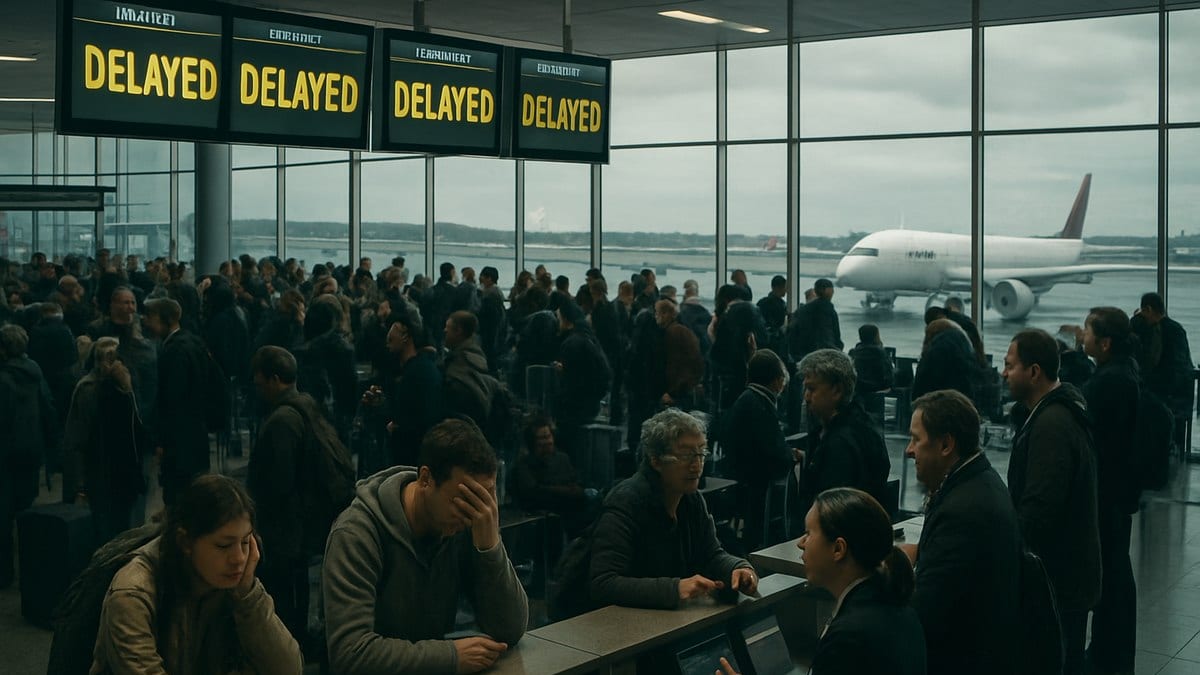
Flag Carrier Feels Impact at Key Asian Hubs
Published coverage indicates that the early weeks of April 2026 have brought a sharp rise in delays and cancellations across major Asian hubs, including Singapore Changi, Hong Kong, Tokyo Haneda and Seoul Incheon. Singapore Airlines, which relies heavily on smooth hub operations and tight aircraft rotations, has increasingly been caught in the knock-on effects of this regional turbulence.
Reports from aviation data providers and industry outlets describe hundreds of cancellations and several thousand delays recorded in recent days across Asia, with weather systems and air traffic flow restrictions slowing movements at multiple airports. For an airline built around precise long haul and regional connections, even short ground holds can quickly ripple through the schedule.
At Singapore Changi, publicly available airport data and travel reports point to clusters of disrupted departures and arrivals, particularly on days of heavy showers and reduced visibility. When combined with late inbound aircraft from Europe and the Middle East that are now flying longer routings to avoid sensitive airspace, Singapore Airlines has had less margin to recover its timetable.
Travel forums and passenger accounts referencing April departures on the carrier show a growing pattern of last minute retimings, aircraft swaps and rebookings onto later flights. While the overall operation remains far from a full breakdown, the experience for many travelers this month has involved longer airport waits and unexpected overnight stays.
Capacity Cuts Meet Sudden Operational Shocks
Singapore Airlines entered April having already trimmed capacity on selected routes. A recent schedule update published by the airline shows targeted cancellations across parts of its South West Pacific and other networks through the second quarter, reflecting a strategy to align supply with demand and manage cost pressures.
Those planned reductions have intersected awkwardly with unplanned shocks. A wave of regional disruption linked to storms in East Asia, strong winds and low visibility in parts of China and Japan, and congestion tied to rerouted long haul traffic has reduced the availability of spare aircraft and crews. With some frequencies already removed from the timetable, the room to absorb further irregular operations has narrowed.
Industry analysts cited in financial and aviation trade coverage note that Singapore Airlines has also been navigating higher operating costs and a more competitive marketplace, even as it works to keep premium service levels intact. When large scale weather or airspace events hit, such underlying pressures can make rapid recovery more difficult, particularly on complex multi sector itineraries.
For passengers, the interaction between planned capacity cuts and sudden operational shocks is most visible in full flights and limited rebooking options. Travelers misconnecting in Singapore this April are in some cases finding that alternative departures on the same day are already booked close to capacity, pushing reaccommodation into the following day or onto partner airlines.
Volcanic Ash and Detours Add New Strain
The April turmoil has not been driven by weather alone. Recent eruptions in parts of Indonesia have produced volcanic ash clouds that forced temporary airspace closures and airport shutdowns, particularly around Bali and eastern Indonesian gateways. In such conditions, airlines typically divert or cancel flights to avoid ash, which can damage engines and cockpit systems.
According to recent travel industry reports, Singapore Airlines has joined other regional and Australian carriers in cancelling or rescheduling selected services on Bali related routes when ash levels have risen. Even a small number of cancellations at a busy leisure destination can create operational bottlenecks, as aircraft and crews end up out of position for onward sectors.
At the same time, airspace constraints tied to geopolitical tensions in parts of the Middle East have lengthened flight times between Europe and Asia for many airlines. Travel advisories and consumer guidance published this month highlight that some long haul services are now being routed further south or around restricted areas, increasing flight duration and fuel burn.
For Singapore Airlines, these detours can reduce schedule resilience for long haul aircraft that connect into dense regional banks at Changi. When an inbound service from Europe arrives late after a longer routing, its onward flight to North Asia or Australia may face a cascading delay, or in some cases a last minute aircraft reassignment that triggers disruption elsewhere in the network.
Passengers Juggle Rebookings, Refunds and Reroutes
On the ground, the widening April disruption has translated into crowded customer service desks and busy digital channels across the region. Guidance from online travel agencies and fare comparison platforms this week urges passengers flying in Asia to monitor booking status closely, highlighting Singapore Airlines among the major carriers experiencing irregular operations.
Publicly available information from airlines and travel intermediaries indicates that standard options such as free date changes, alternative routings and, in some cases, refunds are being offered when flights are significantly delayed or cancelled. However, with so many carriers affected at once, spare seats are limited, especially on peak weekend departures and popular holiday routes.
User posts on travel forums and social media referencing Singapore Airlines in early April describe a mixed experience. Some travelers report relatively smooth rebookings onto later services or partner airlines, while others highlight long waits for assistance during peak disruption periods. These accounts mirror a broader regional picture in which customer outcomes vary widely depending on timing, route and fare conditions.
Consumer advocates quoted in recent commentary have encouraged travelers to keep documentation of delay notices, boarding passes and receipts for essential expenses such as accommodation and meals, in case reimbursement is available under airline policies or travel insurance. For those with tight connections or onward cruises and tours, the advice is to build in longer buffers where possible during this volatile period.
Outlook for the Remainder of April
Looking ahead to the rest of April, operational data and meteorological outlooks suggest that Asia’s aviation system is likely to remain under strain, even if the most acute disruption eases. Seasonal weather patterns, continued airspace complexities and the lingering impact of earlier delays mean that airlines, including Singapore Airlines, may need several weeks to fully normalize their schedules.
Aviation planners interviewed in trade coverage point out that recovery is not only about clearing a single day’s backlog. Aircraft maintenance slots, crew duty limits and airport capacity constraints all interact with earlier disruption, which can leave fragile points in the network for some time. For a hub focused carrier such as Singapore Airlines, careful management of connection banks and standby capacity will be crucial.
For travelers considering trips through Singapore and other major Asian hubs this month, the emerging guidance from travel industry sources is to remain flexible. Booking slightly longer connection times, avoiding the last flight of the day where possible and checking flight status regularly in the 24 hours before departure are among the practical steps that can reduce risk.
Singapore Airlines, like its regional peers, is navigating a difficult start to the second quarter, shaped by forces largely outside its direct control. The degree to which it can shield passengers from further disruption in the coming weeks will depend not only on its own contingency planning, but also on how quickly Asia’s broader air traffic system stabilizes.