

More news on this day
Singapore Airlines is set to resume passenger flights between Singapore and Hangzhou in June 2026 after a 28-year hiatus, a move that highlights rapidly strengthening air connectivity and travel demand between Singapore and mainland China.
Get the latest news straight to your inbox!
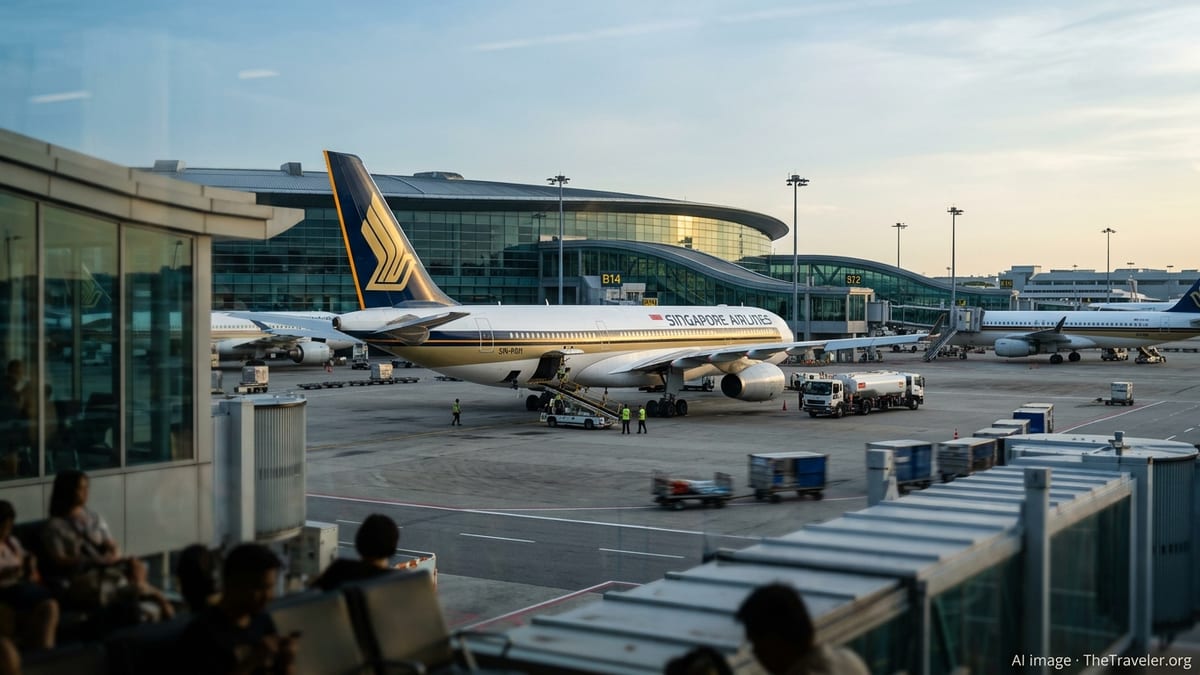
Historic Route Returns After Nearly Three Decades
According to publicly available scheduling information, Singapore Airlines plans to reintroduce nonstop services between Singapore Changi Airport and Hangzhou Xiaoshan International Airport from June 2026. Industry data and media coverage indicate that the carrier last operated its own mainline flights on the route in the late 1990s, meaning the restart will come roughly 28 years after the service was withdrawn.
The Hangzhou relaunch adds another major city in the Yangtze River Delta to the airline’s China network, complementing existing links to hubs such as Shanghai and other key mainland gateways. The development is being viewed in the aviation sector as a symbolic milestone in the normalization and deepening of travel flows between Singapore and China following the shocks of the pandemic years.
Hangzhou, capital of Zhejiang province and a leading technology and tourism centre, has grown significantly since Singapore Airlines last served the route. The restored connection is expected to offer passengers a direct premium option to one of eastern China’s most dynamic urban economies, reducing the need for connections through other Chinese or regional hubs.
Singapore–China Connectivity Strengthens On Multiple Fronts
The decision to return to Hangzhou comes amid a broader upswing in air links between Singapore and China. In recent traffic reports, Changi Airport has identified mainland China as its single largest passenger market, with volumes surpassing pre-pandemic levels and outpacing other top markets in growth. These trends point to a strong recovery in both business and leisure travel between the two economies.
Over the past two years, a succession of route launches and resumptions by Singapore Airlines, its low-cost subsidiary Scoot, and Chinese carriers has rebuilt a dense network between Singapore and major Chinese cities. Publicly available airline schedules show that services now cover multiple points across the mainland, from coastal economic hubs to interior provincial capitals.
At the policy level, Singapore and China have also taken steps to ease people-to-people exchanges. Recent bilateral developments, including expanded visa facilitation measures and the wider use of automated border clearance systems in Singapore for foreign visitors, have collectively lowered barriers to short-term travel. These measures provide a supportive backdrop for airlines expanding their China capacity.
Changi Airport Rides Wave of Post-Pandemic Recovery
The Hangzhou announcement aligns with Changi Airport’s broader recovery trajectory. Official traffic statistics reported in Singaporean and regional business media show that the airport handled about 67 to 70 million passengers in 2024 and 2025, effectively returning to, and in some periods surpassing, pre‑2019 levels. China has consistently featured as Changi’s top or among its top passenger markets during this rebound.
Sector analyses describe Changi as a key beneficiary of revived Asia–Pacific travel, particularly on routes connecting Southeast Asia with greater China. Increased frequencies by full-service and low-cost carriers, combined with new destinations, have contributed to a steady climb in passenger movements through the hub’s four operating terminals.
Looking ahead, longer-term infrastructure projects such as the planned Terminal 5 and associated runway developments are expected to further expand capacity. Aviation commentators note that renewed links like Singapore Airlines’ Hangzhou service can help sustain momentum in passenger growth, reinforce Changi’s role as a gateway to China, and support the airport’s case for continued investment.
Economic and Tourism Implications for Singapore and Zhejiang
Industry observers see the route’s revival as carrying implications that go beyond point‑to‑point traffic. Hangzhou is home to major digital economy players, advanced manufacturing clusters and a thriving start‑up scene, while Singapore remains a leading financial and logistics centre for Southeast Asia. A nonstop premium service between the two cities is expected to facilitate executive travel, cross‑border project work and investment‑related visits.
On the tourism front, direct flights typically stimulate new itineraries by reducing total travel time and eliminating transfers. Travel trade commentary suggests that Singapore‑based travellers could increasingly combine Hangzhou with nearby destinations in Zhejiang and the Yangtze River Delta, while Chinese visitors gain easier access to Singapore’s attractions as well as its onward links across Southeast Asia.
Higher visitor volumes generally translate into benefits for hotels, retail, meetings and events, and related services. For Zhejiang, improved access to Singapore may support efforts to attract more international conferences and high‑value tourism, while Singapore stands to gain from additional arrivals from China’s affluent eastern seaboard.
Competitive Landscape and Traveller Choices
The return of Singapore Airlines to Hangzhou adds competitive pressure to a market already served by Chinese carriers and, in some cases, low‑cost operators through nearby airports. Public data on airline schedules show that Hangzhou has existing links to Southeast Asia and other global regions, with Chinese airlines and regional players vying for passengers on both price and connectivity.
By re‑entering the city with a full‑service product, Singapore Airlines is positioning itself to capture travellers who prioritise schedule reliability, premium onboard services and seamless connections via Changi to long‑haul destinations in Europe, Australia and South Asia. At the same time, passengers will likely continue to evaluate alternatives through larger Chinese hubs such as Shanghai, where frequencies and fare options may be broader.
Analysts note that the balance between full‑service and low‑cost capacity on China routes out of Singapore remains fluid, influenced by macroeconomic conditions, fuel prices and evolving demand from both leisure and corporate segments. The Hangzhou restart, after a 28‑year gap, illustrates how network planners are recalibrating their China strategies as the market enters a new phase of post‑pandemic normalization and growth.