

More news on this day
Singapore Airlines has been pulled into an escalating wave of flight delays and cancellations across Asia, as mounting operational bottlenecks and weather-related constraints disrupt travel at key regional hubs.
Get the latest news straight to your inbox!
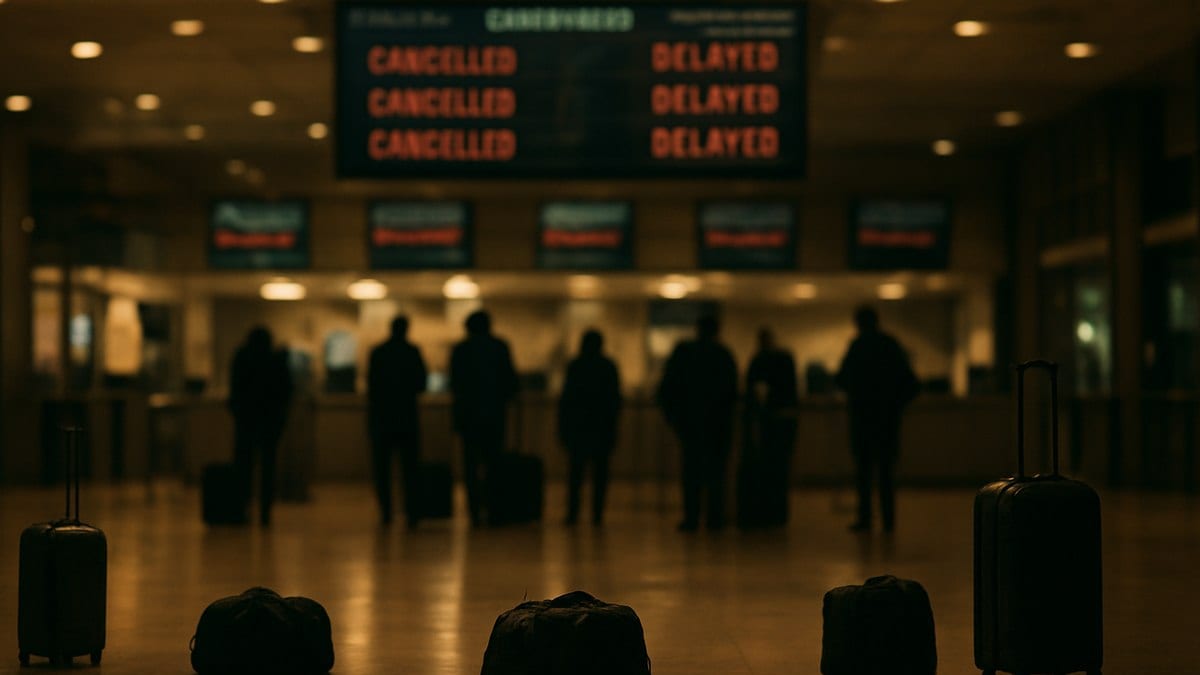
Regional Turbulence Spreads Across Asia’s Skies
Published data on Asia’s aviation networks indicates that the region is experiencing a sharp spike in same-day delays and cancellations, with disruption now affecting major hubs from Singapore and Bangkok to Beijing, Tokyo and Dubai. Recent tallies point to thousands of delayed services and hundreds of cancellations in a single day, underscoring how fragile schedules have become amid heavy traffic and tight capacity.
Reports on 12 April show that airports across China, Indonesia, Hong Kong, Singapore, Malaysia and Thailand have been particularly affected, with congestion rippling through Beijing, Shanghai, Guangzhou, Shenzhen, Chengdu, Jakarta, Hong Kong, Singapore, Kuala Lumpur, Bangkok and Phuket. Operational bottlenecks, severe weather in some markets and overstretched ground and air traffic resources are contributing to rolling knock-on effects.
The pattern follows several consecutive days of elevated disruption. Earlier figures for the region highlighted more than 4,000 delays and close to 200 cancellations in a 24 hour period, affecting airports in Singapore, Tokyo, Dubai and several major Chinese and Indian cities. This sequence has created an environment in which even small schedule mismatches can quickly cascade into wider network issues.
For travellers, the practical impact is immediate: longer queues at check in and security, extended aircraft holding times on the ground and in the air, missed connections and a scramble for rebookings at already busy customer service desks. The growing number of affected carriers and hubs suggests that the problem has moved beyond isolated incidents to a broader regional stress test.
Singapore Airlines Pulled Into the Meltdown
Within this volatile backdrop, Singapore Airlines has emerged among the carriers now feeling the strain. Industry-focused coverage lists the flag carrier alongside Emirates, Qatar Airways, Cathay Pacific, China Eastern, IndiGo, Batik Air, Etihad and others as part of a widening web of disruption that has left thousands of passengers stranded or significantly delayed across Asia.
Singapore’s Changi Airport, one of the region’s most important connecting hubs, has recorded both cancellations and a high number of delays over recent days, according to operational snapshots compiled by travel news outlets. While the majority of flights continue to operate, the cumulative effect of even a modest proportion of disrupted services is enough to produce crowding around departure gates and customer service counters.
Publicly available tracking data shows that when aircraft and crew arrive late into Changi from heavily disrupted airports such as those in China, Japan or the Middle East, subsequent departures are forced into later slots, tightening already narrow turnaround windows. For a network carrier like Singapore Airlines, which relies heavily on coordinated waves of arrivals and departures to feed long haul connections, this adds complexity to schedule recovery.
Travel industry reports indicate that the airline is contending with the same constraints facing its regional peers: limited spare aircraft, leaner staffing levels following the pandemic years and air traffic control capacity that has not always kept pace with Asia’s rapid traffic rebound. These structural limits reduce the options available when irregular operations stretch across multiple days.
Causes Range from Weather to Capacity and Geopolitics
The current spike in Asia flight disruption does not stem from a single cause. Published analyses point to a combination of factors, including seasonal storms and adverse weather patterns in parts of East and Southeast Asia, which have forced temporary airspace restrictions and slower traffic flows. Such conditions often trigger holding patterns, diversions or cancellations that reverberate through airline networks.
At the same time, many airports and carriers are still recalibrating after the post pandemic demand surge. Capacity has returned unevenly, with some airlines and hubs operating close to their limits during peak travel periods. This leaves little slack in the system when technical issues, aircraft routing changes or crew availability problems arise.
Geopolitical tensions and airspace constraints layered on top of these operational issues have further complicated routings between Asia, the Middle East and Europe. Recent coverage of reduced or suspended services on certain Middle East routes, coupled with higher fuel costs on alternative paths, illustrates how decisions made far from Southeast Asia can still tighten capacity on connecting services through regional hubs such as Singapore.
The result is a more fragile network where multiple small stresses can interact. Delays in one geography can displace aircraft rotations elsewhere, while crew duty time limits may force last minute cancellations when recovery windows narrow. For premium long haul carriers like Singapore Airlines, maintaining reliability in this environment is a constant balancing act.
Knock On Effects for Fares, Tourism and Business Travel
As disruption spreads, analysts and travel industry observers are watching closely for impacts on fares and demand. Prior commentary from airline executives across the region has already noted that ticket prices remain elevated, in part due to capacity constraints and robust demand. When irregular operations reduce effective capacity further, even temporarily, the pressure on yields can increase.
Short term, travellers face higher odds of schedule changes, longer total journey times and a greater need to build buffers into itineraries, especially for tight connections through key hubs such as Singapore, Hong Kong, Bangkok and major Chinese airports. Corporate travel managers are likely to respond by revising internal guidelines, favouring longer minimum connection times and contingency plans for mission critical trips.
Tourism boards and airport operators across Asia will also be sensitive to the optics of repeated disruption. While most flights are still operating, the perception of an unreliable travel environment can influence destination choice for leisure travellers weighing options between regions. For Singapore, which positions itself as a premium and highly efficient hub, sustained irregular operations would risk chipping away at a carefully cultivated brand.
However, experts note that Asia’s aviation system has proven resilient through earlier shocks. Investments in airport infrastructure, digital operations tools and regional cooperation on air traffic management are expected to play a role in stabilising performance once the current combination of weather, capacity and routing pressures eases.
What Travellers Through Singapore Should Expect Now
For passengers flying with Singapore Airlines or transiting through Changi in the coming days, industry guidance suggests preparing for a less predictable operating environment. This includes monitoring flight status closely, allowing extra time for connections and being ready for gate or timing changes on short notice.
Travel advisories and real time tracking platforms currently highlight clusters of delays rather than blanket cancellations, indicating that airlines are still prioritising completion of most scheduled services. Nevertheless, even modest timing shifts can be disruptive for those with onward connections, especially on long haul itineraries to Europe, North America or Australia.
Observers also emphasise the importance of flexibility in rebooking and accommodation plans. With multiple carriers affected, seat availability on alternative services may be limited on certain routes and days. Passengers are being encouraged in public guidance to keep documentation of delays and any additional expenses, in line with the differing compensation or assistance policies that apply across jurisdictions.
For Singapore Airlines specifically, the coming weeks will serve as a test of its operational resilience amid the broader Asia flight meltdown. The way the carrier manages aircraft rotations, crew deployment and customer handling during this period is likely to influence traveller perceptions as the region heads toward its next busy travel season.