

More news on this day
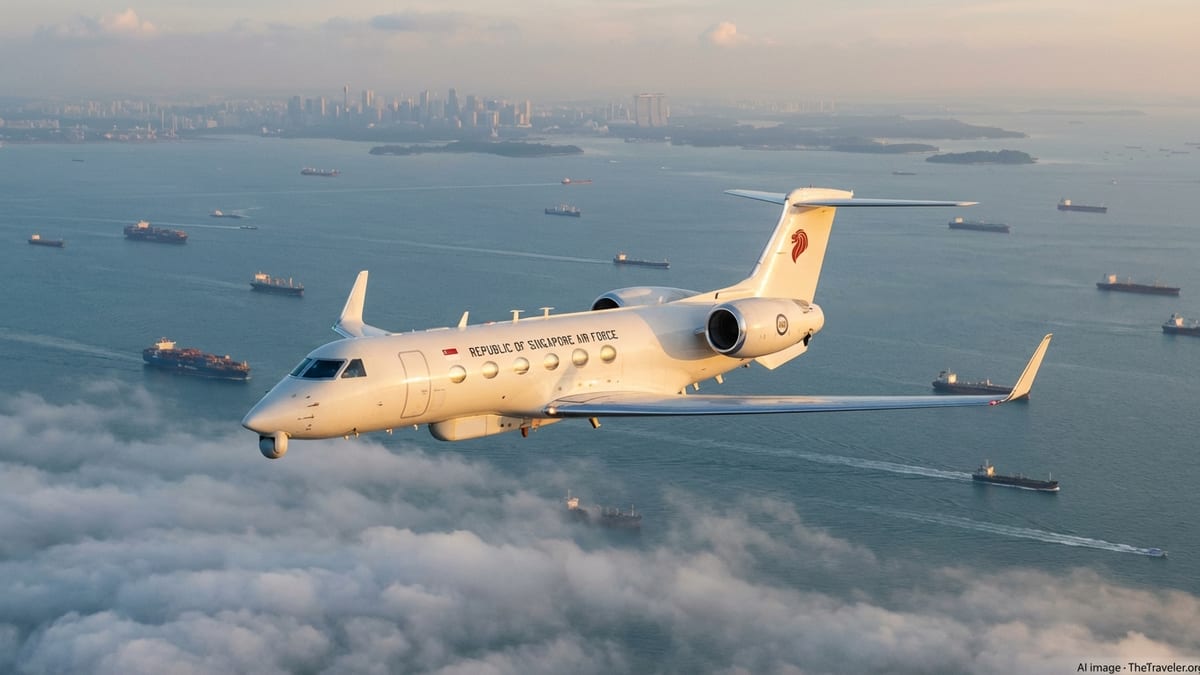
Singapore has ordered three Gulfstream G550 Maritime Surveillance Aircraft to strengthen its maritime security network, signalling a deeper commitment to safeguarding vital sea lanes in Southeast Asia.
A New Layer in Singapore’s Maritime Security Shield
The Ministry of Defence announced the acquisition on 27 February 2026 during a parliamentary debate on the defence budget, framing the move as part of a sustained effort to modernise intelligence, surveillance and reconnaissance capabilities. The Republic of Singapore Air Force will operate the aircraft as dedicated maritime surveillance platforms, expanding its ability to monitor busy waterways around the island state.
Built on the proven Gulfstream G550 business jet, the new Maritime Surveillance Aircraft are equipped with specialised mission systems designed for long-endurance patrols over sea. According to an official fact sheet, the G550-MSA can remain airborne for about nine hours, flies at high subsonic speeds and operates at altitudes up to 40,000 feet, giving crews a wide field of view over congested shipping routes.
Defence officials say the aircraft will plug directly into Singapore’s existing maritime security architecture, which already links air, naval and coastal sensors. By adding persistent, high-altitude surveillance from the G550-MSA, planners aim to build a more continuous picture of activity across the Malacca Strait, the Singapore Strait and adjacent waters that are central to global trade.
Advanced Sensors to Track a Crowded Sea
At the heart of the G550-MSA is a suite of mission systems tailored for wide-area maritime surveillance. The aircraft carries a dedicated maritime search radar capable of scanning large swaths of ocean and detecting surface contacts at long range. Complementing the radar are electro-optical and infrared cameras that allow crews to visually identify and document vessels in day or night conditions.
The aircraft are also fitted with an Automatic Identification System receiver and advanced identification and communications equipment. This combination allows operators to cross-check radar tracks against AIS broadcasts, quickly flagging ships that are behaving suspiciously or that have switched off their transponders. Integrated communications links then allow data to be shared in near real time with command centres and maritime forces.
Singapore’s defence planners have emphasised that these capabilities are intended to enhance early warning of maritime threats, from piracy and smuggling to potential grey-zone activities. In a region where commercial shipping, naval patrols and fishing fleets all vie for space, the ability to simultaneously detect, track and classify multiple targets is increasingly seen as essential for crisis prevention and rapid response.
Replacing Fokker 50s and Teaming With Future P-8As
The Gulfstream G550-MSAs will assume roles currently handled by the Republic of Singapore Air Force’s ageing Fokker 50 Enforcer II maritime patrol aircraft, which have been in service since the early 1990s. Despite having undergone life-extension upgrades, the Fokker 50s face growing constraints in range, sensor performance and sustainment, prompting Singapore to seek a more capable successor platform.
In parallel, Singapore has committed to acquiring four Boeing P-8A Maritime Patrol Aircraft, which will focus on anti-submarine warfare and long-range maritime patrol. The lighter, faster G550-MSA is expected to complement the larger P-8A rather than replace it, taking on day-to-day surveillance, surface tracking and cueing duties while the P-8A tackles more specialised missions.
This layered approach reflects Singapore’s broader strategy of building a diverse but tightly integrated fleet. By pairing business-jet-based surveillance aircraft with dedicated maritime patrol and anti-submarine platforms, the air force can tailor assets to specific tasks, conserve higher-end capabilities for complex contingencies and maintain a constant presence over key sea lines of communication.
Deepening Regional and Industry Partnerships
Singapore’s decision to adopt the G550 for maritime surveillance builds on earlier cooperation with Gulfstream Aerospace and Israel Aerospace Industries. The Republic of Singapore Air Force already operates G550-based Conformal Airborne Early Warning aircraft equipped with Israeli-developed radar and mission systems, which have become central to the country’s air defence network.
Defence analysts note that this experience likely shaped the new programme’s industrial model. Gulfstream is expected to supply the baseline airframes, while a specialist integrator will install and certify the maritime mission suite. Similar conversions of G550 airframes into maritime surveillance configurations have been carried out for other operators, reflecting growing global interest in adapting long-range business jets for specialised patrol roles.
Regionally, the acquisition sends a signal that Singapore intends to remain a leading security provider at the maritime crossroads between the Indian and Pacific Oceans. The city-state has been a regular participant in multilateral exercises and coordinated patrols, and the enhanced situational awareness from the G550-MSA is likely to feed into information-sharing arrangements with partners concerned about piracy, trafficking and strategic competition at sea.
Implications for Travellers and Maritime Trade
For travellers and maritime industries that rely on Singapore as a global hub, the move underscores how critical secure sea lanes are to the wider travel and tourism ecosystem. The vast majority of goods, including aviation fuel, food and consumer products that support Southeast Asia’s travel sector, arrive by sea through chokepoints near Singapore.
Improved surveillance from the G550-MSA fleet is expected to enhance safety along these routes by enabling earlier detection of distress situations, illegal activities or potential confrontations. More accurate and timely information on vessel movements can also support search and rescue coordination and environmental protection efforts in the event of maritime incidents.
While the aircraft will operate largely out of public view from secure air bases, their impact will be felt across the region’s interconnected transport networks. By investing in advanced maritime surveillance, Singapore is not only modernising its defence posture but also reinforcing the resilience of trade and travel flows that link Asia to the rest of the world.