

More news on this day
Singapore has pushed back the launch of its pioneering green jet fuel levy from April to October, as the Middle East war reshapes global fuel markets, strains Asian airlines and threatens to drive up ticket prices for travelers across the region.
Get the latest news straight to your inbox!
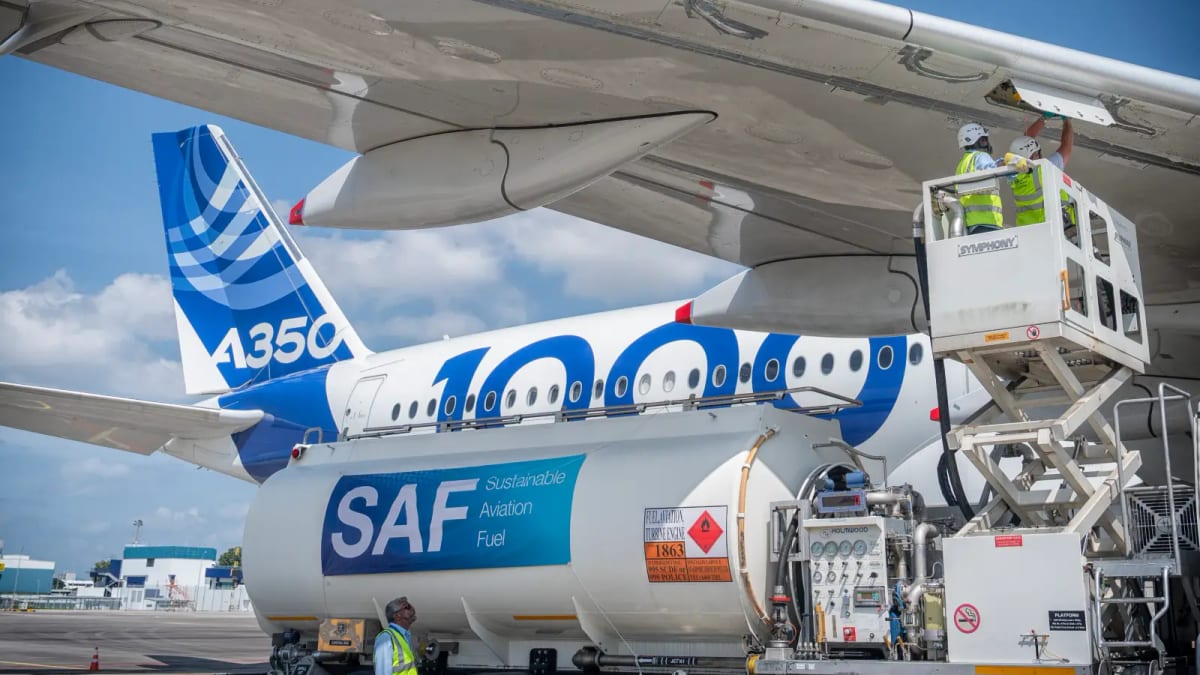
Image by Focus on Travel News
Planned SAF levy shifts from April to October
Publicly available information from Singapore’s aviation regulator indicates that the sustainable aviation fuel, or SAF, levy on departing flights was initially scheduled to be factored into tickets sold from 1 April 2026, tied to a mandate for airlines to begin using greener jet fuel on routes from Changi and Seletar airports. The measure was designed to fund the cost premium of SAF over conventional jet fuel and to support an initial national blending target of around 1 percent.
Recent updates now show that the levy’s effective start date has been deferred to tickets and services sold from 1 October, with the associated use of SAF for international departures pushed out to 2027 rather than 2026. While the long term objective of reaching a 3 to 5 percent SAF blend by 2030 remains unchanged, the latest adjustments signal a short term pause as policymakers reassess the economic environment.
The levy has been framed as a modest surcharge that varies by distance and cabin class, adding a few Singapore dollars to short haul economy tickets and rising to several tens of dollars on premium long haul itineraries. For origin destination passengers and cargo shippers, this charge is intended to pool funds so that Changi can procure sufficient volumes of greener fuel when the mandate fully kicks in.
Analysts following Singapore’s climate policy package describe the new October timeline as a recalibration rather than a reversal, arguing that the government is attempting to keep its decarbonisation trajectory intact while responding to a sudden spike in geopolitical and cost pressures.
Middle East conflict roils jet fuel markets
The decision to defer the SAF levy comes as the latest conflict in the Middle East disrupts oil flows, raises concerns over shipping routes and sends refined product prices sharply higher. Industry monitoring shows that benchmark Jet A 1 prices linked to Singapore have climbed to well above two hundred dollars per barrel in recent days, widening the gap between aviation fuel and crude oil.
Reports from across Asia point to knock on effects for airlines and airports that depend on imported fuel. Carriers in Vietnam and the Philippines have flagged higher operating costs and, in some cases, reduced flying, as their main suppliers in Singapore and other hubs face tighter inventories. Some governments in the region have also introduced export restrictions on refined products to safeguard domestic supply, further tightening the market.
The impact is not limited to fuel prices alone. Airlines have been forced to reroute services to avoid conflict airspace, increasing flight times and burning more fuel on long haul routes that connect Asia with Europe and the Middle East. Travel media coverage notes that Singapore based airlines have suspended or reduced selected Middle East services since late February, underscoring how operational decisions and cost management are now intertwined with security considerations.
In this environment, commentators suggest that layering a new green levy on top of already volatile fuel bills could risk undermining airline finances and dampening demand just as the sector confronts another external shock, leading regulators in Singapore to opt for a delay.
Balancing climate goals with travel affordability
Singapore’s SAF levy has attracted global attention because it represents one of the first nationwide efforts to earmark a dedicated charge on travelers to fund lower carbon jet fuel. Environmental policy briefings emphasize that aviation is a hard to abate sector, and sustainable fuels are viewed as a critical pathway for reducing emissions from long haul flights that cannot easily be electrified.
At the same time, tourism and travel stakeholders have voiced concern that additional fees risk making Singapore less competitive as a regional hub, particularly for price sensitive leisure travelers and transfer passengers who can choose alternative routings. Commentaries in travel and business outlets describe the measure as another layer on top of existing passenger service, security and airport development charges that already feature in ticket breakdowns.
The current postponement highlights the delicate balance policymakers are trying to strike. By aligning the SAF levy’s rollout with a later start to the fuel mandate, Singapore appears to be seeking a window in which global fuel markets may stabilize while still giving airlines and passengers time to plan for the cost shift. Observers also note that a voluntary SAF trial involving industry partners is expected to proceed this year, signalling that the country’s broader decarbonisation agenda remains in motion despite the revised timeline.
For travelers, the delay means that tickets issued between April and the end of September are less likely to reflect an explicit green fuel charge, although base fares and conventional fuel surcharges may still move in response to broader market conditions.
Regional carriers brace for higher costs and schedule changes
The Middle East conflict’s impact on fuel supply is being felt across Asia, and Singapore’s deferral of its SAF levy is only one part of a wider aviation story. Airlines in several countries, from South Korea to India, have announced route cuts, seasonal suspensions or lower flight frequencies as they confront higher fuel bills and uncertainty over future deliveries.
Trade and aviation outlets report that low cost carriers in particular are trimming marginal routes and delaying planned expansions, as their business models rely heavily on high aircraft utilisation and tight cost control. Some full service airlines are introducing or raising fuel surcharges of up to several hundred dollars on long haul tickets, a move that shifts more of the immediate cost burden onto passengers.
In Singapore’s case, while the SAF levy is designed to finance long term sustainability goals, the immediate priority for airlines appears to be keeping networks resilient through the fuel shock. Analysts suggest that by deferring the levy, regulators are giving carriers slightly more room to manage cash flow, renegotiate supply contracts and adjust schedules without simultaneously absorbing a new policy driven cost component.
Nevertheless, most regional forecasts still anticipate slower capacity growth in the coming months compared with earlier projections, as airlines weigh the risk of further fuel price spikes and the possibility of additional airspace restrictions if the conflict escalates.
What the delay means for future green aviation policies
Singapore’s shift from an April to an October levy start date is being closely watched by other governments that are considering similar mechanisms to fund SAF uptake. Policy papers and industry briefings describe the city state as a test bed for market based approaches to aviation decarbonisation, with its experience likely to inform regulatory designs in other hubs.
The revised schedule suggests that flexibility will be built into future green aviation policies, with room to adjust implementation if external shocks threaten economic stability or travel demand. Observers argue that tying climate measures too rigidly to fixed dates risks eroding public support when unforeseen crises, such as wars or pandemics, reshape the landscape.
At the same time, the fundamentals behind the SAF levy have not changed. International aviation bodies continue to call for scaling up production of sustainable fuels, and airlines that position themselves early in this transition may gain a competitive edge as corporate and individual travelers pay closer attention to the carbon impact of their journeys.
For now, Singapore’s deferral underscores two parallel realities facing global travel: the immediate pressures created by geopolitical conflict and energy market turmoil, and the longer term necessity of transforming how planes are powered. How effectively the country navigates both may influence not only ticket prices out of Changi in the next few years, but also the pace at which greener flying becomes a mainstream feature of international tourism.