

More news on this day
Singapore-based hotel investors are sharpening their focus on Vietnam as the country’s tourism rebound, expanding luxury pipeline and competitive operating costs turn it into one of Southeast Asia’s most closely watched hospitality growth stories.
Get the latest news straight to your inbox!
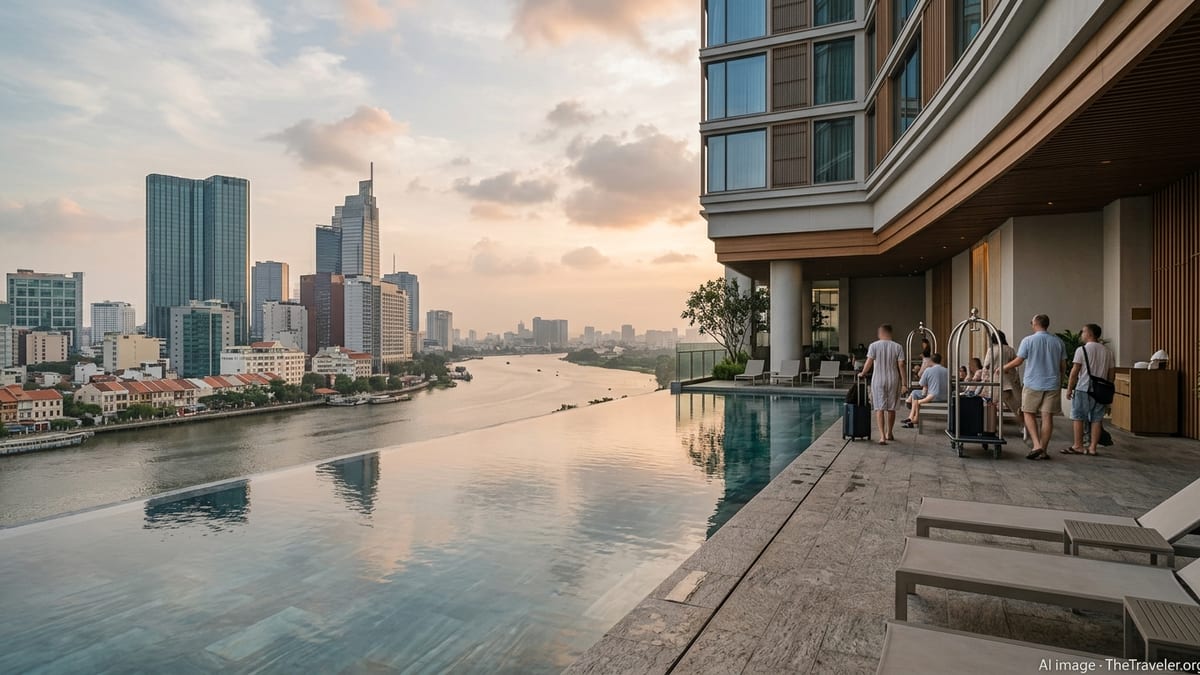
Vietnam Emerges as Regional Hospitality Hotspot
Recent market research shows Vietnam rapidly moving up the regional hotel investment map as international arrivals surge and room performance in key cities outpaces pre-pandemic peaks. Industry analyses note that hotel occupancy rates and average daily room rates in Ho Chi Minh City and Hanoi climbed beyond 2018 and 2019 levels toward the end of 2025, creating strong momentum for new capital deployment in 2026.
According to published coverage of Vietnam’s hospitality sector, investors are attracted by a combination of rising visitor numbers, still-modest room supply in the upscale and luxury brackets, and an improving transport and airport infrastructure network. Forecasts by advisory firms suggest that Vietnam could welcome tens of millions of tourists annually over the next few years, supported by expanded air connectivity and marketing campaigns positioning the country as a year-round destination.
Market commentaries also highlight the growing diversity of demand. Traditional leisure hotspots such as Da Nang, Nha Trang and Phu Quoc are being complemented by business-oriented hubs including Ho Chi Minh City and Hanoi, as multinational companies expand operations and regional conferences return. This blend of corporate and leisure travel is helping to underpin more stable year-round occupancy, which in turn supports investor interest in branded and professionally managed hotel assets.
Singapore Capital Moves Deeper Into Vietnam
Singapore has emerged as one of Vietnam’s most active foreign investment partners, and hotel and hospitality projects are increasingly part of that story. Data on foreign direct investment inflows in 2025 indicates that Singapore ranked among the leading sources of new capital into Vietnam, reflecting the city-state’s role as a regional financial hub and staging ground for Southeast Asian expansion.
Publicly available information on recent transactions and pipelines points to a widening footprint of Singapore-linked hotel players. Singapore-based lodging platforms and hospitality groups have been building room inventories across Vietnam’s gateways and coastal resorts, targeting both midscale and higher-end segments. Collaborative structures, including joint ventures and management agreements between Singaporean investors and Vietnamese developers, are common as firms pair international branding and know-how with local land access and market knowledge.
Analysts note that this flow of Singapore capital sits alongside a broader surge of regional interest, but stands out for its focus on branded product, risk-managed structures and long-term hold strategies. For many Singapore investors, Vietnam hotels are viewed as a portfolio diversifier relative to more mature domestic or regional markets, with the potential for yield compression if performance continues to improve.
Returns, Yields and the Case for Hotels
Investment research from international consultancies suggests that Vietnam’s hotel sector is currently offering yields that compare favorably with other core hospitality markets in Asia. One widely cited outlook by a global real estate services firm estimates that stabilized hotel assets in Vietnam can deliver annual returns in the mid-single to high-single digit range, ahead of many city-center hotel investments in markets such as Singapore or Hong Kong where pricing has already normalized.
JLL’s hotel investment commentary on Vietnam notes that returns in the range of roughly 6 to 7.5 percent per year are achievable for well-located quality assets, a level that is drawing more institutional and private capital from Singapore and elsewhere in the region. Industry observers point out that operating costs in Vietnam remain relatively competitive, allowing owners to capture a greater share of revenue growth as room rates climb and ancillary income from food and beverage and events recovers.
These fundamentals have supported several notable hotel trades and development commitments. Coverage of recent deals indicates that both city hotels and coastal resorts are attracting bids, with some Singapore-related investors targeting value-add opportunities such as repositioning older properties under new brands or expanding existing complexes to tap rising demand. The relative scarcity of high-quality stock in top locations is also prompting interest in forward-funding development projects, particularly in resort destinations with improving international air links.
Luxury, Branded Residences and New Concepts
Beyond traditional hotel rooms, Singapore investors are also eyeing Vietnam’s fast-evolving luxury and branded-residence segment. Research from global property advisers forecasts that branded residences across Asia Pacific could increase sharply by 2031, with Southeast Asia a key growth engine and Vietnam among the leading markets by development pipeline share. These projects often pair hotel-branded serviced apartments or villas with resort-style amenities, appealing to lifestyle-focused buyers and long-stay guests.
According to Savills’ recent analysis of branded residences in the region, Vietnam and Thailand together account for a meaningful proportion of future supply, benefiting from strong tourism narratives, relatively affordable land compared with more mature cities, and growing demand from international buyers in markets such as Singapore, China and Hong Kong. For Singapore-based investors, branded residences in Vietnam offer a hybrid play that blends recurring hospitality income with real estate sales proceeds and potential capital appreciation.
At the same time, international hotel operators headquartered in Singapore are expanding management platforms in Vietnam. Public information on regional pipelines shows new luxury and upper-upscale hotels planned in coastal provinces and secondary cities, as groups seek first-mover advantage in destinations expected to benefit from upgraded airports, highways and cruise infrastructure. These projects often come with wellness, culinary and experiential components designed to capture higher-spending travelers and lengthen stays.
Risks, Policy Tailwinds and the Road Ahead
While the overall narrative is positive, Singaporean investors assessing Vietnam’s hotel market are weighing several risks alongside the upside. Analysts continue to flag global macroeconomic uncertainty, exchange-rate volatility and construction cost inflation as potential headwinds for new projects. In some destinations, rapid development has raised concerns about temporary oversupply, particularly where infrastructure and workforce training lag project completions.
Nonetheless, policy shifts in Vietnam are providing important tailwinds. Reports on recent tourism reforms highlight more flexible visa policies, including expanded e-visa access and longer permitted stays for selected source markets, which are expected to support higher arrival volumes and repeat visitation. Government planning documents also emphasize tourism as a strategic pillar of economic growth, encouraging public investment in airports, expressways and coastal infrastructure that, in turn, improves the viability of new hotel developments.
For Singapore-based hotel investors, these dynamics translate into a window of opportunity that will likely favor well-capitalized players able to navigate regulatory processes and partner effectively with local stakeholders. Industry commentary suggests that disciplined site selection, brand positioning and operator choice will be critical as competition intensifies. If current projections for tourism growth and income gains in Vietnam are realized, the country may increasingly feature as a core, rather than peripheral, allocation in Singapore hospitality investment portfolios over the coming decade.