

More news on this day
Singapore has issued a fresh health and travel advisory for families with young children after an 11 month old girl became the first preschool linked measles case of 2026, marking the fifth infection in an infant under 12 months and raising concerns about wider exposure in a city known for its high travel volumes.
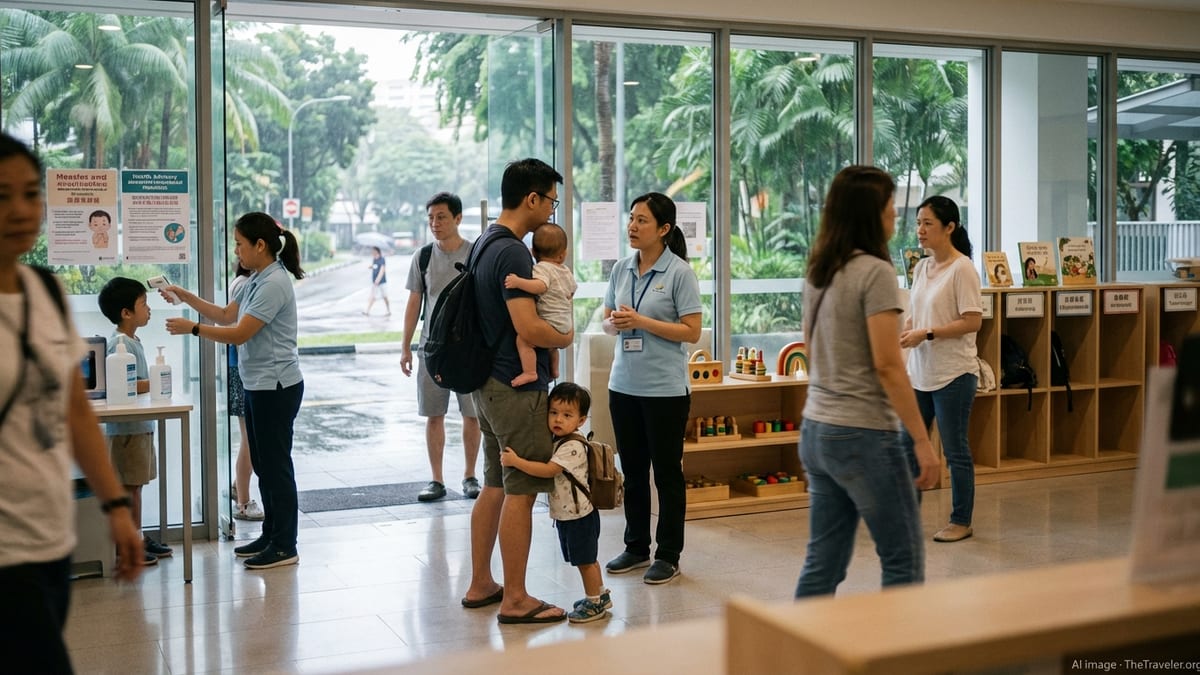
First Preschool Case Adds New Urgency to 2026 Measles Spike
Health authorities confirmed that the latest case involves an 11 month old girl who attends a preschool in Singapore and was infectious while in class, intensifying anxiety among parents and early childhood operators. The Communicable Diseases Agency said the child, who was not yet due for her routine measles, mumps and rubella vaccination, is recovering well but had no recent travel or known contact history, suggesting local exposure remains possible.
The case, notified on February 17 and announced publicly on February 24, is the fifth measles infection in an infant under 12 months reported in Singapore in 2026, and part of at least 15 confirmed cases nationwide this year. Officials stress that the numbers do not yet constitute a major outbreak, but the involvement of a preschool setting has shifted risk calculations for families and schools that had so far watched the situation from a distance.
The Early Childhood Development Agency said it is working with the preschool and health officials to reinforce infection control, health screening and cleaning protocols, while operators across the island review contingency plans. Preschools have been reminded to ensure strict adherence to vaccination requirements for eligible children and staff and to send home anyone showing symptoms such as fever and rash.
Travel Advisory Targets Families With Infants and High Risk Itineraries
With school and holiday travel driving heavy passenger flows through Changi Airport, Singapore’s health authorities are now explicitly warning families with young children to reassess upcoming trips in light of rising measles activity worldwide. Parents of infants under 12 months, who are too young for the standard two dose measles, mumps and rubella schedule, have been urged to consult healthcare providers before booking or proceeding with travel.
Guidance issued in mid February recommends that infants aged six to eleven months who must travel to destinations experiencing measles outbreaks or high incidence receive an early dose of the measles, mumps and rubella vaccine at least two weeks before departure. The dose is intended to provide temporary protection during travel, with children still required to complete the routine two dose course at 12 and 15 months for long term immunity.
Officials emphasise that there is no evidence of sustained community transmission in Singapore at present, and no blanket restrictions on inbound or outbound travel have been introduced. However, the alert places a particular focus on families transiting through or visiting regions currently grappling with sizeable measles outbreaks, as imported infections have featured prominently in recent case investigations.
Travel medicine clinics report an uptick in enquiries from parents seeking advice on measles risks in specific destinations and whether to vaccinate early, postpone trips or modify itineraries to avoid crowded indoor attractions. Physicians say conversations increasingly mirror those seen during the coronavirus pandemic, with families weighing health, schooling and financial considerations when deciding whether to proceed with travel plans.
Parents and Preschools Step Up Safeguards Amid High Anxiety
The confirmation of a measles case in a preschool has put early childhood centres under intense scrutiny, with many stepping up communication to reassure worried parents. Operators have circulated reminders about keeping unwell children at home, updated sick policies and, in some cases, reintroduced temperature checks and visual screenings at drop off, particularly for infants and toddlers who cannot reliably describe symptoms.
Some kindergartens and childcare centres report higher absenteeism as anxious parents opt to keep children at home temporarily, especially if there are newborns or medically vulnerable relatives in the household. School administrators say they are fielding a surge of questions about vaccination rates among enrolled children, staff immunisation status and the exact steps that would be taken if a case were detected on campus.
Authorities have reiterated that close contacts in the affected preschool have been individually notified and assessed, with quarantine orders reserved only for those who are unvaccinated or not in the process of being vaccinated. Vaccinated close contacts have been told to monitor their health closely, while casual contacts are being advised to check their immunisation status and seek care promptly if symptoms appear.
Travel sector observers note that health scares in schools can ripple into booking patterns, especially for family oriented trips during upcoming holidays. Travel agents say some multigenerational groups are now splitting itineraries so that infants and preschoolers stay home with one caregiver while older children and adults proceed with previously booked travel.
High Vaccination Coverage Holds, but Gaps Leave Infants Exposed
Singapore maintains one of the region’s highest measles vaccination rates, and health experts underline that this remains the most effective shield against large outbreaks. Authorities note that the majority of cases recorded in 2026 have occurred in individuals who were either unvaccinated or not fully vaccinated, a pattern that mirrors experiences in other countries facing measles resurgences.
Infants under 12 months occupy a particularly vulnerable gap, as they are not yet eligible for the standard measles, mumps and rubella schedule and rely on what experts call cocooning protection. This approach hinges on ensuring that adults and older children around them, including caregivers, grandparents and preschool staff, are fully immunised so that the virus has fewer opportunities to reach the youngest members of the community.
In parliament this week, Singapore’s health minister highlighted that measles vaccination is already mandatory for foreign born children seeking long term passes, as well as for healthcare workers, preschool staff and domestic workers in households with young children. Officials argue that these measures, combined with surveillance and rapid response to each case, make additional border controls unnecessary at this stage.
Doctors caution, however, that global trends are not reassuring. The United States and parts of Europe have seen a steep rise in measles cases linked to declining vaccine coverage and post pandemic immunity gaps, increasing the likelihood that travellers may import the virus even from destinations once seen as low risk. For highly connected hubs such as Singapore, every imported case is a reminder of how quickly measles can spread in pockets of under immunised people.
What the New Alert Means for International Visitors and Transit Passengers
For international visitors heading to Singapore, the latest alert does not change entry rules but serves as a pointed reminder to check measles vaccination status before travel. Adults born after routine measles vaccination programmes were introduced are typically advised to have received at least one documented dose of a measles containing vaccine, with two doses recommended for full protection, particularly if they plan to visit preschools, family homes or community centres.
Transit passengers passing through Changi Airport are considered at very low risk if they are vaccinated, but health authorities reiterate standard respiratory hygiene advice, including staying away from travel if feeling unwell and seeking medical care promptly if fever and rash develop after a trip. Airlines and airport operators remain on standby to support contact tracing should any infectious traveller be identified.
Tourism operators say there has been no wave of cancellations linked to the measles cases so far, but many are proactively updating health advisories on their booking platforms and briefing frontline staff on common traveller questions. Large attractions and hotels, which already maintain enhanced cleaning regimes, are watching developments closely given the sensitivity of family travellers to any hint of infectious disease risk.
For now, officials stress that Singapore remains open and safe for travel, with the latest measles case seen as a warning rather than a reason to stay away. The message to both residents and visitors is clear: keep vaccinations up to date, stay alert to symptoms and act quickly if exposure is suspected, so that isolated infections do not escalate into the kind of sustained outbreaks that have disrupted travel elsewhere.