

More news on this day
A new Traveller Scheme branded around social security protection for Malaysians working in Singapore is being readied for launch, signaling a major shift in how the region safeguards the hundreds of thousands who cross the Johor-Singapore border for work every day.
Get the latest news straight to your inbox!
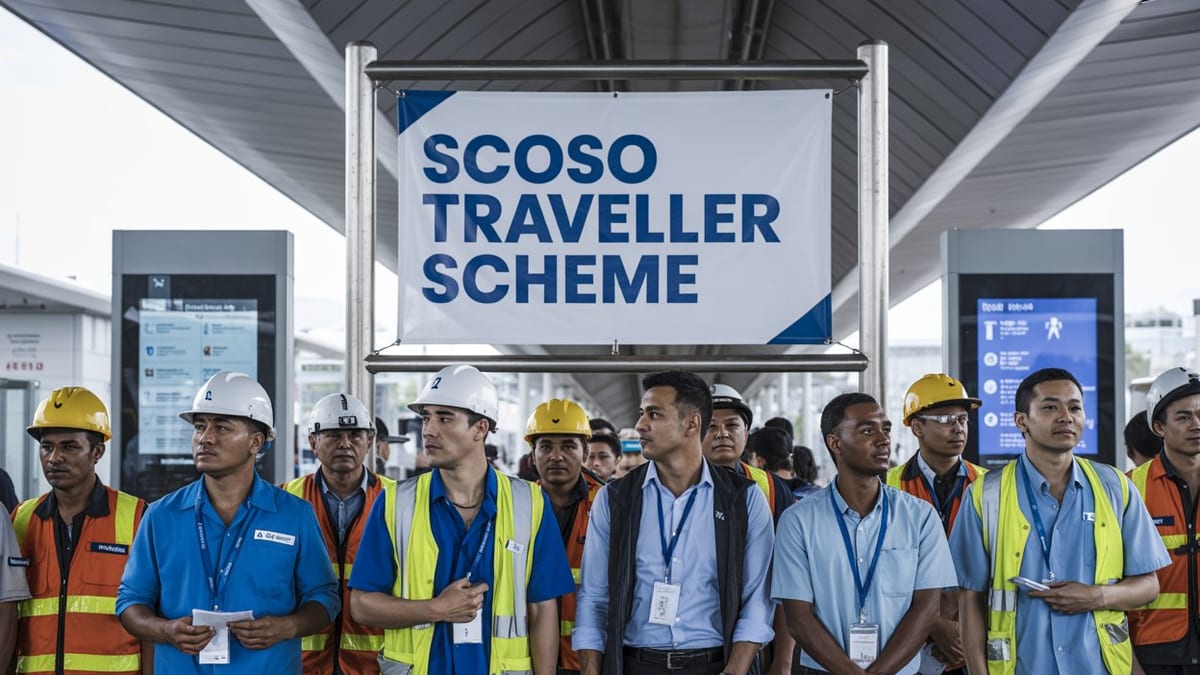
Image by Latest International / Global Travel News, Breaking World Travel News
From Policy Gap to Protection Net for Daily Commuters
Publicly available information in recent weeks describes the Traveller Scheme as a landmark move to cover a long-recognised blind spot in cross-border protection. Around 400,000 Malaysians are estimated to commute daily from Johor to jobs in Singapore, often during early-morning and late-night hours when accident and injury risks are higher. Until now, protection has largely depended on fragmented work injury coverage in Singapore and separate domestic schemes at home, with gaps once workers leave their worksites.
Reports indicate that the forthcoming scheme is being developed around Malaysia’s existing social security framework, which is administered by the Social Security Organisation, commonly known as SOCSO. Early coverage suggests that the Traveller Scheme is designed to mirror social security-style benefits for cross-border commuters, rather than conventional travel insurance, by recognising commuting hours as part of a worker’s risk exposure instead of treating them purely as leisure travel.
The initiative has emerged at a time of rising debate about fair treatment of temporary and mobile workers across borders. Comparative research on cross-border social protection highlights that many commuter corridors worldwide still lack clear, portable safeguards, even as labour mobility accelerates. Against that backdrop, the Johor-Singapore corridor is becoming a test case for how governments can extend safety nets beyond national boundaries while maintaining clear lines of responsibility.
Regional insurance and labour analysts quoted across Malaysian and Singaporean media also point out that the Traveller Scheme is intended to reduce the grey area between work-related accidents and commuting incidents. If structured as described, it would recognise that many cross-border commuters travel on motorcycles or buses for long distances each day, exposing them to risks that fall outside traditional workplace coverage.
How the SCOSO Traveller Scheme Is Expected to Work
According to recent Malaysian coverage, the Traveller Scheme is expected to be tabled at Cabinet level ahead of a planned launch window targeted for the coming months. While final policy details are still being refined, the broad contours are becoming clearer. The scheme is envisioned as a dedicated layer of protection that follows Malaysian citizens as they leave Johor, enter Singapore for work, and return home, with particular emphasis on accidents and injuries that occur during the commute.
Early descriptions suggest that the scheme will operate on a contribution-based model, drawing on SOCSO’s experience in managing workplace and employment injury protection inside Malaysia. Observers expect a mix of employer and worker contributions, potentially supplemented by government support in the pilot phase, although the precise cost-sharing formula has not yet been formally outlined in available documents. A key design goal appears to be affordability, so that low- and middle-income commuters who already face daily transport costs are not deterred from enrolling.
Reports in specialist insurance media note that designers of the Traveller Scheme are also exploring a digital-first approach to claims and administration. This includes the possibility of fully online claims submissions, simplified documentation for cross-border incidents, and direct payment of benefits to families in Malaysia when accidents take place in Singapore. If implemented as described, such features could shorten processing times and reduce the paperwork that often discourages injured commuters or their dependants from seeking compensation.
Crucially for travel and mobility, the Traveller Scheme is not expected to replace existing border control or immigration processes between Malaysia and Singapore. Instead, it is being framed as a social protection overlay that runs in parallel to entry and exit procedures already managed by both countries. For commuters, the immediate impact is likely to be felt not at the checkpoint gates but in the form of new coverage that extends beyond regular working hours and worksites.
Why the Johor-Singapore Corridor Is a Global Test Bed
The daily flow across the Johor Causeway and Second Link is widely cited as one of the busiest land borders in Southeast Asia, with high concentrations of industrial, service and logistics workers commuting into Singapore. Publicly available transport data and labour surveys depict long queues, motorcycle convoys and packed buses, particularly before dawn and late at night as shifts change. For many households in Johor, cross-border wages form a crucial pillar of income, but the journey has historically brought little formal protection.
Comparative examples from Europe show that cross-border workers in the European Union are typically covered by coordinated social security rules in the country of employment, with mechanisms for portability when workers move. By contrast, most Southeast Asian corridors have rested on a patchwork of national laws and voluntary insurance products, leaving commuters to navigate complex overlaps when accidents occur on foreign soil.
The proposed Traveller Scheme is attracting attention among regional policy observers because it effectively treats the commute as part of the worker’s protected journey, rather than leaving it in a legal grey zone. If implemented as described, it would complement Singapore’s own workplace regulations and private insurance coverage by ensuring that Malaysian workers and their families can still claim support even when an incident happens en route, outside a formal job site.
Insurance industry commentary notes that the Johor-Singapore route is also a natural proving ground for innovation because of its scale and regularity. With hundreds of thousands making similar trips along fixed routes, actuaries can model risk with more precision than in more dispersed migration corridors. That in turn could allow the Traveller Scheme to offer more competitive contribution rates and clearer benefit structures than ad hoc commuter policies seen elsewhere.
Digitalisation, Claims and the Future of Cross-Border Travel Safety
Beyond headline protection, the Traveller Scheme is being closely watched for its digital ambitions. Reports in regional insurance outlets describe efforts to integrate border-crossing data, mobile applications and online claims portals so that incidents can be reported and verified without adding new administrative hurdles at checkpoints. For example, accident notifications could be filed from Singapore but processed and paid out in Malaysia, reducing the need for families to navigate two separate bureaucratic systems.
Such digitalisation dovetails with broader upgrades already underway at Singapore’s land checkpoints, where automated lanes and biometric systems are being expanded for faster processing of travellers. While these border technology initiatives are separate from Malaysia’s Traveller Scheme, observers suggest that, together, they point toward a more integrated ecosystem in which cross-border commuting is both smoother and more securely protected.
Travel and labour commentators add that the Traveller Scheme may also encourage a cultural shift in how commuters perceive their daily journeys. With explicit social security-style coverage in place, workers may be more inclined to report accidents, seek medical attention promptly and claim benefits that previously seemed out of reach. Over time, this could feed back into safety campaigns, infrastructure planning and even employer transport policies, as new data sheds light on where and when incidents most often occur.
The initiative is also seen as part of a broader conversation about the Johor-Singapore Special Economic Zone and efforts to deepen economic integration between southern Malaysia and the city-state. By addressing a basic concern for worker welfare, the Traveller Scheme could help underpin more ambitious cross-border projects, reassuring both investors and commuters that mobility across the Causeway is not only convenient but also meaningfully protected.
What Commuters and Employers Should Watch Next
As policymakers refine the Traveller Scheme ahead of its expected rollout, commuters and employers along the corridor are paying close attention to final design choices. Key questions include the level of contributions, the exact scope of covered incidents, and how the scheme will interact with existing workplace insurance policies in Singapore. Clear communication will be critical so that workers understand what protection they are gaining and what obligations they may assume.
Employers on both sides of the border are also monitoring how the scheme may affect hiring, benefits packages and corporate responsibilities. Some analysts suggest that businesses relying heavily on cross-border labour might eventually incorporate Traveller Scheme participation into standard employment terms, treating it as part of a broader duty of care for staff who undertake long and often risky commutes.
For travel planners and transport operators, the emerging framework is prompting fresh thinking about risk management on cross-border routes. Motorcyclist safety, bus standards and congestion at key choke points are likely to remain in focus as authorities and private firms examine where targeted improvements could reduce accident rates and thus long-term costs for the scheme.
While important details are still being finalised, the trajectory is clear. The SCOSO-style Traveller Scheme signals that the era of viewing cross-border commuters as largely outside formal protection systems may be coming to an end. For the thousands who ride the pre-dawn convoys to Singapore and return late each night, the next phase of policy development on both sides of the Causeway could reshape not just how they travel, but how secure they feel every time they cross the border.