

More news on this day
Singapore has deferred the planned rollout of a sustainable aviation fuel levy on air passengers, as the ongoing conflict in the Middle East roils global energy markets and raises uncertainty over airline operating costs.
Get the latest news straight to your inbox!
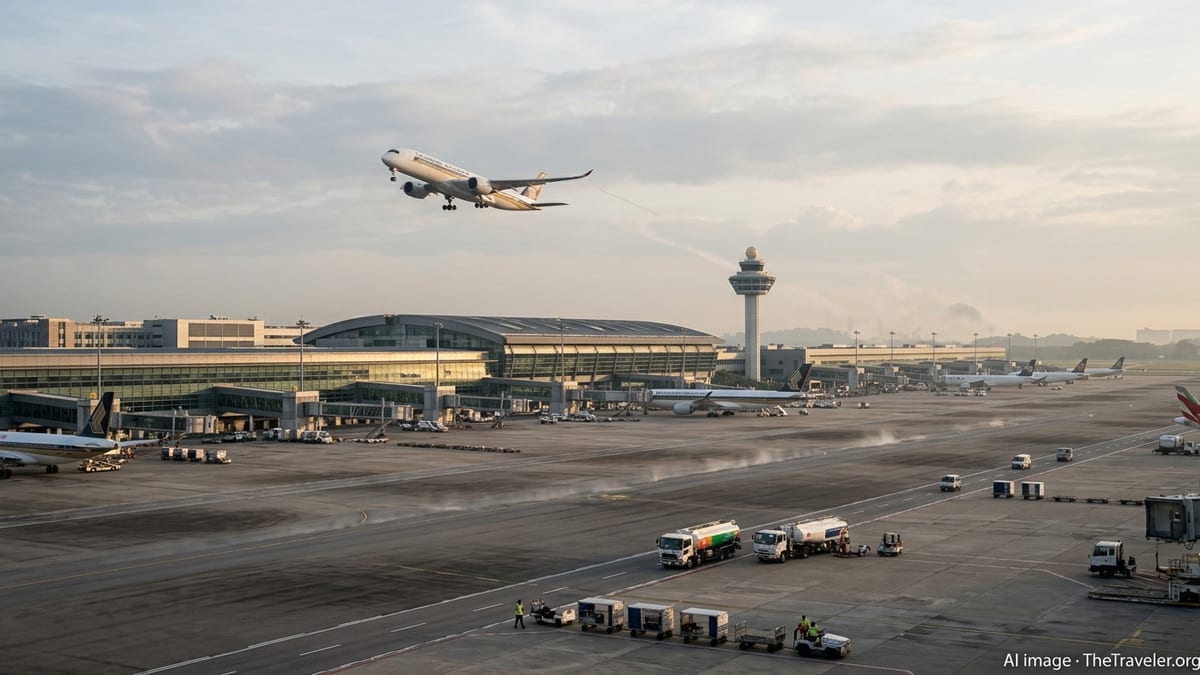
Planned SAF Levy Paused Ahead of April Start Date
Singapore had been preparing to introduce a sustainable aviation fuel, or SAF, levy on passengers departing from Changi Airport, with the initial rollout slated for 1 April 2026. Publicly available policy documents and commentaries describe the levy as a key instrument in funding the city-state’s transition toward lower-carbon air travel, supporting a national target for SAF use from the mid-2020s onward. The charge was expected to be embedded in air tickets, collected from travellers and channelled into the purchase of cleaner fuel blends for flights taking off from Singapore.
According to recent media coverage and public briefings, the new timeline has now been pushed back, with officials citing a need to reassess cost impacts in light of the deteriorating situation in the Middle East. The decision effectively pauses one of Asia’s earliest attempts at a national-level SAF passenger levy, even as other regions continue to explore similar mechanisms to decarbonise aviation.
The postponement comes on top of existing airport-related fees at Changi, such as passenger service and security charges, an aviation levy and an airport development levy, which were already slated to rise gradually over the second half of the decade to fund infrastructure expansion and hub capabilities. The SAF component was designed as an additional, dedicated contribution to climate goals rather than a replacement for those charges.
Middle East Conflict Disrupts Energy Markets and Flight Networks
The shift in Singapore’s timetable is unfolding against a backdrop of escalating conflict in the Middle East, which has disrupted air corridors and energy flows across a region that is central to global oil and jet fuel supply. Recent international reporting points to missile and drone strikes on energy and transport infrastructure, as well as intermittent closures or restrictions affecting Middle Eastern airspace. These developments have triggered flight reroutings, extended block times and higher fuel burn on affected corridors between Asia, Europe and the Gulf.
The conflict has also driven renewed volatility in crude oil benchmarks, with airlines warning in recent days that higher fuel prices are beginning to squeeze margins despite resilient passenger demand. Long-haul carriers operating through the Middle East, including those serving Singapore, face a complex mix of risk management, hedging decisions and operational adjustments as they navigate both geopolitical tensions and changing cost structures.
For Singapore, a global hub that links Southeast Asia with the Gulf, Europe and Africa, the instability raises questions about near-term fuel procurement, logistics and pricing. Public commentary within the country has highlighted concerns about exposure to oil supply disruptions, given that a significant share of imported crude and liquefied natural gas historically transits chokepoints such as the Strait of Hormuz. In this context, a new levy that could further raise ticket prices has become more politically and economically sensitive.
Balancing Climate Ambitions with Cost Pressures on Travellers
Singapore’s SAF levy was conceived as part of a broader climate policy package that includes national emissions reductions commitments and sector-specific targets. Analytical papers and sustainability reports note that from 2026 Singapore aims to secure a minimum share of SAF in fuel uplift at Changi, ramping up toward higher blends by 2030. The levy was one of the tools identified to help close the price gap between conventional jet fuel and cleaner, but more expensive, alternatives.
The delay does not signal a retreat from those climate ambitions, but it underscores the difficulty of sustaining green transition plans when geopolitical shocks raise baseline costs for consumers. Airlines serving Singapore are already grappling with higher operating expenses from fuel and insurance, and many have signalled caution about passing on additional charges too abruptly in a competitive market.
Travel demand through Changi has remained strong, reflecting pent-up leisure trips and robust business connectivity across Asia-Pacific. Yet the prospect of higher fares due to both market-driven fuel increases and policy-linked levies has generated debate among passengers and industry observers. Some argue that a targeted SAF charge is necessary to ensure aviation contributes fairly to decarbonisation, while others contend that implementation should be timed to avoid compounding cost-of-living pressures in periods of global instability.
Implications for Airlines, Routes and the Wider Travel Market
The postponement of the SAF levy offers airlines short-term relief from an additional surcharge on tickets sold out of Singapore, potentially easing pressure on price-sensitive routes. Carriers that had begun factoring the levy into fare structures or revenue forecasts will now need to revise their plans, even as they continue to confront elevated jet fuel costs and operational disruption tied to the Middle East conflict.
Industry analysts suggest that Singapore’s move may influence how other hubs and regulators pace their own SAF funding measures. Airports and aviation authorities worldwide are watching how passengers respond to a layered structure of charges that includes traditional infrastructure fees alongside climate-oriented levies. The experience at Changi, where hub competitiveness is central to economic strategy, will likely be studied closely by policymakers weighing similar initiatives.
For travellers, the immediate impact is that air tickets originating from Singapore will not, for now, include the additional SAF-related line item that had been signposted for the April travel period. However, this respite could prove temporary. Once energy markets stabilise and the trajectory of the Middle East conflict becomes clearer, the levy may be reintroduced, possibly with adjustments to its level or phasing to reflect lessons learned during the current crisis.
Outlook for Sustainable Aviation Policy in a Volatile World
The deferral of Singapore’s SAF levy highlights a wider challenge facing the global push for sustainable aviation: climate policies are being rolled out in an era defined by geopolitical shocks, energy insecurity and cost-of-living strains. While consensus is growing that aviation must decarbonise, the pathway to doing so in a manner that is financially and socially sustainable is far from straightforward.
Observers expect Singapore to use the pause to refine its SAF strategy, exploring options such as diversified sourcing, regional production partnerships and potential incentives for early adopters among airlines. The city-state’s position as a major refining and bunkering hub could, over time, support a scaled-up ecosystem for low-carbon fuels that reduces vulnerability to disruptions in any single region.
For the wider travel industry, the developments in Singapore serve as a reminder that environmental policy, energy security and route economics are increasingly intertwined. As conflicts in key producing regions periodically unsettle fuel markets and airspace, governments and aviation stakeholders may need to design more flexible mechanisms for funding cleaner flight technologies. Singapore’s delayed SAF levy, shaped by events far beyond its borders, underlines how closely future travel costs and climate action are now linked.