

More news on this day
Singapore’s tourism engine is shifting up a gear as a wave of hotel renovations, strong passenger growth at Changi Airport and the arrival of Disney Cruise Line position the city-state’s hospitality industry for a buoyant 2026.
Record Tourism Receipts Set the Stage for 2026
Singapore enters 2026 with tourism fundamentals at their strongest since the pandemic, giving hotels and travel operators confidence to invest for the next wave of visitors. The Singapore Tourism Board reported that visitor arrivals reached 16.5 million in 2024, at the top end of its forecast range, while tourism receipts climbed to an all-time high, driven by higher spending from core markets including China, Indonesia and Australia.
Preliminary figures for 2025 show that momentum has continued. Tourism receipts for the first nine months of 2025 have already surpassed the same period a year earlier, putting Singapore on track to beat its full-year forecast even though arrivals have grown at a more measured pace. Analysts say this underscores the destination’s strategic shift away from pure volume towards attracting higher-yield travellers who stay longer and spend more.
Looking ahead, the Singapore Tourism Board now projects between 17 million and 18 million international visitor arrivals for 2026, alongside a record S$31 billion to S$32.5 billion in tourism receipts. Local research houses describe the outlook as “go time” for the hospitality sector, with hotels, attractions and cruise operators all anticipating a busier, more lucrative trading environment.
Changi Airport’s recovery adds further confidence. Passenger throughput crossed pre-pandemic levels on a rolling 12-month basis in 2025, with about 70 million passengers handled for the year, reflecting both robust point-to-point travel and Singapore’s continued strength as a regional air hub.
Hotel Renovations Recast Singapore’s Luxury Skyline
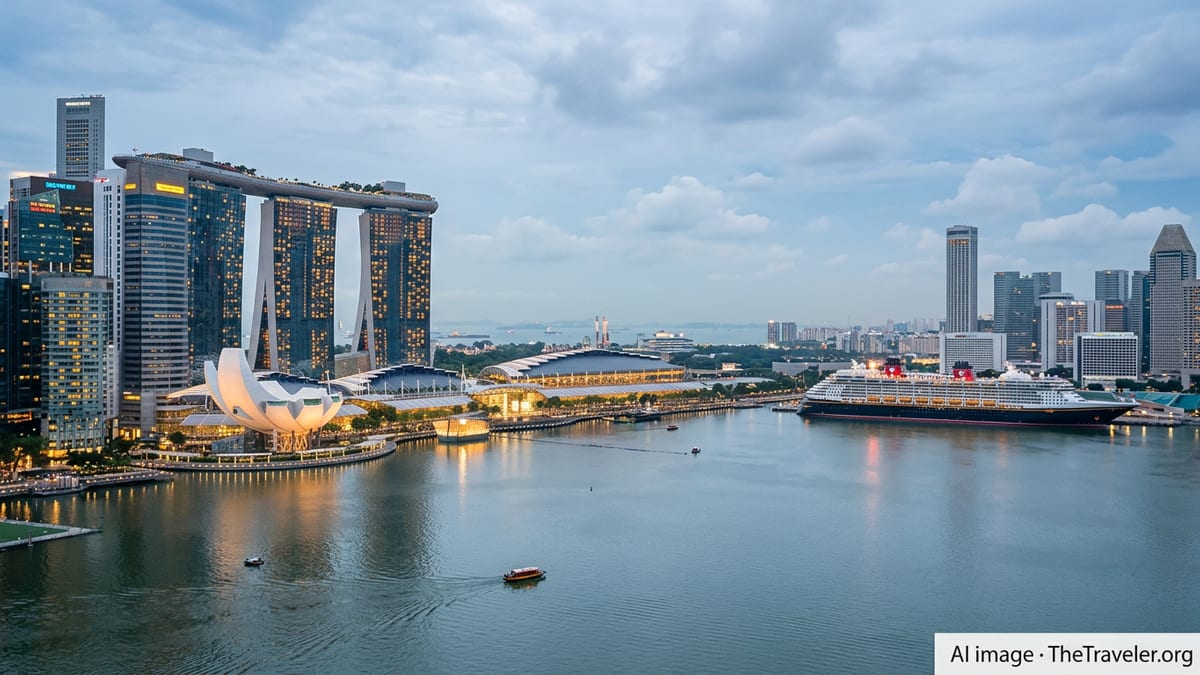
One of the clearest signs of confidence is the scale of reinvestment sweeping through Singapore’s hotel stock. Marina Bay Sands completed a comprehensive renovation of all rooms in its three iconic hotel towers in 2025, refreshing interiors and service offerings at one of the country’s most recognisable integrated resorts. The upgrade is part of a broader expansion plan backed by a multibillion-dollar financing package, aimed at reinforcing the property’s pull with premium leisure and business travellers.
Across Marina Bay, the Conrad Singapore Marina Bay rebranded and refreshed its positioning from 2025, signalling a renewed focus on the district as a core luxury and meetings hub. Other established properties along Orchard Road and in the civic district are also undergoing phased refurbishments, from lobby redesigns and new food-and-beverage concepts to technology upgrades such as mobile check-in and smart-room controls.
Developers, too, are reshaping key precincts with mixed-use projects that will bring new hotel inventory online over the next few years. Redevelopment plans for the voco Orchard Singapore site and surrounding properties, as well as pipeline projects in areas such as the city fringe and Sentosa, are expected to add a mix of upscale and lifestyle brands targeting younger, experience-driven travellers.
For visitors, the renovation wave means a noticeably refreshed product by 2026, particularly in the luxury and upper-upscale segments. Industry observers say guests can expect more suites and club rooms, enhanced wellness facilities and a stronger emphasis on sustainability, from energy-efficient systems to greener operations and design.
Disney Cruise Line’s First Asian Homeport Arrives in Singapore
The headline-grabbing development for 2026 is Disney Cruise Line’s debut in Asia, with Singapore as its first permanent homeport in the region. Following extensive refurbishment, the Disney Adventure is scheduled to begin year-round sailings from Marina Bay Cruise Centre in March 2026, operating mainly three- and four-night itineraries tailored to families across Southeast Asia and beyond.
The vessel will be the largest in Disney Cruise Line’s fleet and the first to be based outside the United States on a long-term basis. On board, guests can expect themed areas inspired by Disney, Pixar and Marvel franchises, alongside family entertainment zones, character encounters and dining concepts designed for multigenerational groups. The ship is set to sail from Singapore for at least five years under a partnership between Disney Cruise Line and the Singapore Tourism Board.
Travel economists say the deployment could deliver a significant uplift in cruise-related tourism. Each sailing is expected to draw a mix of international fly-cruise passengers and regional drive-to-market guests, supporting demand for pre- and post-cruise hotel stays, shopping and dining. Local travel agencies are already preparing bundled packages that combine Disney Adventure sailings with city tours, theme attractions and nature experiences.
The move also cements Singapore’s status as a leading cruise hub in Asia. Marina Bay Cruise Centre, which has been handling a growing roster of premium and mega-ships, is expected to benefit from more predictable year-round traffic and greater international visibility once the Disney-branded ship becomes a fixture on the skyline.
Mega Events and MICE Demand Bolster Hospitality
Beyond cruises and city breaks, Singapore is stacking its 2026 calendar with large-scale events aimed at driving high-value visitor segments. The Singapore Tourism Board has highlighted a pipeline of concerts, festivals and sporting fixtures, including a multi-night stop on the BTS world tour and an expanded sprint race weekend at the 2026 Formula 1 Singapore Grand Prix. Together, these events are expected to stimulate strong demand for hotel rooms and premium experiences.
The city-state is also leaning hard into the meetings, incentives, conferences and exhibitions segment, widely seen as a key pillar of its Tourism 2040 ambitions. Major gatherings such as the Association for the Advancement of Artificial Intelligence’s 2026 annual conference, held in Singapore for the first time, and Herbalife Extravaganza 2026, forecast to bring around 25,000 incentive visitors, will fill convention centres and hotels during traditionally softer travel periods.
New and refreshed venues will support this push. The opening of spaces such as the Grange Road events precinct, along with upgraded convention facilities at integrated resorts and city hotels, provide more flexibility for organisers seeking immersive, city-centre experiences. For visitors, that translates into easier access to dining, entertainment and retail within walking distance of their meetings and events.
For the hospitality sector, the event pipeline means a more balanced mix of leisure and business demand through 2026. Revenue managers are already signalling firmer room rates around key dates, while operators are hiring to rebuild service teams and ramp up food-and-beverage offerings to cater to larger, more international crowds.
What 2026 Visitors Should Expect on the Ground
For travellers planning a trip in 2026, Singapore’s bright tourism outlook will be felt from the moment they land. With Changi Airport passenger traffic now exceeding pre-pandemic levels and capacity continuing to expand, airlines are adding frequencies and restoring routes to key markets in Asia-Pacific, Europe and North America. This should translate into more flight options and, in some cases, more competitive fares, even as overall demand rises.
On accommodation, analysts expect hotel occupancy to tighten in core areas such as Marina Bay, Orchard Road and Sentosa, particularly during peak event periods and school holidays. Visitors are being advised to book early for stays in 2026, especially if they intend to pair their trip with a Disney Adventure sailing or major concert. At the same time, a broader spread of lifestyle, midscale and extended-stay properties across the island will help absorb demand and provide price-conscious options.
Travellers can also anticipate a richer menu of experiences. Beyond headline attractions and urban icons, new offerings such as immersive theatre concepts, expanded wildlife and nature precincts, and refreshed cultural programming in neighbourhoods like Kampong Glam and Chinatown will provide more reasons to extend stays. With tourism authorities prioritising value and quality, spending is increasingly being channelled into experiences rather than volume-driven discounts.
Industry stakeholders caution that external risks remain, from geopolitical tensions to currency fluctuations and potential regional travel disruptions. But barring major shocks, Singapore’s combination of renewed hardware, marquee partnerships like Disney Cruise Line and an ambitious calendar of global events gives its hospitality sector one of the strongest near-term outlooks in Asia, setting up 2026 as a year to watch for both visitors and investors.