

More news on this day
A powerful blizzard sweeping across the Northeast has effectively shut down New York City’s two main airports, John F. Kennedy International and LaGuardia, with thousands of flights canceled and disruptions rippling across the United States to more than 5,700 flight cancellations nationwide.
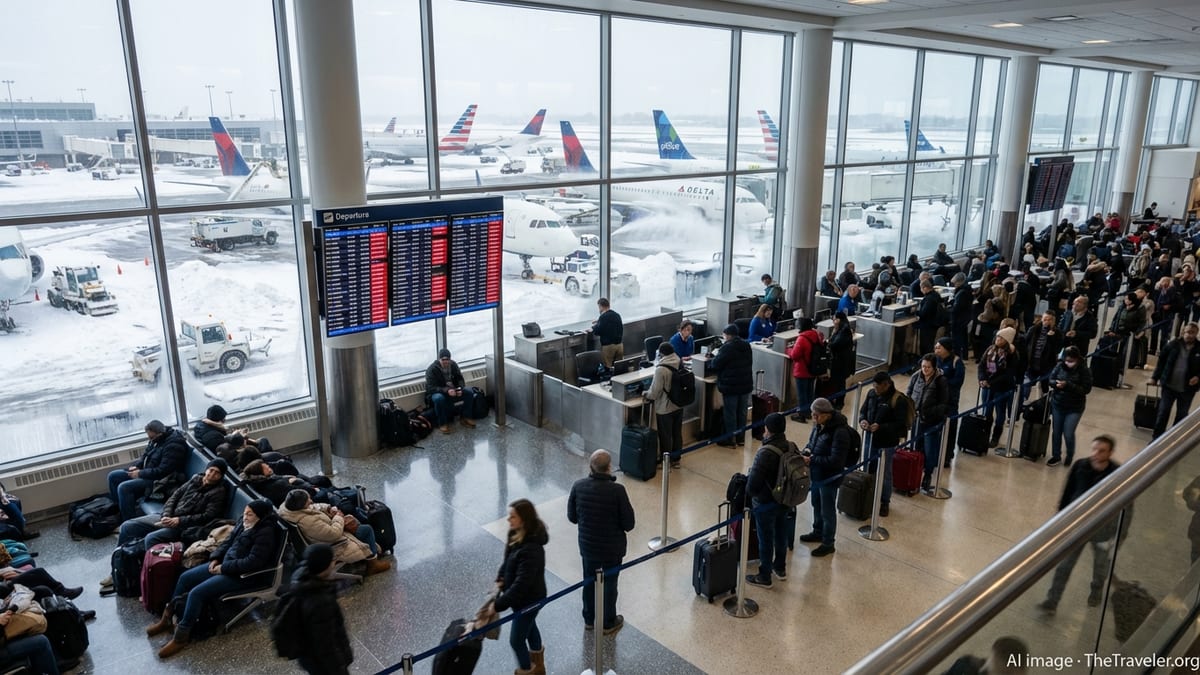
New York’s Major Airports Nearly Brought to a Standstill
Across New York City, air travel was upended as the storm pushed operations at JFK and LaGuardia to the brink. Flight tracking data showed that on Monday more than 90 percent of flights into and out of the region’s three major airports were canceled, with JFK and LaGuardia bearing the brunt. At LaGuardia, virtually all departures and arrivals were scrapped at the height of the blizzard, as crews struggled to keep runways clear amid heavy snowfall and high winds.
At JFK, a similar picture emerged, with hundreds of cancellations on both domestic and international routes. Ground transportation links added further strain: the AirTrain serving JFK was suspended for a period, replaced by shuttle buses navigating snow-clogged roadways. Inside terminals, departure boards filled with red as airlines preemptively canceled services, seeking to avoid stranding aircraft and crews in unsafe operating conditions.
By Tuesday, limited operations had begun to resume, but the New York area airports continued to lead the nation in cancellations and delays. Airlines reported that departures from JFK were subject to extended ground delays because of snow and ice on taxiways and ramps, with average wait times stretching to several hours as the system slowly restarted.
LaGuardia, with its smaller footprint and shorter runways, remained under particular pressure. Hundreds of flights there were canceled again on Tuesday as airport authorities focused on snow removal and de-icing, prioritizing safety over speed in restoring schedules.
Nationwide Flight Disruptions Exceed 5,700 Cancellations
While New York was among the hardest hit, the storm’s reach extended far beyond the city. Flight tracking services reported that more than 5,700 flights were canceled nationwide as the weather system swept across the Northeast, snarling operations at key hubs from Boston to Philadelphia and disrupting schedules as far away as the West Coast.
Boston Logan, Newark Liberty, and Philadelphia International all saw large majorities of their Monday departures wiped from the schedule, contributing to more than 10,000 cancellations across the multi-day event. With many of the affected airports serving as critical nodes in domestic and transatlantic networks, the knock-on effects were felt by travelers in cities that saw little or no snow themselves as aircraft and crews were left out of position.
Even as the snow tapered off, the storm’s legacy persisted in the form of lingering cancellations and delays. Airlines warned that the reset would take days, not hours, as carriers worked to reassign crews, reposition aircraft, and clear the backlog of stranded passengers. On Tuesday, cancellations nationwide remained elevated, though below Monday’s peak, as operations gradually stabilized.
Industry analysts noted that the scale of the disruption rivaled some of the most severe winter events of the past decade, underscoring the vulnerability of the U.S. air travel network when multiple major Northeast hubs are simultaneously constrained by weather.
Travelers Confront Long Lines, Packed Terminals, and Limited Options
For passengers, the statistics translated into long, exhausting hours in terminals across the region. At JFK and LaGuardia, crowds built from Sunday into Monday as travelers watched their flights first delay, then cancel altogether. Many were left searching for scarce rebooking options as successive waves of cancellations erased departures for later in the day and, in some cases, the rest of the week.
Inside terminals, cots and makeshift sleeping areas appeared as some travelers opted to stay airside, hoping to secure standby seats once operations resumed. Others chose to abandon their trips altogether, unable to find suitable alternatives as both flights and intercity rail services between New York and Boston were curtailed by the same storm.
Airlines activated severe-weather waivers, allowing many affected passengers to change itineraries without additional fees, subject to seat availability. Some carriers urged customers to postpone nonessential travel to and from the Northeast entirely until later in the week, warning that even confirmed bookings could face further disruption as operations gradually normalized.
Airport officials repeatedly advised travelers not to show up at JFK or LaGuardia without a confirmed, operating flight, stressing that on-site rebooking options would be limited and that terminal congestion could slow the recovery effort.
Airlines and Airports Work to Dig Out
Behind the scenes, airport crews and airline operations centers worked around the clock to restore the system. At both JFK and LaGuardia, plows, blowers, and de-icing trucks circulated on the airfield, clearing runways, taxiways, and gate areas as bands of snow moved through. Strong winds complicated the work, blowing snow back onto freshly cleared surfaces and reducing visibility.
Airport authorities emphasized that runway safety was the top priority, even as pressure mounted to get flights moving again. Treating runway surfaces, checking lighting and navigational aids, and verifying braking conditions all added time before the first departures could safely take off. In parallel, airlines had to coordinate crew duty limits and reposition aircraft that had been diverted or parked elsewhere to avoid the storm.
By Tuesday afternoon, some airlines began operating a reduced schedule at JFK and LaGuardia, focusing on core routes and key connections. However, carriers cautioned that schedules would remain fluid for several days, with last-minute changes likely as they balanced weather-related constraints with operational needs.
Travel experts suggested that the most affected customers would be those on complex itineraries or flying through multiple storm-impacted hubs, urging them to monitor airline apps and alerts closely and to be flexible with dates and even origin or destination airports.
What Travelers Should Expect in the Coming Days
With cleanup operations continuing across the Northeast, travel planners warned that the impact of the storm will extend well beyond the last snowflake. The combination of thousands of canceled flights at key hubs, crews displaced from their normal bases, and aircraft marooned outside the region will leave airlines working to catch up for much of the week.
Passengers with upcoming trips through JFK, LaGuardia, or other Northeast airports were urged to check flight status frequently and consider adjusting plans where possible. Early morning flights, often the first to depart after overnight snow removal, were expected to offer the best chance of operating close to schedule. Later in the day, delays can stack up as air traffic control programs manage congestion and weather-related reroutes.
For those already stranded, patience and flexibility remained the main currencies. Rebooking into alternative airports in the region, such as Hartford or smaller upstate New York facilities, could help some travelers reach their destinations faster, though ground travel conditions outside major cities were also affected by the storm.
Even as blue skies return over New York, the storm’s impact on air travel will remain visible in departure boards and packed standby lists, a reminder of how a single powerful weather system over the Northeast can reverberate through flight networks nationwide.