

More news on this day
South Africa is enjoying a powerful tourism rebound, with international arrivals climbing back toward pre-pandemic levels, even as the country confronts stubbornly high violent crime rates and fresh public-health warnings that complicate travel decisions.
Get the latest news straight to your inbox!
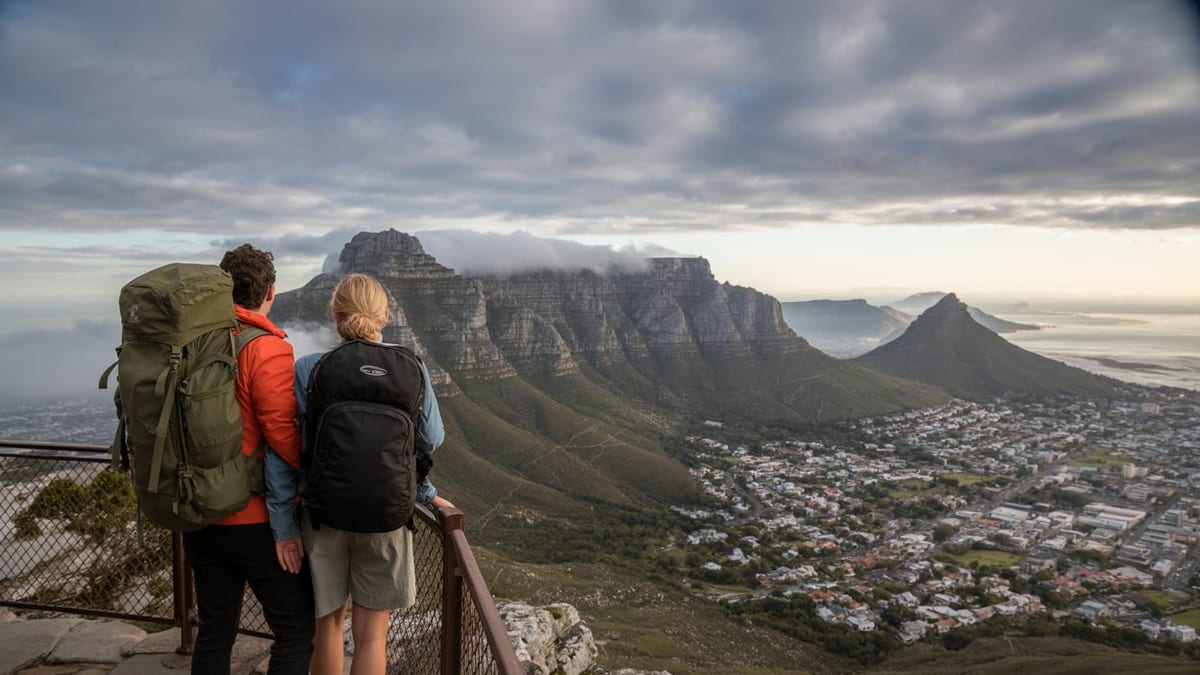
Image by Travel And Tour World
A Tourism Recovery Gathers Pace
Recent statistics from South Africa’s official data agency and tourism authorities indicate that international visitor numbers continued to rise through 2024, with long-haul markets from Europe and North America steadily returning alongside strong regional travel from elsewhere in Africa. Industry analyses for 2025 describe a sector that has largely shaken off pandemic-era restrictions, driven by enduring interest in Cape Town, the Garden Route, wine regions and big-five safari destinations.
Consultancy and industry reports suggest that total foreign arrivals are now within striking distance of 2019 levels, underscoring South Africa’s appeal as a relatively affordable, long-haul destination with diverse experiences, from urban culture and food to wildlife and coastline. Travel operators also point to a favorable exchange rate that has made on-the-ground costs comparatively low for many international visitors.
At the same time, business publications and tourism bodies warn that the country’s long-running reputation problem around safety remains one of the biggest obstacles to fully unlocking this recovery. Surveys of potential travelers consistently show crime and instability as the top concern when weighing South Africa against other long-haul destinations.
Crime Hotspots, Tourist Incidents and Perception Risks
South Africa’s overall crime statistics remain among the highest in the world, with major cities such as Johannesburg, Pretoria, Durban and Port Elizabeth regularly appearing near the top of global crime-perception indexes compiled by data platforms. Published rankings for early 2026, for example, place several South African metros in the top tier for perceived crime, reinforcing international concerns about personal safety.
While much of the most severe violence is concentrated in specific neighborhoods and townships on the urban periphery, high-profile incidents involving visitors continue to draw international attention. Local coverage has highlighted robberies and shootings of tourists traveling between Cape Town International Airport and coastal suburbs, as well as attacks on hikers in parts of the Table Mountain National Park area, fueling fears that opportunistic crime is intersecting with visitor routes.
Publicly available information shows that authorities have responded with a mix of targeted policing operations, tourism safety patrols and, more recently, the deployment of soldiers in selected high-crime areas of major cities to support law-enforcement efforts. Analysts note that these measures are intended both to reduce violent crime and to shore up international confidence in South Africa as a destination, though they also underscore the seriousness of the underlying security challenge.
Safety specialists emphasize that the risk profile for visitors is highly uneven. Tourist-heavy zones such as central Cape Town, popular beaches, wine country and private game reserves generally experience far lower levels of violent crime than surrounding regions, but issues like armed robbery, carjacking and theft still occur and tend to spike after dark or in less busy areas.
Health Alerts, Infrastructure Strain and Environmental Hazards
Beyond crime, travelers are being urged to pay close attention to evolving health and infrastructure issues. The World Health Organization and regional health bulletins have recently tracked cholera outbreaks in parts of South Africa since late 2023, with sporadic cases and clusters reported into 2024. While these have not been concentrated in mainstream tourist enclaves, public-health agencies advise paying close attention to water safety, hygiene and official advisories, particularly when visiting areas with weaker sanitation systems.
South Africa is also a country with one of the world’s highest HIV prevalence rates, although this is primarily a broader public-health and development concern rather than a direct risk to typical tourists. For visitors, the more practical considerations relate to access to medical care. Travel guidance published in 2025 notes that major private hospitals in Cape Town, Johannesburg and other large cities are generally of high standard, but medical facilities can be more limited in rural or remote areas, reinforcing the importance of comprehensive travel insurance.
Energy supply has been another persistent concern. Years of rotational power cuts, widely known as load shedding, disrupted daily life and could complicate travel logistics. Although extended periods of uninterrupted electricity supply were reported in 2024 and 2025 as new generation capacity and private solar installations came online, power analysts caution that the grid remains fragile. Travelers are therefore advised to verify backup power arrangements with hotels, lodges and guesthouses, particularly in smaller towns.
Environmental risks, including seasonal wildfires and severe storms in the Western Cape, have also affected transport routes and occasionally led to evacuations of hiking areas and nature reserves. Recent seasons have seen repeated fire alerts in the mountains around Cape Town and damaging winter cold fronts that triggered flooding and displacement in informal settlements. Visitors planning outdoor activities are encouraged to monitor local weather and park notices closely.
What Travelers Can Do to Reduce Their Exposure
Travel safety experts stress that, despite daunting national crime statistics, most international visitors to South Africa complete their trips without incident when they prepare carefully and follow conservative safety habits. Risk mapping published by tourism consultancies and safety initiatives shows that serious crime affecting tourists tends to cluster in particular corridors, such as certain highway exits near airports, isolated coastal pull-offs, and hiking routes at off-peak times.
Current guidance commonly recommends arranging airport transfers with reputable operators, avoiding informal taxi services, limiting nighttime walking in city centers or unfamiliar suburbs, and relying on vetted ride-hailing or hotel-arranged transport after dark. Visitors are also advised to keep valuables out of sight, use hotel safes where available, and be cautious at ATMs and in crowded public spaces where pickpocketing and card fraud are reported.
For outdoor pursuits, local mountain and hiking organizations encourage staying on well-used routes, avoiding solo excursions at dawn or dusk in more isolated areas, and checking recent incident reports from park authorities or community safety forums. In urban sightseeing, choosing accommodation in established tourist districts, studying local neighborhood dynamics and asking accommodation providers about current conditions can significantly reduce exposure to higher-risk zones.
On the health front, standard recommendations include consulting a travel clinic well before departure about routine vaccinations and any region-specific advice, packing necessary prescription medications, and confirming that travel insurance explicitly covers medical evacuation. In areas where recent cholera or other waterborne disease activity has been recorded, travelers are urged to pay close attention to food and water hygiene and to follow any local advisories on water use or swimming.
Balancing Reward and Risk Before You Book
Tourism analysts describe South Africa as a destination of sharp contrasts, where world-class natural attractions and sophisticated urban experiences coexist with deep social inequality, violent crime and pressured public services. For many travelers, the rewards, from wildlife encounters to food, wine and culture, still outweigh the risks, provided that trips are planned with realistic expectations and robust safety precautions.
Published travel-sentiment surveys suggest that perceptions of danger sometimes exceed the actual risks faced by visitors who stick to established routes and follow conservative safety practices. At the same time, business media warn that any further high-profile attacks on tourists or large-scale health emergencies could quickly undermine the sector’s fragile gains, especially as competing destinations on the continent market themselves as lower-risk alternatives.
For would-be visitors considering trips in 2026 and beyond, the key is not to ignore South Africa’s well-documented challenges, but to treat them as practical planning factors. That means choosing itineraries and operators with strong safety records, building flexibility into schedules in case of transport or power disruptions, and staying informed about crime, health and weather developments in the specific regions being visited.
In a country where tourism is a major employer and foreign-exchange earner, the stakes are high for both travelers and local communities. For now, the evidence points to a destination whose tourism boom is real, but whose long-term success will depend on whether crime and health risks can be brought under firmer control, and whether visitors feel they can explore with confidence rather than anxiety.