

More news on this day
South Bend International Airport found itself swept into a broader U.S. travel meltdown this weekend, as a powerful storm system and widespread airline disruptions triggered mass flight cancellations, leaving thousands of passengers stranded and scrambling for options across the country.
Get the latest news straight to your inbox!
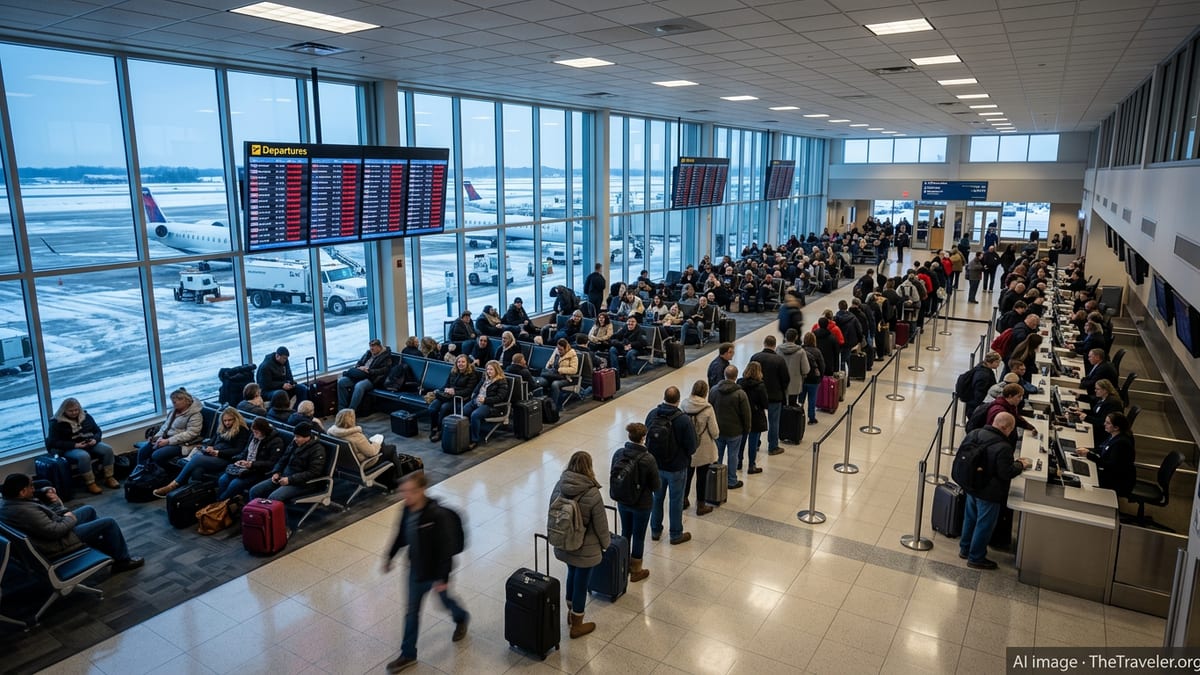
Storm System Triggers Nationwide Travel Turmoil
The latest wave of travel chaos is unfolding as a sprawling March storm system lashes large swaths of the United States, bringing blizzard conditions to parts of the Upper Midwest and severe weather farther south. Publicly available meteorological data show that a deep low-pressure system tracking across the northern tier has delivered heavy snow, strong winds, and treacherous visibility to key aviation corridors, snarling operations at multiple hubs.
Airlines across the country have responded by preemptively slashing schedules and cancelling flights as conditions deteriorated, a tactic increasingly used in recent years to avoid aircraft and crew being trapped in the wrong cities. By Monday morning, aggregated flight-tracking data indicated that thousands of flights nationwide had been delayed or cancelled, turning what was expected to be a busy late-winter travel period into an operational crisis for carriers and airports alike.
While the worst weather has focused on major metros in the Upper Midwest and Great Lakes region, the ripple effects have extended far beyond the direct impact zone. Smaller airports that depend heavily on connections through large hubs have seen their schedules gutted as upstream flights vanish from boards, leaving passengers with few or no alternative options the same day.
The situation has been exacerbated by tight aircraft utilization and lean staffing environments, with published industry analyses noting that airlines have little slack in their systems when major storms hit. As a result, disruptions that begin with weather can quickly become a broader network event that takes days to unwind.
South Bend International Brought to a Standstill
South Bend International Airport, a regional gateway for northern Indiana and southwestern Michigan, has been swept up in this cascading disruption. Publicly available flight-status information on Monday showed swaths of cancellations and long delays on routes linking South Bend to major hubs such as Chicago, Detroit, and other key connection points, effectively severing many passengers from their onward travel plans.
With most of South Bend’s commercial traffic tied to larger Midwest and East Coast hubs now contending with the storm, a single cancellation at a hub has frequently meant the paired return flight to South Bend never departs, leaving gaps throughout the day’s schedule. Travelers who had counted on tight connections for business trips, international departures, or spring-break getaways have instead faced hours in terminal seating, repeatedly refreshing airline apps in search of remaining options.
Airport operations themselves have remained limited but functional, according to publicly available information, with runways and taxiways kept open between bursts of heavy snow and low visibility. Ground crews, however, have been forced to work around rapidly changing conditions, including icing concerns and gusty crosswinds that can temporarily halt or slow ramp activity even when runways are technically available.
The result has been a patchwork day of operations in South Bend: a handful of flights manage to depart in short weather windows while others are scrubbed entirely or held for hours awaiting aircraft and crew from elsewhere in the network. For many travelers, the distinction between delay and cancellation has offered little comfort, as rebooked options often fall one or two days later than originally planned.
Thousands Stranded Across the U.S. Network
The crisis unfolding at South Bend is just one visible piece of a much larger national breakdown. Flight-tracking dashboards and airline alerts show that, taken together, U.S. carriers have scrubbed several thousand flights over the course of the storm event, with additional services delayed by hours as operations attempt to restart. In many cases, aircraft and crews have been left out of position far from their scheduled routes, creating what aviation analysts describe as a complex logistical puzzle.
Passengers transiting major hubs such as Chicago, Detroit, and other Midwest and East Coast airports have reported extensive lines at customer service counters, crowded gate areas, and a shortage of available hotel rooms near large airports as the disruption stretches into multiple days. According to published coverage, some airlines have issued broad travel waivers for affected regions, allowing customers to rebook without change fees, but this has done little to expand the pool of actual available seats.
Travel industry commentary points out that the timing of the storm has amplified its impact. The mid-March period coincides with early spring-break travel for many schools and universities, pushing up load factors on popular routes even before cancellations are taken into account. When flights that were already scheduled near capacity are removed from the system, remaining services rapidly sell out, leaving stranded travelers facing long waits for the next open seat.
For international passengers relying on regional feeder flights from cities like South Bend, the consequences have been particularly severe. Missed transatlantic and transpacific departures often cannot be easily re-accommodated the same day, and travelers may see complete itineraries unravel as separate tickets or nonrefundable hotel bookings downline go unused.
Limited Options for Rebooking From Smaller Airports
The turmoil highlights the vulnerabilities of smaller airports during nationwide air travel crises. South Bend, like many regional facilities, is served by a limited number of carriers and relies on frequent connections to one or two major hubs rather than a broad portfolio of nonstop destinations. When those key hubs are hit by weather and staffing challenges, the knock-on effect can quickly force a near halt to local air service.
Public discussions among frequent fliers and travel advisers emphasize that passengers at airports like South Bend often have fewer same-day alternatives than those already positioned in a large hub. Even when airlines offer waivers to rebook to other departure points, securing ground transportation at short notice to a larger airport such as Chicago O’Hare may be costly or impractical, particularly for families or those traveling with significant luggage.
As cancellations have mounted during this latest storm, many South Bend travelers have reportedly turned to rental cars, intercity buses, or rail services in an attempt to salvage their plans. However, broader regional demand has strained those options as well, with rental fleets booking out quickly and road conditions deteriorating in the same wintry weather that grounded flights.
Consumer advocates note that current U.S. regulations give airlines flexibility in how they respond to weather-related disruptions, often limiting travelers to rebooking on the same carrier rather than requiring refunds or cross-ticketing on competitors. For passengers from smaller markets, this can mean prolonged waits for the next available seat on a limited schedule, especially when aircraft and crews remain out of position days after the initial storm.
Longer-Term Questions for Airlines and Travelers
The latest travel nightmare has renewed questions about the resilience of U.S. airline networks in the face of increasingly volatile weather and tight operating margins. Recent winters have featured several major storms that triggered mass cancellations across wide regions, and publicly available industry reports suggest that carriers are still working to rebuild staffing and fleet flexibility after years of pandemic-era cuts and restructuring.
Aviation analysts note that while preemptive cancellations can reduce the risk of passengers being stranded on tarmacs or aboard diverted flights, they do not eliminate the broader disruption for travelers, particularly at small and mid-sized airports. Each wave of mass cancellations highlights how quickly the system can seize up when multiple hubs confront extreme weather, maintenance constraints, or air traffic control slowdowns simultaneously.
For travelers using airports like South Bend, the events of this week may serve as a fresh reminder to build additional buffers into tight connections, consider flexible ticket options when possible, and monitor weather forecasts closely in the days before departure. Travel planners also advise keeping backup plans for surface transport to larger hubs during higher-risk seasons, though such options are not always practical or affordable.
As airlines gradually rebuild their schedules and reposition aircraft after the storm system clears, operations at South Bend and across the country are expected to stabilize. Yet the scenes of crowded gates, departure boards filled with red cancellations, and weary travelers sleeping in terminal chairs underscore how fragile the air travel network can become when severe weather and high demand collide.