

More news on this day
South Bend International Airport in Indiana has become a flashpoint in a broader U.S. travel meltdown this weekend, as powerful Midwest storms and a wave of airline schedule disruptions leave thousands of passengers stranded amid widespread flight cancellations and delays nationwide.
Get the latest news straight to your inbox!
Midwest Storms Trigger Severe Airline Disruption
A potent late-winter storm system sweeping across the Midwest between March 13 and March 16 has created hazardous conditions for air travel, with snow, high winds, and low visibility affecting airports from Iowa and Wisconsin to Michigan. Publicly available meteorological summaries describe a sprawling storm complex that has prompted winter storm and blizzard warnings across the northern tier of states, with ripple effects spreading through key airline hubs across the region.
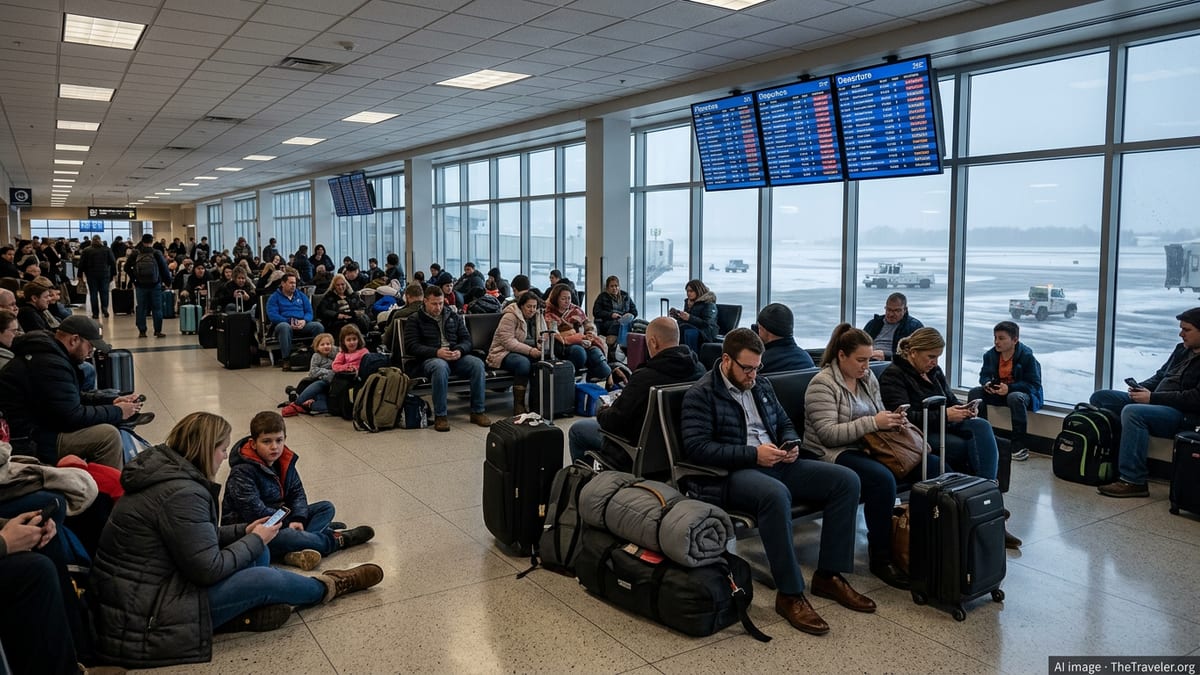
South Bend International Airport, which serves as a critical regional link for northern Indiana and southwest Michigan, has been hit by a wave of cancellations and rolling delays as airlines struggle to keep schedules aligned with rapidly changing weather and aircraft positioning constraints. Travelers arriving for early-morning departures on March 15 reported departures boards filling with red “canceled” and “delayed” notices, while inbound flights were diverted or scrubbed altogether when conditions deteriorated along approach paths.
The situation has been compounded by operational knock-on effects from earlier storms this winter, which have already left U.S. airlines dealing with tight aircraft rotations, stretched crew schedules, and limited spare capacity. Industry data and recent coverage of nationwide disruptions throughout January and February indicate that major winter systems have repeatedly forced mass cancellations, with carriers still working to reset networks when the latest storm hit.
As the Midwest system intensified over the weekend, the impact radiated outward to connecting hubs in Chicago, Detroit, and other major cities, snarling the intricate web of domestic connections that feed smaller airports such as South Bend. With flights into those hubs grounded or delayed, South Bend’s outbound options narrowed sharply, stranding travelers who suddenly found their onward journeys uncertain.
South Bend Travel Waivers and Thousands Stranded
Publicly available customer advisories show that at least one major U.S. carrier issued a Midwest winter weather travel waiver that explicitly included South Bend for travel dates from March 14 through March 16. The waiver allows affected passengers to change itineraries without additional fees, as long as they remain within specified rebooking windows and route limitations. While such waivers can soften the financial blow for travelers, they do not resolve the more immediate challenge of limited seat availability when large portions of a daily schedule are wiped out.
Social media posts and traveler forums over the weekend have described crowded gate areas and long lines at ticket counters in South Bend as passengers compete for scarce seats on remaining flights. With many routes funneled through already stressed Midwest hubs, even a single cancellation has tended to cascade into missed connections and overnight stays, leaving some travelers searching for rental cars, trains, or buses to continue their journeys.
Reports from nearby Chicago, one of the region’s largest aviation hubs, describe extensive cancellations and difficulty “getting out” of the area, reinforcing the sense of a broader regional gridlock. With South Bend heavily dependent on those larger hubs for onward connections, travelers booked through Indiana have often found themselves caught within the same web of network-wide disruption.
For South Bend International, the wave of cancellations has highlighted the airport’s dual role as both a local gateway and a dependent spoke in the national aviation system. When weather and operational issues converge across multiple states, the airport’s limited number of daily departures means passengers can quickly overwhelm available options, resulting in packed waiting areas and a scarcity of same-day alternatives.
National System Under Strain From Successive Weather Shocks
The chaos at South Bend is unfolding against a backdrop of repeated severe weather events that have battered U.S. aviation this winter. Earlier in the season, a sprawling late-January winter storm led to one of the worst days for weather-related U.S. flight cancellations since the early pandemic era, with more than ten thousand flights called off in a single day according to published analyses of airline and tracking data.
In February, additional snow and ice systems in the Northeast again forced thousands of cancellations, compounding the logistical burden on airlines already managing stretched resources. Flight operations experts have noted that each large-scale disruption can leave aircraft and crews out of position for days, and that recovering from successive storms grows more complex as reserve capacity is consumed.
Longer-term data on U.S. flight operations show a steady rise in weather-linked disruptions in recent years, with some analyses indicating that severe conditions now account for a dominant share of cancellations. In that context, the latest Midwest storm has arrived at a time when many carriers are still refining winter resilience strategies, from de-icing capacity and crew scheduling to how far in advance to preemptively thin schedules.
For passengers at airports like South Bend, those strategic debates are playing out in real time. Limited gate space, small terminal footprints, and fewer alternative carriers mean that any large systemic shock can feel magnified on the ground, even when the immediate cause lies hundreds of miles away along a storm track or at a congested hub.
Airlines Juggle Recovery, Rebooking and Passenger Care
Across the United States, airlines are attempting to balance network recovery with passenger accommodation as the storm moves through and conditions gradually improve. Standard recovery practices typically include reassigning aircraft, calling in reserve crews, and pruning future flights to free capacity for displaced travelers, though the exact steps vary by carrier and by the severity of the disruption.
At South Bend, travelers have turned to airline apps and online tools to rebook, track baggage, and secure hotel or meal assistance where eligible. Industry guidance from consumer advocates and government agencies consistently emphasizes the importance of monitoring flight status early, signing up for carrier alerts, and understanding fare rules and passenger rights, especially in situations where weather is the primary cause of cancellations.
Publicly available information from past disruptions shows that airlines often prioritize restoring core trunk routes and reconnecting major hubs before fully rebuilding service at smaller airports. For South Bend passengers, that can mean a lag between the resumption of operations elsewhere and the availability of convenient departure times or nonstop options from their local field.
While some travelers have managed to reroute via alternative cities or to shift plans by several days, others remain in limbo, particularly those with international connections, time-sensitive commitments, or limited flexibility. The coming days are expected to test how quickly airlines can unwind the backlog of stranded passengers and reposition aircraft, and how effectively smaller airports like South Bend can support that recovery process.
What Travelers Through South Bend Can Expect Next
As the storm system moves east and gradually weakens, operational metrics at major Midwest hubs are expected to improve, though the effects may linger for days. Industry observers note that even after weather clears, airlines must clear queues of displaced passengers, meaning that many remaining seats on upcoming flights will be taken by customers from previously canceled services.
For travelers planning to use South Bend International in the coming week, publicly available advisories from airlines and travel experts recommend building extra time into itineraries, preparing for potential schedule changes, and considering alternative routings when possible. Those with flexible plans may find it easier to rebook outside of peak travel times or to accept indirect routings if nonstop options remain constrained.
The current disruption also underscores the value of understanding airline policies before leaving home. Weather-related cancellations typically relieve carriers of certain compensation obligations, but passengers may still be eligible for fee-free changes, vouchers, or hotel assistance depending on ticket type and airline policy. In a rapidly evolving situation, having these details in hand can help travelers at South Bend make faster decisions when gate agents and call centers are under heavy load.
For now, South Bend International remains emblematic of a national air travel system under mounting pressure from volatile weather and complex operational demands. As airlines work to stabilize schedules, the scenes of crowded concourses, anxious families, and blinking departure boards at this regional airport offer a close-up view of a travel nightmare that is playing out across the United States.