

More news on this day
South Korea has imposed a rare, full travel ban on Iran from the evening of March 5, 2026, as the escalating conflict involving United States and Israeli strikes raises security fears for its citizens and disrupts air travel across the wider Middle East.
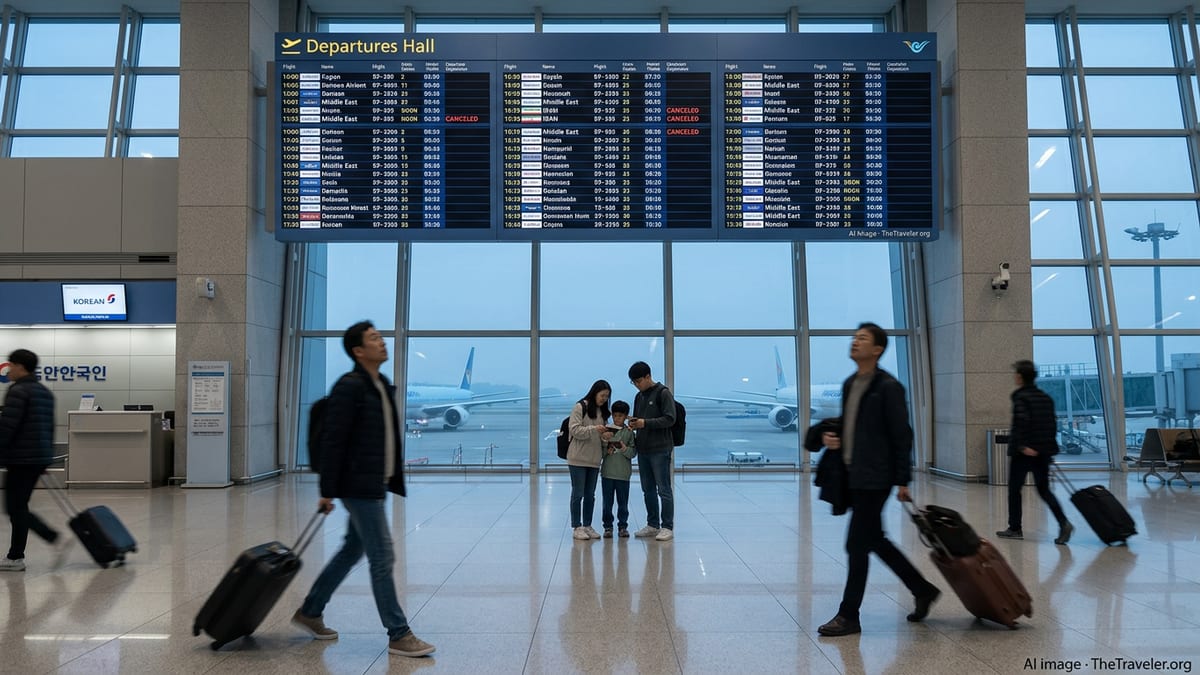
What the New South Korea–Iran Travel Ban Actually Covers
South Korea’s Ministry of Foreign Affairs announced that all travel by South Korean nationals to any part of Iran is now prohibited, upgrading an already strict advisory to the highest possible level. The decision, which took effect at 6 p.m. local time on March 5, follows days of intensified U.S. and Israeli military action targeting Iranian territory and assets, sharply increasing the perceived risk to foreign nationals.
Until now, Seoul had maintained a strong warning that advised its citizens to leave Iran and avoid all nonessential travel. By moving to a legal ban, the government has activated its powers under the Passport Act, which allows authorities to restrict the use of South Korean passports for destinations deemed to pose a serious and immediate threat to public safety. Travel bans of this kind are rare and typically reserved for conflict zones or areas facing severe instability.
Practically, the measure means South Koreans cannot legally enter Iran without a specific exemption granted by the foreign ministry, generally limited to essential diplomatic, humanitarian or narrowly defined business reasons. Those already in the country are being strongly urged to leave as soon as feasible, with consular staff coordinating exit routes via neighboring states such as Turkmenistan.
The ban is temporally open-ended. Officials in Seoul have indicated that it will remain in force until security conditions improve significantly and the risk of South Korean nationals being harmed, detained or caught in wider military operations is judged to have diminished.
Legal Risks for Travelers and What It Means for Existing Plans
For South Korean passport holders, ignoring the Iran ban is not simply a matter of traveling at one’s own risk. Violations can be prosecuted under the Passport Act, with penalties that may include the revocation or suspension of passports and, in more serious cases, criminal charges that carry potential prison sentences. Authorities have underscored that even those traveling for personal, cultural or religious reasons are not exempt.
The ban also creates immediate complications for travelers who were planning multi-country Middle East itineraries, study programs or business trips that included Iran. Any South Korean national with a ticket to Iran now faces the prospect of canceled segments, rerouting, or complete itinerary overhauls. In many cases, travel agencies in Seoul and across Asia are working to redirect travelers to alternative destinations or to reconfigure overland journeys so that they bypass Iranian territory entirely.
Another critical impact is on travel insurance. Standard policies often exclude coverage for trips to destinations under a government-issued travel ban, and some explicitly state that journeys taken in contravention of official prohibitions are not insurable events. Travelers who attempt to go ahead despite the ban risk finding themselves without medical, evacuation or cancellation coverage if the situation on the ground deteriorates further.
For South Koreans currently in neighboring hubs such as Dubai or Doha, the tightening restrictions may mean that previously viable overland exit routes through Iran are no longer a legal option. Consular staff are advising such travelers to seek alternative paths home via safer transit points, and to remain in close contact with embassies and local airlines for rapidly changing guidance.
How Airlines Are Rerouting and Which Flights Are Most Affected
While direct commercial traffic between South Korea and Iran was already limited, the ban comes amid a broader shift in airline operations across the region. Carriers based in South Korea and other Asian countries are reviewing flight paths that cross Iranian airspace, seeking to minimize exposure to potential military activity and airspace closures. Even without a complete shutdown of Iranian skies, risk calculations used by airlines and insurance underwriters are being rapidly updated.
South Korean and regional airlines that previously relied on westbound corridors skirting northern Iran may now opt for more southerly or northerly tracks, lengthening flight times between Asia and destinations in Europe, the Middle East and Africa. Longer routings can lead to increased fuel costs, tighter crew scheduling margins and a higher likelihood of operational delays, especially on already busy long-haul sectors.
For passengers, the immediate effect may show up as extended flight durations, last-minute schedule changes or equipment swaps on certain routes. Travelers connecting through Gulf and Turkish hubs could see more frequent disruptions as local carriers respond to evolving security assessments and any temporary airspace restrictions. Even those not traveling to or from South Korea could feel the knock-on effects as capacity is reshuffled and airlines consolidate or cancel underperforming flights.
In parallel, authorities in Seoul have signaled that charter or military evacuation flights remain on the table if commercial options become too constrained. That planning reflects a worst-case scenario in which regional escalation or sudden airspace closures limit the ability of South Koreans to leave Iran or neighboring states using regular airline services.
Implications for Wider Middle East Travel From Asia
South Korea’s move is being closely watched by other Asian governments, some of which have already issued heightened travel advisories for Iran and parts of the Middle East but have not yet gone as far as a full legal ban. The decision from Seoul is likely to add pressure on regional partners to reassess their own risk thresholds, especially for destinations that lie within range of ongoing missile and drone exchanges.
For Asian travelers more broadly, the picture is one of rising uncertainty rather than outright closure. Many popular Middle Eastern transit and tourism hubs remain open and are still considered safe for normal travel, but the perception of the region as a whole has been shaken. Bookings involving complex itineraries through multiple high-risk zones are likely to come under greater scrutiny from both travel advisors and insurers.
Travel agencies across South Korea are already reporting increased demand for rerouting away from Iran and, in some cases, for postponing or canceling Middle East trips altogether. Alternative destinations in Southeast Asia, Europe and the Americas may see short-term gains as travelers pivot to regions perceived as more stable. At the same time, business travelers with critical operations in the Gulf and beyond are focusing on contingency planning, including remote alternatives and regional office stand-ins.
For the tourism and aviation industries centered in the Middle East, South Korea’s ban sends a signal that confidence in the region’s stability is fragile. While the direct number of South Korean travelers to Iran may be modest, the symbolism of a full legal prohibition reinforces concerns among airlines, hotel groups and tour operators that further government-level restrictions from other Asian markets could follow if the crisis deepens.
What Travelers Should Do Next
For South Korean citizens with any future plans involving Iran, the message from officials is clear: do not attempt to travel there until the ban is lifted, and register with consular services if you are currently in the wider Middle East. Travelers should closely review the fine print of existing tickets and insurance policies, paying particular attention to clauses about government advisories and prohibited destinations.
Even non-Korean travelers should monitor developments, especially if their itineraries include flights routing near or over Iranian territory, or if they are relying on regional connections that could be disrupted by further military or political escalations. Checking with airlines 24 to 48 hours before departure, as well as subscribing to real-time travel alerts from trusted news outlets and official channels, can help minimize surprises at the airport.
Travel planners and corporate travel managers may want to temporarily avoid scheduling nonessential trips that depend on volatile air corridors or require passage through high-risk areas. Building in greater flexibility, including refundable fares, changeable tickets and robust insurance with explicit coverage for geopolitical events, can provide a valuable buffer in a fast-moving situation.
As the crisis evolves, the South Korea–Iran travel ban serves as a sharp reminder that geopolitical tensions can reshape global mobility with little warning. For now, travelers and airlines across Asia are adjusting to a new layer of uncertainty, recalibrating routes, budgets and expectations for journeys that pass anywhere near the Middle East’s most sensitive fault lines.