

More news on this day
A Southwest Airlines Boeing 737 arriving at Hollywood Burbank Airport was forced into an abrupt go-around after its main wheels touched the runway while another aircraft was still occupying the same strip, according to flight tracking data and aviation incident reports.
Get the latest news straight to your inbox!
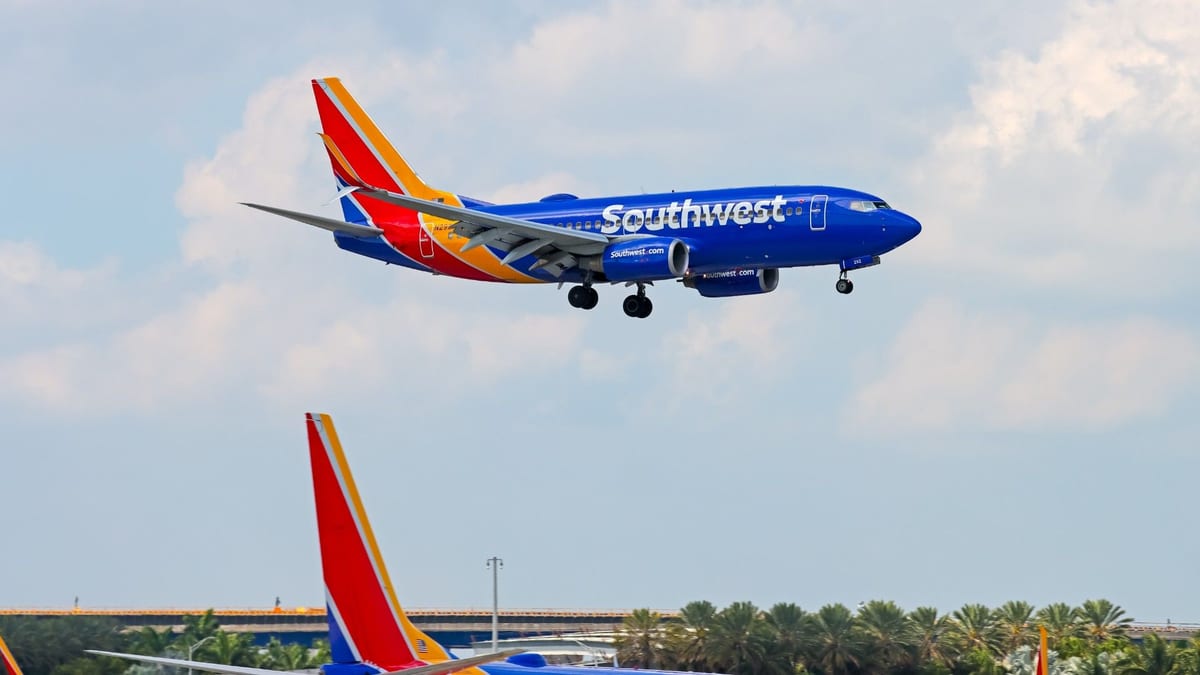
Image by Simple Flying
Touchdown, Then Full Power Back Into the Sky
Publicly available flight tracking records and accounts from aviation incident monitors indicate that the Southwest flight was on short final to Burbank’s primary runway when the sequence unfolded. The aircraft descended normally, crossed the threshold and briefly made contact with the pavement before the crew advanced the throttles and climbed away.
Video posted on social media and descriptions from onlookers suggest the maneuver occurred at low speed and low altitude, with the jet already in the landing flare. The decision to go around after touchdown is relatively uncommon compared with go-arounds initiated higher on approach, but it remains a standard option available to crews whenever a stabilized, safe landing can no longer be assured.
Tracking data show the 737 quickly gaining altitude and repositioning for another circuit to Burbank. The aircraft later landed without further incident, and there were no reports of injuries or damage.
Runway Not Clear as Jet Arrived
Information compiled from aviation safety databases and media coverage indicates that the trigger for the late go-around was a runway conflict involving another aircraft that had not yet vacated the landing strip. The inbound Southwest jet appears to have been cleared to land while the preceding aircraft was still in the process of exiting, leaving little margin as the 737 crossed the threshold.
Descriptions of the event align with a runway incursion scenario, a category of occurrence in which an aircraft, vehicle or person is present on a runway in a way that creates a collision risk. In this case, the crew’s decision to reject the landing and climb away averted a possible near miss on the pavement at one of the Los Angeles region’s busiest secondary airports.
According to publicly accessible air traffic control recordings and reconstructions shared by aviation observers, the 737 crew initiated the go-around at a point where the aircraft had already settled onto the runway. Bringing a transport-category jet back into the air from that stage of the landing requires rapid power application and precise handling but is a maneuver pilots are trained to perform.
Burbank’s History of Tight Margins
Hollywood Burbank Airport has a long record of operational scrutiny because of its relatively short runways and their proximity to surrounding streets and buildings. The most serious Southwest accident at the airport occurred in March 2000, when a Boeing 737 overran the end of the runway and came to rest on a nearby street, prompting a series of safety recommendations and infrastructure changes.
In December 2018, another Southwest 737 arriving from Oakland rolled beyond the end of the same runway and came to a halt in an engineered material arresting system, or EMAS, a crushable concrete bed designed to stop overrunning aircraft. That incident, widely covered at the time, reinforced concerns about landing performance and safety margins at Burbank in wet or challenging conditions.
Published safety analyses note that the airport’s constrained footprint and short runway safety areas leave little room for error. As a result, pilots and controllers operating at Burbank are accustomed to strict adherence to stabilized approach criteria, conservative go-around policies and careful sequencing of arrivals and departures to avoid runway conflicts.
Go-Arounds as a Critical Safety Tool
Aviation safety specialists frequently highlight the go-around as one of the most important safety tools available to flight crews. Industry guidance encourages pilots to initiate a go-around any time there is doubt about runway status, aircraft stability, or the ability to complete a landing within the available distance, even if that decision causes delays or discomfort for passengers.
Data from international safety organizations show that unstable or continued landings after a problem develops on final approach are persistent contributors to runway excursions and other landing accidents. By contrast, go-arounds, while occasionally dramatic for passengers, are classified as precautionary maneuvers that break an error chain before it results in an accident.
In the Burbank event, the Southwest crew’s decision to abandon the landing after touchdown illustrates the philosophy that it is safer to discontinue a marginal situation, even at a very late stage, than to attempt to salvage a landing when the runway environment is not fully assured.
Renewed Focus on Runway Incursions
The incident at Burbank comes amid heightened attention to runway incursions across the United States. Recent near-miss events at major hubs, including episodes in which landing airliners were forced into go-arounds because other aircraft crossed or occupied active runways, have led to new guidance, technology trials and procedural reviews.
Federal data and independent analyses show that while serious collisions on runways remain rare, the number of reported incursions has drawn concern from regulators, airlines and pilot organizations. Efforts under way include testing improved surface surveillance tools, refining phraseology between pilots and controllers, and reinforcing cockpit procedures that require crews to visually confirm that a runway appears clear before landing or crossing.
Burbank’s combination of short runways, dense surrounding development and high traffic volume during peak periods makes it a frequent subject of such discussions. The latest Southwest go-around added another data point to an evolving picture of how quickly traffic conditions can change in the runway environment, and how decisive action by flight crews can prevent a serious outcome.