

More news on this day
Southwest Airlines’ shift to assigned seating is rippling through U.S. airports, with fresh reports that flight crews are now instructed to strictly enforce seat assignments and stop passengers from swapping seats, even on flights that are far from full.
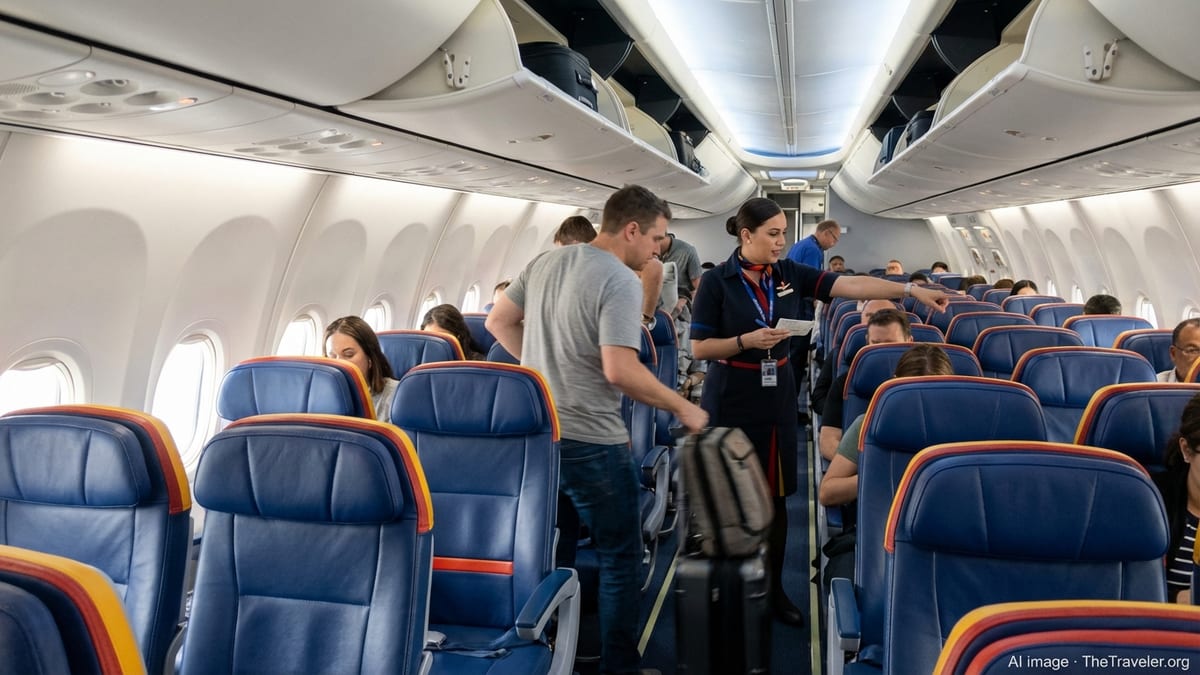
A Radical Culture Shift for America’s Former Open-Seating Carrier
The move marks a striking cultural reversal for the Dallas-based carrier, which for more than five decades allowed travelers to choose any open seat once on board. That system, often celebrated by loyalists as part of the airline’s egalitarian identity, ended with the rollout of assigned seating on January 27, 2026, bringing Southwest into line with major rivals across the United States.
Under the new model, every customer receives a specific seat at booking or check-in, and boarding is organized in numbered groups linked to fare type, seat location and frequent flyer status. Extra-legroom and preferred seats at the front of the cabin now carry premium price tags, while basic fares typically board later and are scattered toward the rear. Analysts say the changes are designed to unlock new revenue and address years of investor pressure after costly operational disruptions and a weaker financial performance in the mid-2020s.
What is catching passengers off guard, however, is not just the introduction of assigned seats but the way the policy is being enforced on the aircraft. Travelers have shared accounts of cabin crews insisting that families, couples and solo travelers remain in their assigned places, telling them that seat changes are no longer permitted once boarding is complete.
In some cases, the reported clampdown has extended even to flights with visibly empty rows, where travelers say they were told they could not move to a more desirable window or aisle without prior authorization or a paid upgrade. For a generation of Southwest regulars used to fanning out across the cabin as soon as they stepped on board, the new rigidity has been jarring.
Passenger Backlash as Seat Swaps Are Denied
Social media feeds and traveler forums have quickly filled with stories from customers surprised or angered by the restrictions. Some describe being blocked from trading a middle seat for an empty aisle just a few rows away, while others recount situations in which strangers tried to coordinate swaps so families could sit together, only to be overruled by crew citing company rules.
Parents in particular have voiced concern about being separated from young children when last-minute rebookings or irregular operations scatter their seat assignments. In previous years, Southwest’s open seating allowed families who boarded together to cluster in available rows with little fuss. Now, some say they are being told to resolve seating issues at the gate, where options may already be limited, or to accept split seating unless another passenger volunteers to move.
Travel advocates warn that a broad “no seat swapping” stance could create friction in the cabin and slow down departures as debates play out in crowded aisles. Veteran flight attendants at other carriers say ad hoc swaps have long served as a practical safety valve, resolving comfort issues and family separations without requiring complex rebooking or fee waivers.
The rigid approach is also colliding with travelers’ expectations shaped by years of informal flexibility. Many customers associate Southwest with a more relaxed, cooperative boarding culture, from its famously unscripted safety announcements to the old scramble for favorite spots. As one frequent flyer put it in a recent online post, the new regime feels less like the airline they grew up with and more like every other big U.S. carrier.
Revenue Strategy Meets Operational Control
Industry analysts say the airline’s strict line on seat changes is closely tied to its broader revenue and operational strategy. By tightly controlling where people sit, Southwest can better protect the value of its premium products, such as extra-legroom and preferred seats, which command higher fares and are marketed as guaranteed perks for business travelers and elite customers.
If passengers were free to reshuffle into those seats after boarding, it would undermine the appeal of paying extra for them. Carriers that sell differentiated seating often instruct crew to prevent free upgrades and unauthorized moves into higher-value rows, a practice that has become standard across much of the industry. Southwest’s new stance suggests it is fully embracing that logic after decades of resisting it.
Operationally, precise assignments also give schedulers better data on weight and balance, boarding group flows and overhead bin usage. Since the policy went live, some travel observers have noted that the airline is watching how boarding times and on-time performance change as customers adapt to the group-based process. Limiting spontaneous seat swaps, they argue, may be one way for Southwest to keep turn times predictable as it fine-tunes the new system.
Still, the calculus is delicate. Southwest built its brand on simplicity and friendliness, and critics worry that aggressive enforcement of seating rules could erode that identity, especially when it appears to offer little tangible benefit to customers outside the premium tiers.
Calls for Flexibility and Clearer Guidance
Consumer advocates and travel experts are urging Southwest to clarify how far its crews are expected to go in blocking seat moves, and whether there will be exceptions for families, people with disabilities or other vulnerable travelers. Some note that regulators already expect airlines to make reasonable efforts to seat young children with a parent or guardian, and warn that a blanket prohibition on movement in the cabin could draw scrutiny if it leads to avoidable separations.
Internally, the airline is reported to be reviewing early feedback on its assigned seating rollout, including complaints about limited overhead bin space, confusion over boarding groups and frustration with the apparent “no switching” posture. Analysts say small adjustments, such as explicitly allowing low-stakes swaps within the same fare category or row once boarding is complete, could preserve revenue integrity while easing customer tensions.
For now, travel planners suggest that passengers treat Southwest like any other legacy carrier: choose seats early, pay if a specific location matters and resolve family seating needs well before reaching the gate. They also recommend building in extra time at the airport to negotiate changes with agents, rather than counting on in-flight flexibility that may no longer exist.
Whether the airline ultimately relaxes its stance or doubles down will likely depend on how the numbers look over the coming months. With assigned seating, new baggage fees and premium products already boosting revenue, executives may be reluctant to introduce any policy that risks blurring the lines between free and paid perks, even if it means alienating some of the customers who long defined the Southwest brand.