

More news on this day
The Spa Valley Railway, a much-loved heritage line linking Tunbridge Wells in Kent with Eridge in East Sussex, has announced a five hundred thousand pound infrastructure upgrade that volunteers are calling the most ambitious project in its history, positioning the route at the forefront of preservation-era investment and setting a new benchmark for heritage railways across Kent and Sussex.
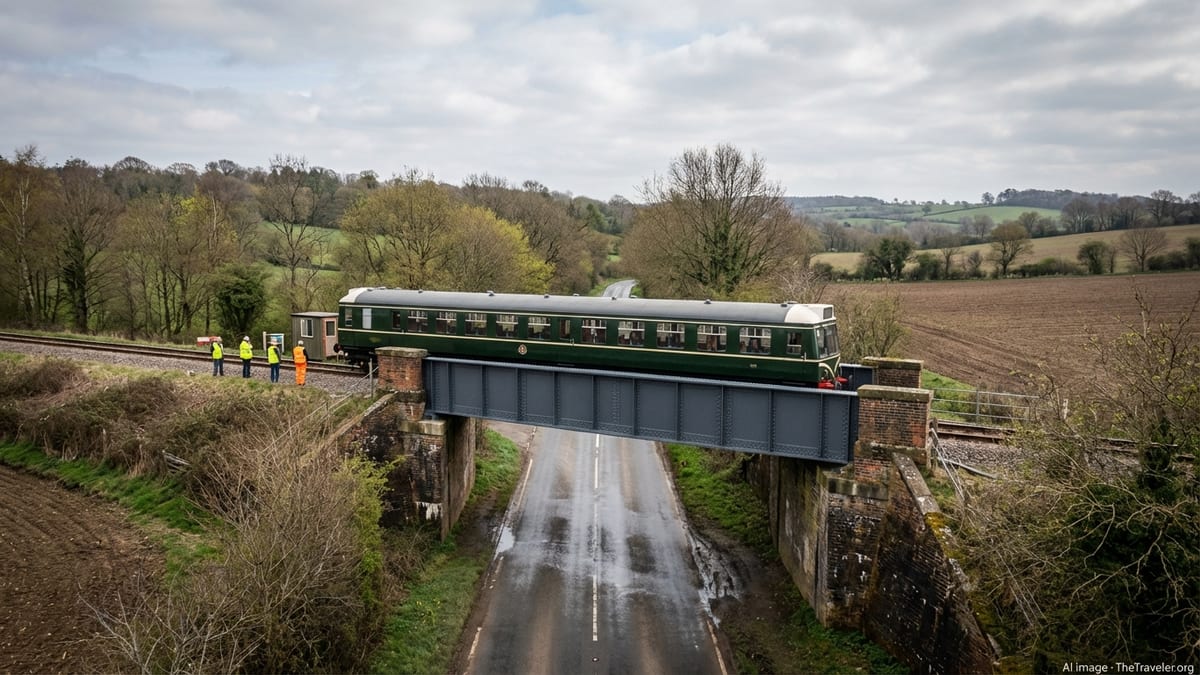
Most Ambitious Project in the Line’s Modern History
The centrepiece of the upgrade is the replacement of Broom Lane Bridge, a vital structure on the Spa Valley Railway that has suffered from corrosion and age-related wear. Railway officials say the bridge works represent both a technical and financial leap for the organisation, eclipsing previous infrastructure schemes in scale and complexity.
Described by the railway as its “most ambitious and expensive” undertaking to date, the project is budgeted at around £500,000. That figure is substantial for a volunteer-led heritage line, where operating margins are tight and much of the day-to-day activity depends on donated time and charitable giving. The cost covers demolition of the existing steel bridge, construction of a new span to modern engineering standards, and associated track and drainage works.
Work is due to begin with the line temporarily closed to regular passenger services, allowing contractors safe access to the bridge site. The railway has confirmed that trains are scheduled to resume by Good Friday in early April, a critical target that would preserve much of the lucrative spring and Easter holiday traffic, while showcasing the upgraded infrastructure to visitors at the start of the main operating season.
For a line that only reopened in stages from the mid-1990s after closure under British Rail, the decision to commit to such a large-scale project underlines the management’s view that Spa Valley Railway now operates as a permanent part of the regional transport and tourism landscape rather than a fragile experiment in preservation.
Funding Drive Galvanises Local Support
The financial cornerstone of the upgrade has been an intensive fundraising appeal that has drawn donations from across Kent, Sussex and further afield. The line has already secured more than £100,000 from the public toward the bridge work, an amount that railway representatives say reflects deep-rooted community affection for the route and a growing public appreciation of the costs involved in safeguarding historic infrastructure.
Supporters have contributed through direct donations, special events, online appeals and on-train collections. Many donors are regular passengers, local residents or enthusiasts who have followed the railway’s progress from its earliest restoration days. For them, the bridge project is not only a construction scheme but also a visible investment in the long-term health of an asset they regard as part of their shared heritage.
Despite the strong initial response, the £500,000 price tag means that Spa Valley Railway will be servicing the cost of the project for many years. Managers have acknowledged that careful financial planning is essential, with a mix of reserves, appeal income and staged payments. Volunteers stress that the railway will need sustained support well beyond the initial fundraising headlines to ensure the bridge is fully paid for without undermining day-to-day operations.
Nevertheless, the fundraising momentum has provided the organisation with a powerful narrative: that local communities, when given a clear explanation of the stakes, will step forward to fund infrastructure at a level more commonly associated with larger transport bodies. In doing so, the line has demonstrated a funding model that other heritage railways in the region will be watching closely.
Engineering a Modern Solution for a Historic Route
The Broom Lane Bridge replacement highlights the technical balancing act heritage railways must perform when upgrading Victorian and mid-20th-century infrastructure for 21st-century use. Although full engineering specifications have not been publicly detailed, the new structure is expected to incorporate contemporary materials, corrosion protection and load-bearing capacities that significantly exceed those of the ageing span it will replace.
Engineers working with the railway must factor in not only the weight and dynamic forces of steam and diesel locomotives, but also modern safety standards covering everything from pedestrian access to clearances and resilience in severe weather. The need to future-proof the structure against further decades of use is critical, particularly as climate change brings more frequent heavy rain and temperature swings that can accelerate deterioration.
The works will require careful sequencing, from removal of the old steelwork and inspection of abutments to installation of the new deck and reinstatement of track. Throughout, heritage specialists will be liaising with contractors to ensure that any visible elements of the bridge remain in keeping with the rural setting and the character of the former main line between Tunbridge Wells and Lewes.
For passengers, most of the engineering will be hidden beneath their carriages, but the impact will be felt in smoother running, reduced maintenance closures and the assurance that a key structure on the route is no longer operating on borrowed time. The project underscores how heritage railways increasingly rely on modern engineering expertise to keep historic operations both safe and reliable.
Raising the Bar for Heritage Railways in Kent and Sussex
Within the broader network of heritage railways in Kent and Sussex, the scale of the Spa Valley project is drawing attention. The region is home to several well-known preserved lines, from long-established operations to newer restorations, each contending with ageing bridges, embankments and cuttings originally designed for very different traffic and climate conditions.
By committing to a single project costing around half a million pounds, Spa Valley Railway is setting what many observers see as a new benchmark for infrastructure ambition in the sector. Where smaller-scale repairs and patchwork renewals once sufficed, managers are increasingly leaning toward comprehensive replacements that offer greater longevity, even if they require significant upfront fundraising and borrowing.
Industry figures note that the project aligns with a wider shift in preservation thinking, in which heritage railways move beyond being purely recreational attractions to be recognised as serious infrastructure undertakings. This entails more detailed asset management, long-term capital planning and closer cooperation with engineering contractors, local authorities and regulators.
The Spa Valley upgrade may therefore act as a template for other lines in the South East facing their own critical structures reaching the end of their safe operating lives. From a visitor’s perspective, such investment is largely invisible, but for the long-term survival of these lines it is now seen as non-negotiable.
Balancing Disruption with Visitor Expectations
Closing a popular heritage railway for engineering work is never an easy decision, especially ahead of a busy holiday period. Spa Valley Railway’s leadership has been explicit that disruption is unavoidable if the bridge is to be renewed safely and efficiently, yet they have also made clear that reopening by Good Friday is a priority to protect revenue and goodwill.
During the closure period, the railway is expected to focus on behind-the-scenes tasks such as rolling stock maintenance, volunteer training and planning of future events. These activities, while less visible to the public, are essential to ensure that when services resume, they do so with both infrastructure and operations in peak condition.
Communication with passengers and local residents is a central part of the strategy. Advance notice of timetable changes, frank explanations of the reasons for the closure and regular updates on progress at the bridge site are all designed to maintain trust. Heritage lines have learned from past experience that silence breeds speculation, while openness can transform inconvenience into a shared sense of achievement.
When trains return to the full line, the railway aims to capitalise on the upgrade with special services and themed events that draw attention to the investment made. For many visitors, travelling over the renewed bridge will be an unseen but important reminder that ticket purchases and donations directly underpin the survival of the route.
Economic and Tourism Impact Across the Weald
Although the Spa Valley Railway functions primarily as a leisure attraction, its economic footprint in the Weald of Kent and East Sussex is increasingly significant. Visitors arriving for a day on the railway typically spend in nearby cafes, pubs, shops and accommodation, multiplying the effect of each ticket sold. Local tourism bodies have long pointed to heritage railways as anchor attractions that help sustain rural economies outside peak summer months.
By investing heavily in its infrastructure, Spa Valley Railway is signaling its intention to remain a dependable component of the local visitor economy. A secure, modern bridge at Broom Lane reduces the risk of unexpected closures that could disrupt events, private charters and seasonal operations such as Christmas services, which are often key revenue drivers.
The project also reinforces the railway’s role in place-making and identity. For Tunbridge Wells, Groombridge and Eridge, the sight and sound of heritage trains is part of the area’s character, frequently used in marketing materials and media coverage. Ensuring that the line can operate confidently over the coming decades supports broader efforts to promote the region as a distinctive destination combining spa-town heritage, countryside and historic transport.
In a competitive tourism landscape, the visibility of a major investment can itself become a story that attracts attention. The railway’s narrative of volunteers, communities and professionals uniting to fund and deliver a half-million-pound infrastructure project is likely to resonate with visitors seeking experiences that blend nostalgia with a tangible sense of ongoing local effort.
Volunteers at the Heart of a Professional Operation
Behind the headlines about project costs and engineering complexity lies a simple fact: without its volunteers, the Spa Valley Railway could not contemplate such an undertaking. From operational staff and station hosts to back-office administrators and fundraising teams, volunteers provide the majority of the railway’s workforce, giving countless hours to keep trains running and visitors welcomed.
The bridge replacement, however, illustrates how volunteer passion increasingly works hand in hand with professional expertise. Specialist contractors will carry out the heavy engineering, but volunteers have been instrumental in preparing the site, assisting with logistics, and communicating the project to supporters. Many bring professional skills from careers in engineering, finance, marketing or project management, applying them in a heritage context.
As the complexity of infrastructure work rises, heritage railways like Spa Valley are developing more formal governance structures, safety systems and training programmes. This has allowed them to interact more confidently with regulators and to demonstrate that, although volunteer-led, they operate to standards that mirror those of commercial and main line railways.
For new volunteers, the bridge project offers a tangible sense of purpose: the chance to say they were part of safeguarding the line for future generations. Railway leaders hope that the visibility of the upgrade will help attract fresh recruits, including younger people who may be inspired by seeing large-scale engineering and heritage preservation combined.
Looking Ahead to a More Resilient Future
Once the Broom Lane Bridge is complete and the line is fully reopened, attention is likely to turn to what comes next. Heritage infrastructure is an interconnected system, and addressing one critical component often highlights others that will eventually require work, from drainage and embankments to smaller culverts and level crossings.
Spa Valley Railway’s experience with this upgrade is expected to inform a longer-term asset renewal plan, mapping out where and when future investment will be required. Having mobilised public support for a high-profile bridge project, the railway is now better placed to make the case for ongoing infrastructure appeals that spread costs over time and avoid sudden emergencies.
The project’s legacy may therefore extend far beyond a single structure. By demonstrating that a volunteer-led railway can deliver a professionally managed, half-million-pound upgrade, Spa Valley has helped shift perceptions of what is possible in the heritage sector. Its example suggests that, with clear communication, robust planning and sustained community backing, even relatively small organisations can tackle the kind of heavy engineering once thought to be the preserve of national rail bodies.
For passengers boarding trains between Tunbridge Wells and Eridge in the years ahead, little may appear changed beyond the reassuring solidity beneath the rails. Yet the journey will be underpinned by a quiet transformation in how the line sees itself: not as a fragile relic of the past, but as a living railway investing confidently in its future.