

More news on this day
Holidaymakers heading to Spain for Easter are being urged to brace for disruption as airport ground staff strikes, metro walkouts and rail issues threaten to complicate one of the country’s busiest travel weeks.
Get the latest news straight to your inbox!
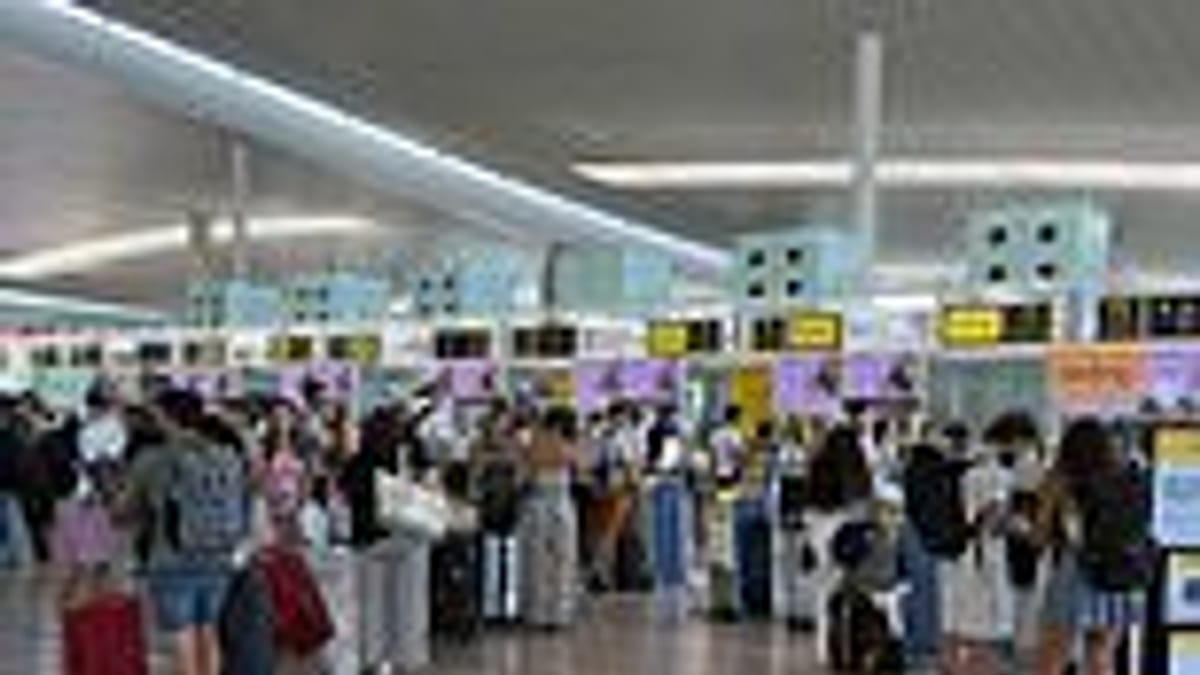
Image by Travel News | Top Europe Destinations & Holiday Ideas | Mail Online
Airport ground staff strikes set to hit key Spanish hubs
Published information from travel industry bulletins and Spanish media indicates that ground handling staff at several major airports have called strikes that overlap with the Easter peak. The stoppages are scheduled around the key getaway period from Friday 27 March through Sunday 6 April, when millions of passengers are expected to pass through Spanish terminals.
According to recent coverage, partial and indefinite walkouts affecting handling companies at airports including Madrid, Barcelona and Malaga are planned in time slots across multiple days. These actions focus on check in, baggage loading and aircraft turnaround services, which are critical to keeping flight schedules running smoothly.
While Spain’s minimum service rules for essential transport are expected to limit the number of outright cancellations, travellers could still face long queues at check in and bag drop, slower boarding and delays at arrival carousels. Industry commentary warns that connecting passengers and those with checked luggage are likely to be most exposed to knock on effects if operations slow down.
Airlines have begun advising customers to arrive at airports earlier than usual, complete online check in wherever possible and travel with cabin baggage only if they can. Some carriers are also allowing free changes to flights on strike affected days, although policies vary and passengers are being encouraged to check conditions carefully before rebooking.
Malaga in focus as strikes coincide with AVE closure
The Costa del Sol, and Malaga in particular, is emerging as one of the main flashpoints for Easter disruption. Local reports highlight that Malaga Costa del Sol Airport expects close to 6,000 flights over the holiday period, just as an indefinite strike by airport ground staff is due to begin.
At the same time, the high speed rail connection between Madrid and Malaga remains suspended following infrastructure damage earlier in the year. Coverage from regional and national outlets notes that the closure, combined with the failure so far to restore full AVE services in time for Semana Santa, has already dented hotel bookings and forced many travellers to switch from rail to air.
With extra Easter flights into Malaga reportedly limited and train capacity constrained, the risk is that any disruption in airport handling cascades quickly into queues, delays and difficulty rebooking. Tourism associations have warned in public statements that the combination of a reduced rail link and potential airport strikes arrives just as Holy Week traditionally marks the start of the high season on the Costa del Sol.
Travellers heading to Malaga and nearby resorts are being advised by consumer groups and travel advisors to build in additional time for all segments of their journey. That includes transfers between the airport and city, where separate metro strikes and road congestion linked to religious processions can also slow movement.
Metro and urban transport walkouts add to local disruption
Beyond the airports, visitors can expect complications on the ground in some cities due to urban transport strikes timed around Holy Week. In Malaga, the metro has already seen stoppages in March, and further walkouts have been called for key Semana Santa dates, including 30 March, 1 April and 2 April, according to regional news reports.
Local authorities have set minimum services of around 60 percent on certain days, but residents and tourism businesses are warning that trains are likely to be more crowded and less frequent than usual. For visitors relying on the metro to reach the historic centre for processions, or to connect between bus and rail stations and accommodation, that could translate into longer waits and more crowded platforms.
Elsewhere in Spain, unions representing rail and metro workers have staged intermittent actions in recent months after a series of safety incidents and infrastructure problems on the national network. Passenger rights agencies have reiterated that travellers affected by cancelled or heavily delayed rail services are entitled to refunds or alternative transport, but any last minute changes still risk disrupting carefully planned Easter itineraries.
Travel planners point out that Semana Santa already brings substantial closures of central streets and diversions of bus routes in major cities such as Seville, Malaga and Granada due to religious processions. Strikes layered on top of those restrictions make it more important than ever for visitors to check updated timetables and route maps before setting out.
Record Easter demand collides with strained infrastructure
Easter 2026 is expected to be one of the busiest holiday periods in Spain since before the pandemic, with traffic authorities forecasting millions of long distance car journeys and strong demand for domestic and international flights. The national traffic directorate has activated a special Semana Santa operation designed to manage heavy flows on motorways and key access roads to major cities and coastal areas.
At the same time, the rail network is still recovering from a high profile accident and subsequent safety reviews earlier in the year, which have disrupted high speed connections on some routes. In Andalusia, the temporary loss of direct AVE services to Malaga has pushed more travellers toward air and road options, concentrating demand just as airports and metro lines face industrial action.
Tourism bodies have voiced concern in public comments that a combination of strikes, infrastructure issues and intense demand could damage Spain’s image as a reliable, easy to reach destination at the very start of the key spring and summer season. Hotel and hospitality associations are calling for rapid dialogue between transport operators, unions and government to limit the impact on visitors who booked trips months in advance.
Despite those pressures, transport operators are stressing that contingency plans are in place, including minimum service guarantees, reinforcement of some road and rail services, and information campaigns designed to keep passengers updated about changes. Travellers, however, are being reminded that even with such measures, bottlenecks are likely at peak times, particularly around the start and end of the school holiday period.
Practical advice for Easter travellers to Spain
Consumer organisations and travel advisers are encouraging anyone flying into or within Spain over Easter to monitor airline alerts closely in the days before departure. Checking flight status regularly, confirming which company provides ground handling at the departure and arrival airports, and reviewing any special rebooking or refund rules can help reduce surprises at the airport.
Passengers are also being urged to allow extra time at airports for security, check in and baggage drop, especially on strike affected days and in the early morning and late afternoon windows when industrial action is concentrated. Where possible, travelling with hand luggage only and using online or app based check in can shorten the time spent in queues.
For those relying on trains or metro systems, monitoring operator announcements and local news for strike updates remains essential. Booking flexible fares when available and considering earlier or later services on busy days can provide more room to adapt if a train is cancelled or overcrowded.
Finally, road travellers are being advised to consult official traffic forecasts and avoid peak departure windows where possible. With processions, diversions and heavy tourist flows all converging during Holy Week, even routes unaffected by strikes can quickly become congested, making careful advance planning a key part of any Easter trip to Spain in 2026.