

More news on this day
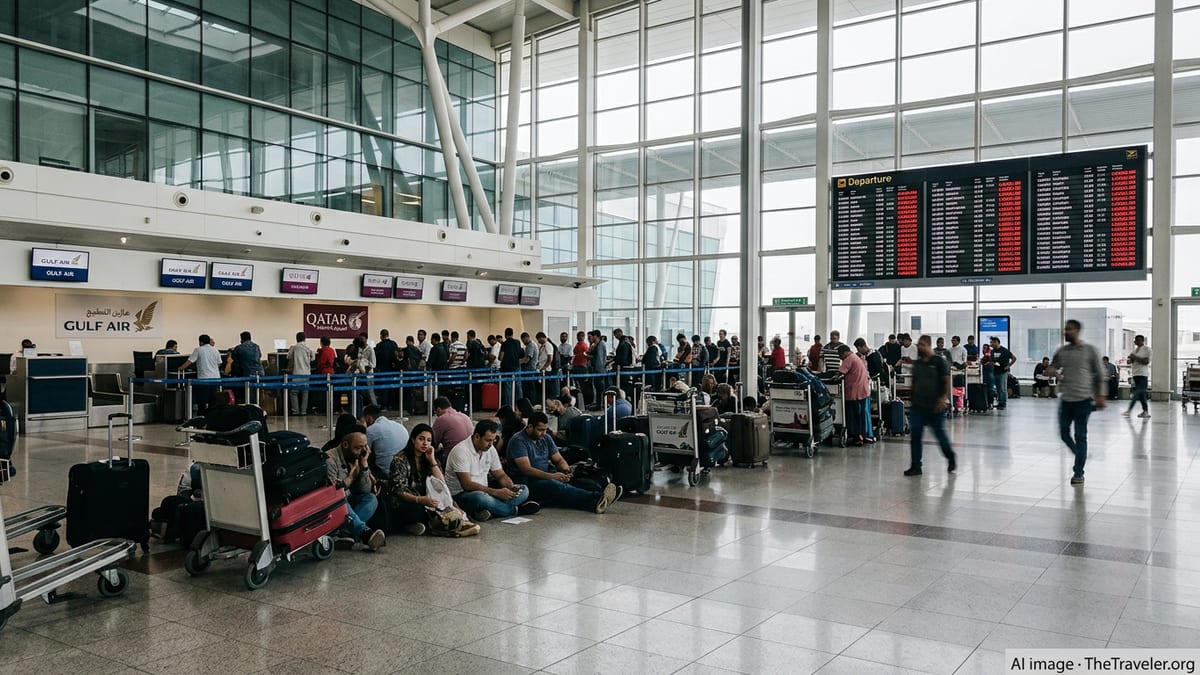
Spain has moved to support travelers stranded between India’s tightening visa overstay rules and ongoing airspace restrictions across the Middle East, joining a growing group of countries scrambling to manage disrupted journeys, mounting costs and complex consular cases involving their citizens.
Get the latest news straight to your inbox!
Spain Aligns With Wider Consular Response on India Travel Snags
Recent coverage indicates that Spain has joined Canada, Germany, the United Kingdom, Ireland, Turkey and Italy in stepping up assistance for nationals affected by interrupted India itineraries and visa complications. These measures come as travelers continue to face extended layovers, last-minute rerouting and unexpected overstays triggered by aviation disruption across the Middle East.
Reports describe consular teams in Europe and North America focusing on travelers who entered India legally but became unable to depart on time after flight corridors through the Gulf and Levant were abruptly curtailed. Publicly available information highlights that Spanish authorities are now coordinating with airlines and travel operators to verify disrupted itineraries, an important step when passengers must justify why they exceeded their permitted stay.
The move positions Spain alongside countries that have already issued updated travel notices or practical guidance for citizens navigating India’s evolving immigration rules. Travel industry commentary notes that Spain’s tourism ties with India, combined with significant Spanish passenger flows via Gulf hubs, have made the impact particularly visible in recent weeks.
Analysts say the coordinated response reflects recognition that overstays linked to airspace closures differ materially from deliberate immigration violations, even though they still risk being recorded in border-control databases and may influence future visa decisions.
India Extends Short-Term Relief as Overstay Concerns Mount
In mid‑March, the Consulate General of India in Dubai announced a 30‑day visa extension window for foreign visitors whose travel plans were derailed by flight cancellations and rerouting across the Middle East. Publicly available notices describe the extension as a temporary facilitation measure designed to prevent otherwise law‑abiding visitors from falling into immediate overstay status while they search for alternative routes home.
Specialist immigration commentary points out that the measure does not amount to a broad amnesty. Travelers are still expected to regularize their stay promptly, document the circumstances of disruption and depart as soon as practical once flights become available. However, the extra 30 days can make a critical difference for those whose original return journeys relied on now‑restricted hubs such as Dubai, Doha or major airports in Saudi Arabia and Iraq.
These developments sit against the backdrop of India’s wider tightening of immigration rules. Legal analyses of the country’s new immigration framework describe higher fines and potential jail terms for visa overstays, alongside upgraded data‑sharing with airlines and foreign governments. Travel advisers say this combination has increased anxiety among visitors caught in genuine force‑majeure situations who fear long‑term consequences for their travel histories.
Industry observers add that the Dubai consular announcement has become an important reference point for European and North American missions when assessing individual cases, particularly where passengers can show that multiple replacement flights were cancelled or rerouted beyond their control.
Middle East Airspace Restrictions Keep Europe–India Routes Under Strain
The continuing conflict in and around Iran has left large sections of Middle Eastern airspace subject to partial or full closure, affecting what aviation analysts describe as one of the world’s most critical corridors linking Europe with India and the broader Asia–Pacific region. Flight‑tracking data and airline updates show that routes which once transited the Gulf, Iraq or Iran are now being diverted over longer, more southerly paths or temporarily suspended.
Recent aviation briefings describe Europe–India journeys extended by one to four hours in some cases, as aircraft burn more fuel and compete for limited alternative routings. Reports from operations centers at major carriers indicate that schedules remain highly fluid, with rolling adjustments to departure times and aircraft types as security assessments and overflight permissions change.
India‑focused airlines have adopted what local business media characterizes as a cautious approach, gradually reinstating select services to the Middle East while maintaining sizeable reductions compared with pre‑conflict capacity. European, British and Turkish carriers continue to avoid certain flight information regions altogether, which in turn reduces the number of viable one‑stop connections between cities such as Madrid, London, Frankfurt or Istanbul and major Indian gateways.
For passengers, the practical effect is persistent uncertainty: itineraries are confirmed, rebooked and occasionally cancelled again within a matter of days. Travel insurers and consumer advocates indicate a rise in claims for missed onward connections and unplanned hotel stays, particularly among travelers whose original tickets routed them through now‑constrained hubs.
Overstay Records, Data Sharing and Future Visa Risks
Beyond the immediate disruption, specialists warn that involuntary overstays may leave a digital footprint in border‑management systems across multiple jurisdictions. Many countries, including Germany, Spain, Italy, Canada and the United Kingdom, participate in advanced passenger information and entry‑exit tracking schemes that log when an individual leaves later than authorized, even by a few days.
Policy papers and official overstay statistics compiled in North America and Europe show that even small percentages of late departures are closely monitored. While most pandemic‑era and crisis‑related overstays did not automatically translate into bans, analysts caution that repeated or unexplained overstays can be weighed negatively in future visa or electronic travel authorization applications.
Legal and immigration advisers therefore recommend that affected travelers collect comprehensive documentation, such as airline cancellation notices, revised e‑tickets and any written confirmations from consulates, when applying for future visas to Schengen countries, the United Kingdom, Canada or Turkey. This evidence can help distinguish disruption‑related overstays from intentional non‑compliance.
Travel industry groups argue that, as conflicts and climate‑related disruptions become more frequent, governments may need clearer frameworks for handling force‑majeure overstays, including shared guidance among partner countries to ensure passengers are treated consistently across borders.
Airlines, Tourism Operators and Travelers Adjust to a New Risk Landscape
The combined impact of India’s stricter overstay penalties and volatile Middle East airspace is prompting airlines and tour operators to rethink how they design itineraries and advise customers. European carriers with large India networks, along with Turkish and Gulf‑based airlines, are recalibrating schedules to reduce dependency on single choke points and to build in longer ground times at alternate hubs.
Major online travel agencies and tour wholesalers are updating booking interfaces to flag routes that remain vulnerable to late‑breaking restrictions, according to recent trade‑press coverage. Some have begun proactively recommending itineraries that avoid the most affected flight information regions, even when longer or more expensive, in order to reduce the risk of passengers involuntarily overstaying their visas in India or elsewhere.
For national tourism organizations in Spain, Italy, Turkey and other Mediterranean destinations, the disruption poses a dual challenge. On one hand, Europe’s energy and fuel costs have risen as a result of the conflict, putting pressure on airline profitability and ticket prices. On the other, there is a need to reassure Indian travelers and diaspora communities that Europe remains reachable, albeit with more complex routing and documentation requirements.
Consumer advocates emphasize that passengers should review visa validity periods carefully, avoid tight connections through volatile hubs and register for travel alerts from both their home government and destination countries. As Spain joins a growing roster of nations formalizing support for citizens caught in these overlapping crises, travel experts suggest that flexibility, thorough documentation and early engagement with consular resources are becoming essential parts of long‑haul trip planning involving India.