

More news on this day
Hundreds of passengers stranded by back-to-back landslides on the Jammu–Srinagar national highway are being moved by special trains between Katra and Banihal, as railway services step in to relieve a days-long disruption of road traffic in Jammu and Kashmir.
Get the latest news straight to your inbox!
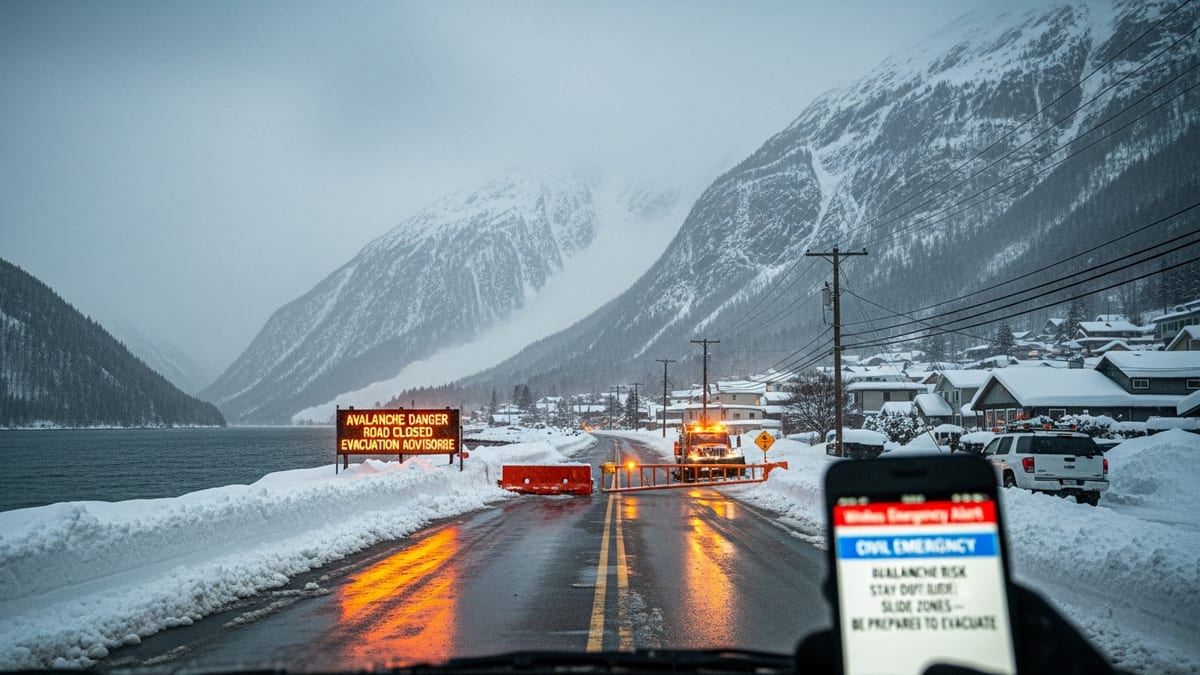
Landslides Cut Vital Road Link Through Ramban Sector
The latest spell of heavy rain early this week triggered multiple landslides along the Ramban and Banihal stretches of National Highway 44, the main all-weather road connecting the Kashmir Valley with the rest of India. Published coverage indicates that a massive slide near Shalgari in the Banihal area buried sections of the carriageway and affected approaches to the Banihal–Qazigund road tunnel, leaving machinery and road crews struggling to clear debris.
Reports from regional outlets describe traffic remaining suspended along key stretches of the highway for a second consecutive day on Wednesday, with long queues of vehicles building up on both sides of the blocked section. Estimates in local media put the number of stranded vehicles at more than 1,200, including trucks loaded with essential supplies, buses, and private cars waiting at points such as Nagrota, Udhampur, Ramban, Banihal, Qazigund, and Anantnag.
Although partial restoration efforts allowed some controlled movement at intervals, intermittent rockfalls and fresh slippages repeatedly forced authorities to halt traffic. Publicly available information shows that the unstable slopes and continued rainfall created challenging working conditions for agencies tasked with keeping the corridor open, underlining the vulnerability of the route during spells of intense weather.
The closure quickly rippled through the wider region, delaying freight bound for the Kashmir Valley and leaving tourists, pilgrims, students, and migrant workers stranded far from their destinations. With no clear timeline for a stable reopening of the road, attention shifted to the parallel rail corridor as the most viable option to move large numbers of passengers safely.
Railway Division Announces Special Unreserved Trains
In response to the mounting backlog of stranded travelers, the Jammu division of Northern Railway introduced special unreserved services designed specifically to bridge the disrupted highway section. According to information carried in regional newspapers, the railway has scheduled special trains between Shri Mata Vaishno Devi Katra and Banihal on 9 and 10 April, timed to provide immediate relief to passengers stuck on either side of the landslide-affected zone.
The trains are being operated on a temporary basis and are distinct from the regular timetable, with coaches opened on an unreserved basis to maximize capacity and flexibility. Passengers holding road travel tickets or stranded at bus stands and temporary shelter points are being encouraged, through public advisories and media reports, to avail themselves of the rail link rather than wait indefinitely for highway clearance.
These special services make use of the upgraded rail infrastructure on the Udhampur–Srinagar–Baramulla line, including high-altitude tunnels and bridges that have shortened travel times between Jammu region towns and the Valley. By running directly between Katra and Banihal, the trains effectively bypass the worst-affected highway stretches in Ramban district, offering a more predictable connection even as earthmovers and engineers continue restoration work on the road.
Publicly available information also points to coordination between railway, traffic, and district administrations to manage flows of people towards stations, with efforts to prioritize stranded passengers and those in vulnerable situations. The short-notice deployment of these trains reflects how critical the rail corridor has become as a redundancy when the mountain highway is repeatedly hit by weather-related disruptions.
Stranded Passengers Turn to Rail as Weather Stays Unsettled
For passengers caught in the shutdown, the launch of special trains represents both a logistical solution and an emotional release. Media coverage from Jammu, Udhampur, and Qazigund describes scenes of buses and private vehicles parked for hours in long columns, with travelers facing shortages of food, water, and basic facilities while waiting for updates on the road’s status.
As word of the special services spread through local news, social media, and public announcements, many passengers began redirecting their journeys towards the nearest functional railway stations. In some cases, this has involved backtracking from highway choke points such as Ramban or Banihal to hubs like Katra or Udhampur, under guidance from published advisories encouraging people not to crowd the blocked zones.
The unreserved format of the trains is intended to accommodate surges of travelers arriving on short notice, though this also raises the possibility of crowded coaches and longer boarding times. Reports indicate that the focus is on clearing stranded passengers first, with railway staff adjusting formations and schedules to handle demand in both directions across the affected days.
With the India Meteorological Department forecasting erratic weather in parts of Jammu and Kashmir through at least 10 April, the possibility of additional landslides or renewed shooting stones along the highway remains a concern. Against this backdrop, the rail-based evacuation of stranded travelers has become a central element of the broader response to the disruption.
Highway Instability Underscores Reliance on New Rail Link
The current episode is the latest in a series of weather-related closures to hit the Jammu–Srinagar corridor, where steep terrain and fragile slopes have long posed challenges to road engineers and motorists. Data compiled by regional think tanks and government agencies highlight numerous past incidents in which heavy rain or snow has led to multi-day blockages, stranding thousands of people and constraining the flow of fuel, food, and other essentials into the Valley.
The progressive commissioning of the Jammu–Baramulla railway line, including the completion of key tunnels and bridges in the Katra–Banihal section, has been framed in policy discussions as a partial answer to this chronic vulnerability. By providing an all-weather alternative for both passenger and, increasingly, freight movement, the railway reduces the region’s sole reliance on a single mountain highway that can be repeatedly cut by landslides.
The deployment of special trains between Katra and Banihal in early April is consistent with a pattern visible in earlier disruptions, when temporary rail services have been used to ferry stranded passengers while road crews work to restore connectivity. Recent coverage of similar measures in previous years points to growing institutional familiarity with this playbook, allowing railway divisions to stand up additional services at relatively short notice when conditions deteriorate.
Travel analysts note that such episodes also shape traveler behavior, encouraging visitors and residents alike to build rail options into their contingency planning during the winter and spring months when the risk of landslides and shooting stones is highest. For tourism operators and transport companies, the ability to shift passengers to rail at times of highway closure can help protect itineraries and reduce the economic costs of prolonged standstills.
Tourism and Local Economies Watch for Faster Restoration
The timing of the disruption has drawn attention within Jammu and Kashmir’s travel and hospitality sector, which is preparing for the early phases of the spring and summer tourist season. The Jammu–Srinagar highway functions not only as a logistics artery for goods but also as a scenic gateway for visitors headed to destinations such as Patnitop, Pahalgam, Gulmarg, and Srinagar.
Tour operators and hoteliers tracking the situation through publicly available advisories are watching both the pace of highway clearance and the capacity of the special trains. While rail services can move large numbers of passengers quickly, some tourist itineraries are built around road travel that includes multiple sightseeing stops, which may need to be modified or postponed when landslides render certain stretches unsafe.
Local economies along the highway corridor, including small restaurants, fuel stations, and roadside markets, also feel the immediate impact when traffic is halted for days at a time. At the same time, brief surges of stranded passengers can strain limited local services, creating a complex mix of lost revenue and sudden humanitarian pressure. The availability of rail-based evacuation mechanisms helps shorten the duration of such spikes and eases stress on towns that serve as temporary holding points.
As restoration work continues on National Highway 44, the experience of this latest closure is likely to feed into ongoing debates about slope stabilization, weather forecasting, and the need for further redundancy in Jammu and Kashmir’s transport network. For now, the special trains running between Katra and Banihal offer a crucial bridge for travelers caught between landslide-locked mountains and the imperative to keep people, and the region’s tourism economy, moving.