

More news on this day
Spirit Airlines is emerging from a turbulent period of back-to-back bankruptcy filings with a much smaller, more tightly focused route map, leaving travelers to sort out which flights are disappearing and which links will remain in the skies.
Get the latest news straight to your inbox!
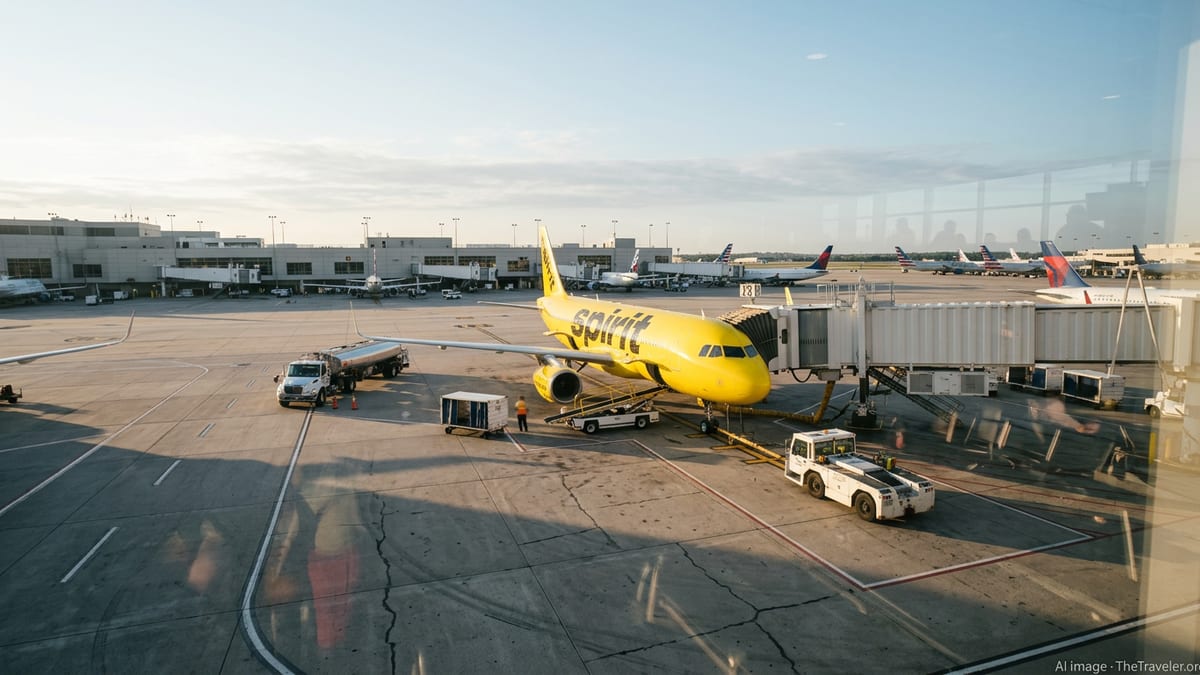
A Slimmer Airline After Back-to-Back Bankruptcies
Publicly available financial and court records show that Spirit Airlines has used two Chapter 11 restructurings in less than two years to shed aircraft, cut debt and renegotiate leases, all while trying to maintain day-to-day flying for customers. The carrier has not reported an annual profit since before 2020, and management has repeatedly described a need to “shrink to profitability” as high costs, soft demand on some leisure routes and reliability problems with Pratt & Whitney geared turbofan engines squeezed its business.
Coverage of the restructuring indicates that Spirit is seeking to cut nearly half of the 214 aircraft it operated before its second bankruptcy filing in 2025, concentrating the remaining jets on routes that consistently generate cash. That strategy is driving a broad reset of the network, with capacity reductions, city exits and base realignments that affect thousands of weekly seats across the United States, Latin America and the Caribbean.
Recent reporting also points to a modestly brighter outlook for the airline’s survival prospects. Spirit has secured new financing, obtained support from key creditors and signaled a plan to emerge from court protection as a leaner independent carrier rather than merge into a larger rival. For travelers, the tradeoff is clear: fewer dots on the Spirit route map, but a higher likelihood that remaining routes are sustainable.
Cities Losing All Spirit Service
The clearest sign of Spirit’s new strategy is a growing list of airports where the airline is ending service entirely. Network updates and airport announcements show that Spirit plans to exit several U.S. and international cities between late 2025 and early 2026, winding down stations that no longer fit its profitability thresholds or fleet constraints.
Among the higher-profile pullbacks, Spirit has outlined plans to leave Milwaukee and to halt operations at Minneapolis–Saint Paul by the end of 2025, closing out relatively small but symbolically important stations in the Upper Midwest. Similar cuts are slated for other mid‑sized markets where competition from larger carriers and other low-cost rivals has made it difficult to sustain ultra‑low fares without persistent losses.
Restructuring disclosures also reference exits from a group of five airports by January 2026, a move paired with the elimination of about 150 salaried jobs and the closure of certain maintenance and warehouse facilities. Internationally, service to Bucaramanga in Colombia is scheduled to end in January 2026, reflecting a broader effort to concentrate limited aircraft time on stronger cross‑border routes.
For passengers in these cities, the loss of Spirit means fewer ultra‑discount options and a likely shift toward higher fares or longer itineraries, particularly on nonstop flights to Florida and major leisure destinations. Other airlines continue to serve most of the affected airports, but the competitive dynamic that Spirit once brought to those markets will be diminished.
Where Spirit Is Pulling Back, Not Pulling Out
In many parts of the country, Spirit is not disappearing altogether but is sharply reducing capacity. Schedule data compiled since 2024 shows a pattern of trimming weaker point‑to‑point routes from key cities such as Dallas Fort Worth, Los Angeles, Fort Lauderdale and Charlotte, while preserving a smaller set of core connections with steadier demand.
Earlier rounds of cuts removed dozens of domestic routes that underperformed, including some cross‑country and hub‑to‑hub links where legacy airlines dominate corporate travel. More recent adjustments under bankruptcy have focused on simplifying the schedule and improving aircraft utilization, dropping marginal frequencies and thinner seasonal routes so that remaining flights can operate with fuller cabins and fewer operational disruptions.
On the West Coast, industry analysts have described Spirit as having “all but abandoned” the region. The airline has already left or substantially reduced its presence at several western airports, keeping only a handful of stations and often just a single route, most commonly linking into its Las Vegas operation. Rather than serving a web of smaller western cities, Spirit now appears to be favoring east‑west flying that connects larger eastern markets to a limited number of western gateways.
These pullbacks mean fewer nonstop options and less schedule choice on certain city pairs, but they do not necessarily leave airports without low‑cost service altogether. In several markets, competing budget carriers continue to operate, and some airports are courting new entrants to backfill capacity vacated by Spirit.
Flights and Focus Cities That Are Likely to Stay
Even as Spirit pares back, publicly available schedules and restructuring materials point to a clear set of priorities: defend the strongest leisure corridors, maintain a presence at major Florida gateways and protect routes where the airline’s low‑fare model still stimulates significant demand. Fort Lauderdale and Orlando remain central pillars, with dense links to Caribbean and Latin American destinations as well as to major population centers along the East Coast and in the Midwest.
Other airports that continue to feature prominently in the network include Las Vegas, Atlantic City and several larger metropolitan areas where Spirit has built brand recognition as a budget alternative. East‑to‑west flights from cities east of a Dallas‑to‑Chicago line into Las Vegas or Southern California appear to be a core component of the reworked schedule, providing leisure travelers with low‑fare access to popular vacation spots even as more peripheral routes vanish.
Some capacity is also being preserved on competitive routes where Spirit’s presence helps pressure incumbents on price, particularly in markets linking big coastal cities with Florida or major tourist destinations. While frequencies may be lower than in past years, these surviving routes generally align with the places where the airline can reliably fill its high‑density Airbus cabins with price‑sensitive travelers.
Industry commentary suggests that as Spirit finalizes its restructuring plan, the network may stabilize around a smaller but more predictable pattern of flights centered on a handful of focus airports, with limited experimentation into new markets until finances improve.
What Travelers Should Expect Next
For customers, the reshaped network means it is more important than ever to verify flight options directly in booking channels rather than relying on past schedules or assumptions about where Spirit flies. Routes that were available as recently as 2024 and early 2025 may already be gone, while remaining flights could operate less frequently or at different times of day than before.
Travel industry reports emphasize that passengers with existing bookings on discontinued routes are generally being offered rebooking on alternative Spirit flights or refunds, depending on the specifics of each case and applicable regulations. Because the airline is operating under court oversight, schedule changes tied to the restructuring are typically disclosed in advance, but the overall pace of adjustments has been brisk.
Looking ahead, Spirit’s own projections describe a multiyear path back toward profitability, with 2026 expected to remain challenging as the downsized fleet and route map are put to the test. If the strategy succeeds, travelers could see a leaner but more stable Spirit Airlines that concentrates on its most popular value‑oriented routes. If market conditions worsen, additional cuts or strategic shifts remain possible, reinforcing the need for travelers to stay alert to further changes before they fly.