

More news on this day
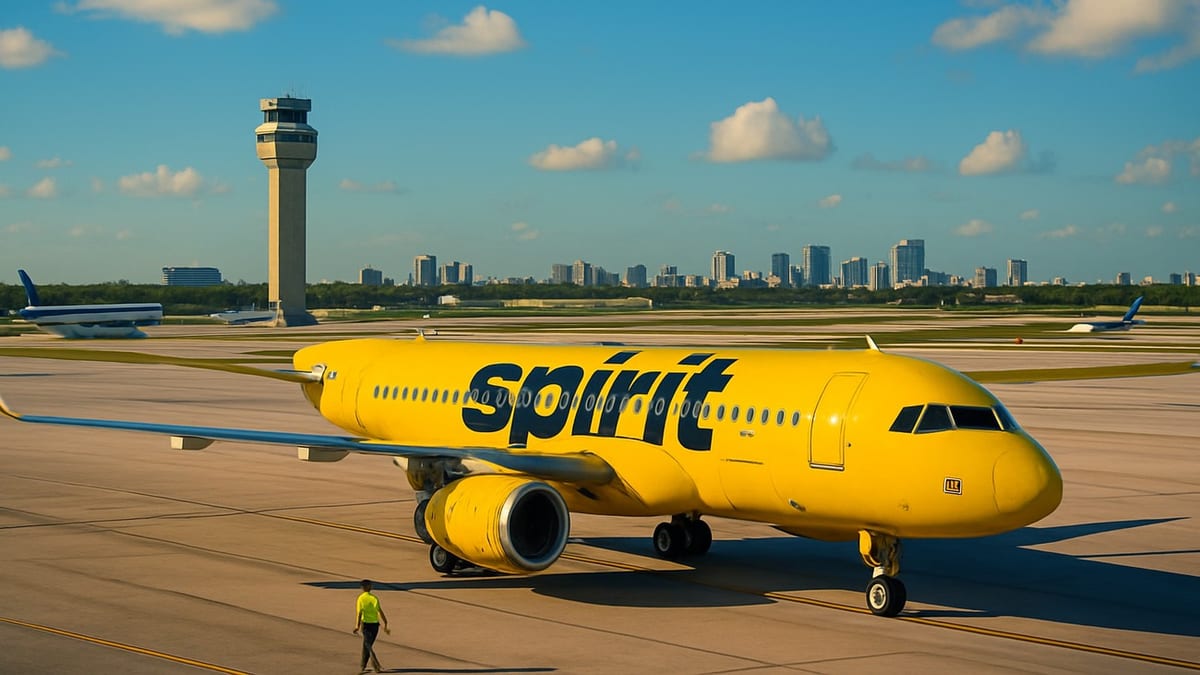
A single grounded Spirit Airlines departure at Miami International Airport on April 12 has cascaded into at least 10 rolling delays across the carrier’s network, disrupting connections to more than 50 destinations in North America, Europe and Latin America, according to flight-tracking data and industry reports.
Get the latest news straight to your inbox!
One Cancellation, Many Delays at a Key Florida Gateway
Publicly available disruption tallies for April 12 indicate that Spirit Airlines recorded one grounded flight at Miami International, while a far larger number of its services were categorized as delayed rather than canceled. Aviation and travel-industry coverage describes the pattern as delay heavy, underscoring that most passengers ultimately flew, but often hours behind schedule.
Miami has experienced several days of elevated disruption in early April, with reports across the holiday period pointing to clusters of more than a hundred delays on some days and relatively few outright cancellations. Within that broader context, Spirit’s single canceled rotation on April 12 stands out less for the volume of flights lost and more for the knock-on impact it created throughout the day.
Operational summaries focused on the April 12 event describe a network that is largely intact but stretched. Aircraft and crews arriving late into Miami struggled to recover their schedules, and the grounded flight effectively removed one aircraft from the rotation, tightening the system further. The result was a ripple of late departures that spread far beyond South Florida.
Air-travel analysts frequently note that Miami functions as a high-pressure gateway, combining dense domestic schedules with long-haul and leisure traffic. When even a modest disruption occurs, tight turnarounds and crowded airspace can convert what might otherwise be a minor delay into a rolling sequence of knock-backs across an airline’s route map.
Global Reach: More Than 50 Destinations Feeling the Ripple
Travel and aviation reports on the April 12 disruption highlight the breadth of destinations affected by the Miami-centered delays. Spirit’s operations linked to cities such as Charlotte and Toronto, along with major long-haul hubs including London, Frankfurt and Amsterdam through interline and connecting itineraries, all experienced schedule pressure tied back in part to the grounded Miami flight and related congestion.
These impacts did not always appear as dramatic cancellations. In many cases, departures pushed back by 30 to 90 minutes, enough to cause missed onward connections or force travelers to accept rebookings later in the day. Across the broader network, industry coverage notes that more than 50 city pairs experienced some measurable delay, illustrating how a localized operational setback can reverberate widely in a tightly scheduled system.
Miami’s role as a gateway to Latin America and the Caribbean further amplified the reach of the disruption. Flights linking the United States with beach and resort destinations in Mexico and the Caribbean often carry large numbers of connecting travelers. When one key feeder flight stalls, the passengers it was due to deliver may miss departures onward, leading to last-minute seat reshuffling, standby backlogs and heavier loads on later flights.
Data compiled from recent days at Miami suggests that this is not an isolated phenomenon. Earlier in the week, separate reporting detailed nearly two hundred delays across all carriers in a single day at the airport, affecting routes to New York, Atlanta, Chicago and other major hubs. Against that backdrop, Spirit’s April 12 pattern slots into a wider story of congested schedules and fragile buffers at one of the country’s busiest airports.
Weather, Congestion and an Airline in Transition
The Miami disruption comes as Spirit Airlines continues a period of restructuring and schedule adjustment following a challenging winter and early spring. Public financial and industry coverage in recent weeks has described the carrier trimming routes, cutting underperforming international services and working to improve operational reliability after bouts of cancellations tied to staffing and weather.
For early April, multiple reports point to a familiar mix of triggers: lingering weather systems in parts of the United States, air-traffic flow programs that slow departures into crowded corridors, and high seasonal demand through Florida gateways. In such conditions, even on days when storms are not directly overhead, airspace restrictions and congestion can require airlines to hold flights on the ground, driving up delay counts.
Analysts note that ultra-low-cost carriers like Spirit typically run dense, high-utilization schedules with limited slack. Aircraft cycle quickly from one route to another, and crews are rostered close to the limits of what regulations allow. When a single flight cancels or incurs a long delay, there are fewer spare aircraft and crew available to plug the gap, increasing the risk that a localized issue will propagate across the network.
Recent industry commentary also points to Spirit’s efforts to recalibrate. Plans to recall furloughed pilots and streamline the route network are intended to restore some of the operational performance the carrier enjoyed in earlier years. However, the April 12 delays at Miami underline that the airline is still navigating a delicate balance between capacity, staffing and reliability as the busy summer travel period approaches.
What Travelers Experienced on the Ground
For passengers at Miami and beyond, the April 12 disruption translated into crowded gate areas, revised boarding times and, in some cases, unexpected overnight stays. Accounts aggregated in consumer coverage and social media posts from recent Miami disruption days describe long lines at service desks and uncertainty about revised departure and arrival times, particularly for those with tight connections.
While only one Spirit flight from Miami was listed as canceled in the immediate data snapshots, the broader pool of delayed departures meant that many travelers effectively lost most of a day in transit. International passengers connecting through Miami to Europe, Canada or Latin America were among those most exposed, as missed connections can translate into 24-hour waits for the next available flight on busy routes.
Publicly available information also highlights the patchwork nature of assistance offered. Some travelers reported receiving food vouchers or hotel accommodations on earlier disruption days when delays were categorized as within the airline’s control, while others in weather-related or air-traffic-driven cases saw more limited support. The distinction often hinges on how the underlying cause is classified in airline and regulatory frameworks.
Consumer advocates monitoring the April travel period in Florida have emphasized that passengers should keep personal records of boarding passes, delay notifications and receipts for essential expenses. These documents can become important if travelers later seek reimbursement or compensation under applicable airline policies or consumer-protection rules.
Planning Ahead for Spring and Summer Travel via Miami
The Miami-centered Spirit disruption on April 12 arrives just as many travelers finalize plans for late spring and summer trips. Given Miami’s record of elevated delays in early April and similar patterns observed during past peak periods, industry guidance consistently recommends building more margin into itineraries touching the airport.
Travel publications and advisory resources suggest opting for longer connection times when routing through Miami, especially for itineraries that involve international segments or the final flight of the day to a given destination. A buffer of several hours can help absorb the kind of schedule slippage seen when a single grounded flight or weather constraint ripples through a carrier’s operations.
Passengers are also encouraged to use airline mobile apps and airport status boards to monitor flights proactively on travel day. Same-day schedule changes and rolling departure estimates are common during disruption events, and real-time updates can provide earlier opportunities to request alternative routings or secure available seats on later flights.
For travelers specifically considering Spirit Airlines in the coming weeks, recent operational data provides a mixed picture. The overall number of cancellations from Miami on April 12 remained low, yet the volume of delays shows how quickly a tight, cost-focused schedule can be thrown off course. As the airline continues to adjust its network and staffing, the events at Miami serve as a reminder that even a single grounded flight at a major hub can reverberate across dozens of destinations worldwide.