

More news on this day
Spring break 2026 has strained operations at Las Vegas’s Harry Reid International Airport, as heavy leisure travel, staffing pressures and early-morning departure banks converge into longer lines and pockets of significant delay.
Get the latest news straight to your inbox!
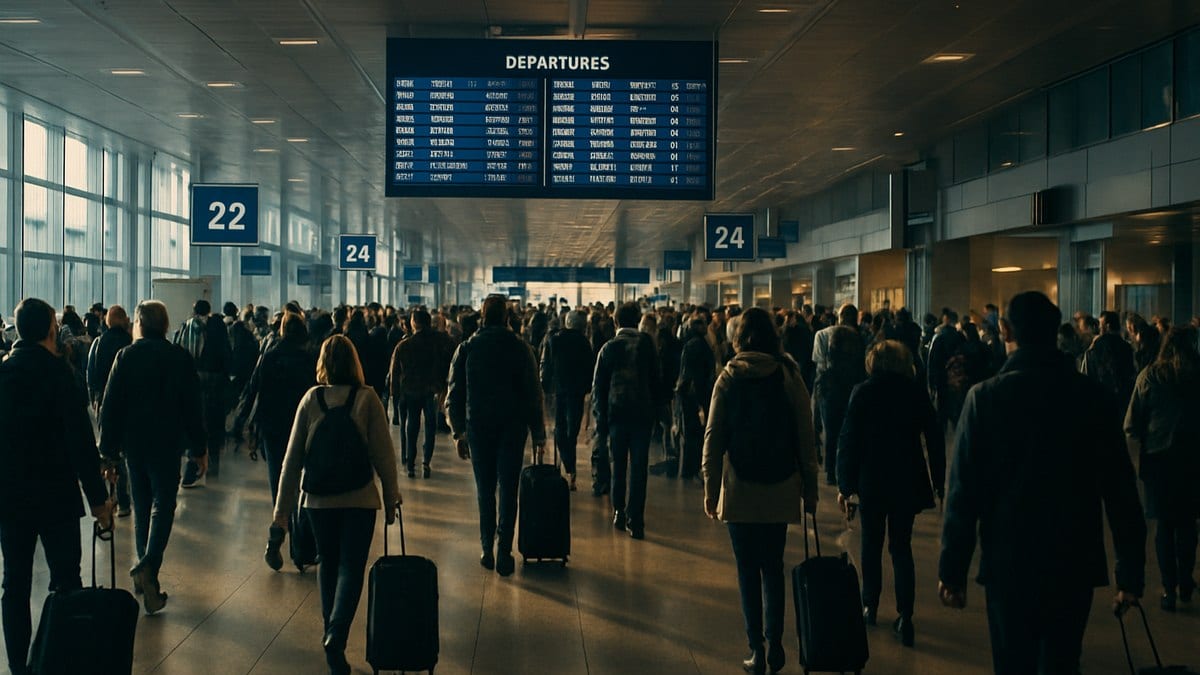
Spring Break Crowds Meet a Softer Year for Traffic
Harry Reid International Airport entered the spring break period with overall traffic trending slightly lower than a year ago, yet still handling millions of passengers in a concentrated leisure season. Airport data for January and February 2026 shows year to date passenger counts down by around 5 to 8 percent compared with 2025, after the airport processed nearly 55 million travelers in 2025, its third-busiest year on record.
Despite that dip, the airport remains one of the nation’s busiest leisure gateways, and the spring calendar continues to compress demand into a handful of peak weeks. With Southern Nevada school holidays scheduled from March 16 to March 20 and college breaks overlapping throughout March, publicly available figures indicate that daily volumes in mid to late March approached levels seen during some of the airport’s strongest months in 2024 and 2025.
The mix of travelers has also shifted. Industry coverage points to weaker international arrivals but resilient domestic leisure demand, meaning more passengers beginning and ending their trips in Las Vegas. That pattern places additional strain on check in counters, baggage systems, and security lanes, even when total passenger counts are modestly below prior peaks.
Analysts following Las Vegas tourism note that this year’s environment has been complicated by airlines adjusting schedules after several record-setting years. More concentrated departure banks and tighter turnaround times can leave less room in the system when weather or staffing issues arise, contributing to sudden surges and rolling delays during already busy school holiday travel.
Security Bottlenecks Drive Perception of “Major Delays”
For many travelers, the most visible sign of stress at Harry Reid International in March 2026 has been at the security checkpoints. Social media posts and traveler forums describe security lines at certain peak times stretching well past the typical queuing areas, particularly in the early morning hours and on Sunday and Monday, when weekend visitors depart.
On at least several days in late March, contributors reported waits pushing toward or beyond an hour in standard lanes, with the Transportation Security Administration opening an additional “innovation checkpoint” on a lower level to relieve congestion. Other posts from the same week, however, describe breezing through security in under 15 minutes at different times of day, reflecting a sharp divide between peak and off peak experiences.
Published guidance from travel and financial services outlets continues to flag spring break as one of the busiest periods for Las Vegas security screening. Typical advice now suggests arriving at the airport two to three hours before departure during March and early April, particularly for morning flights, families with children, or travelers checking bags.
These uneven conditions have fueled a perception among some passengers that Harry Reid International is experiencing “major delays,” even though overall throughput numbers remain within the range of recent years. The challenges are highly time specific: a flight leaving at 6 a.m. on a Monday in late March may face long security queues and crowded gate areas, while a midweek midday departure during the same period can move relatively smoothly.
Operational Strain and Flight Disruptions
The surge in spring break travelers has coincided with a broader pattern of congestion and delay across portions of the U.S. aviation system, where staffing gaps at security and air traffic facilities have drawn national attention. While publicly available data does not indicate the kind of multi hour checkpoint backups seen at some other airports, the higher loads at Harry Reid International have still produced knock on effects for flight operations.
Reports from passenger tracking services and aviation industry coverage suggest that Las Vegas saw elevated levels of departure delays on several peak spring break days, driven by late arriving aircraft, extended boarding times and ground congestion. When passengers reach the gate from security close to departure time, boarding can be slowed as gate agents work through final check in and carry on bag issues.
In addition, the airport’s design funnels large waves of traffic through specific concourses that serve major domestic carriers. During peak hours, that can lead to congestion on taxiways and occasional waits for gate availability, particularly when earlier flights have been held for connecting passengers or deicing requirements at origin airports. Even modest schedule disruptions elsewhere in the network can ripple into Las Vegas when demand is already near capacity.
Aviation analysts note that these spring break pressures are surfacing as the airport pursues a series of infrastructure upgrades, from escalator replacements to planning work on a supplemental airport in Southern Nevada. In the near term, however, travelers are feeling the effects of constrained capacity in existing terminals while projects remain under way.
Airport and TSA Roll Out New Tools for Travelers
As spring break crowds tested security lanes, Harry Reid International and federal security partners introduced new tools intended to give passengers more visibility into wait times. Local broadcast coverage this week highlighted the addition of estimated TSA checkpoint wait times to the airport’s website, allowing travelers to check conditions at each terminal before leaving for the airport.
Previously, many visitors relied on third party tracking sites, airline apps or anecdotal reports to gauge how early to arrive. The move to publish real time estimates on an official channel is designed to help distribute demand more evenly across the morning and to encourage travelers to adjust their plans when lines at a given checkpoint begin to build.
The new feature complements the airport’s existing communication around spring break travel, which in early March emphasized familiar recommendations such as arriving early, checking in online, reviewing baggage and security rules, and allowing extra time for parking or rideshare drop off. Publicly posted guidance also urges passengers to verify terminal and gate information carefully, given the complex layout and multiple concourses at the Las Vegas facility.
Security experts point out that transparency alone cannot eliminate bottlenecks during school holiday peaks, but can reduce the shock factor for visitors who underestimate demand. Combined with staggered staffing and flexible lane management, live wait time data may gradually smooth some of the sharpest spikes in congestion seen in recent weeks.
What Spring Break 2026 Signals for Summer Travel
The experiences of March and early April 2026 in Las Vegas are emerging as an early stress test for the upcoming summer travel season. With passenger volumes still below record highs but concentrated in leisure segments, any mismatch between staffing and demand is quickly felt at check in counters, security, and boarding gates.
Industry commentary suggests that if current patterns hold, Harry Reid International could face a similar dynamic around Memorial Day and the mid summer peak: strong weekend spikes, heavy morning banks, and relatively calm midweek periods. For travelers, that may mean continued variability in wait times and a premium on planning, especially for large groups and those connecting to international flights.
For the region’s tourism economy, the spring break surge is a reminder that Las Vegas remains highly dependent on air access even as visitor numbers fluctuate. The airport’s ability to handle compressed peaks without prolonged disruption will be closely watched by airlines scheduling additional capacity, convention organizers weighing date patterns, and hospitality businesses that rely on predictable arrivals.
In the meantime, publicly available data and traveler accounts from spring break 2026 point to a clear takeaway for anyone heading home from a Las Vegas getaway in the coming weeks: arrive earlier than you think you need to, expect busy checkpoints during morning rush hours, and be prepared for some lingering ripple effects across flights when the terminals fill.