

More news on this day
Spring storms sweeping across the Mid-Atlantic in early April 2026 are compounding an already fragile air travel environment, triggering fresh rounds of delays and cancellations for passengers transiting Washington Dulles International Airport.
Get the latest news straight to your inbox!
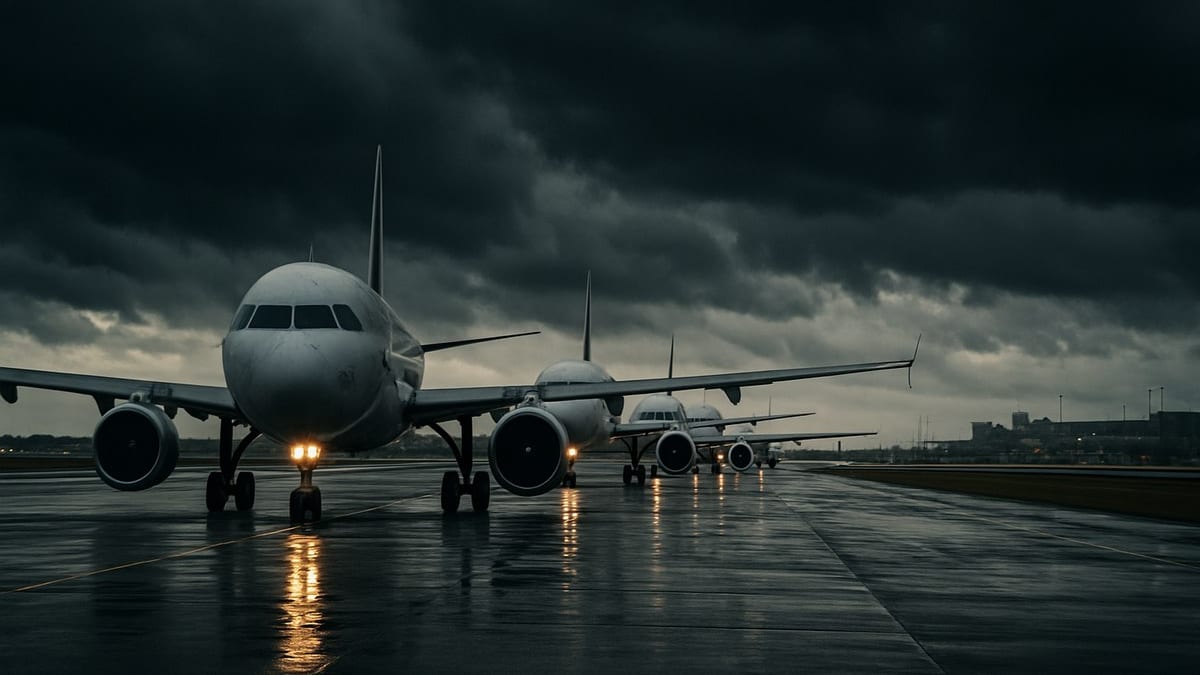
Stormy start to April as weather shifts from winter to severe season
The transition from lingering winter systems to classic spring thunderstorms has intensified across the eastern United States, with forecasters tracking repeated bands of heavy rain, gusty winds and lightning through the Mid-Atlantic corridor in the first weeks of April 2026. National outlooks highlight a growing severe weather risk building into mid-April, with particular concern for fast-moving squall lines capable of disrupting major flight paths along the East Coast.
These atmospheric shifts follow a turbulent March that included a major blizzard in the Midwest and widespread severe convective storms stretching into the Carolinas and Mid-Atlantic, setting the stage for an already stressed airline network entering the busy spring break and Easter travel window. Industry coverage notes that U.S. carriers are moving millions of passengers daily through the end of April, leaving little margin when storms force even brief slowdowns at hub airports.
For Washington Dulles, which handles a mix of transatlantic, transcontinental and regional flights, this pattern means that storms well beyond the immediate D.C. region can quickly cascade into local gridlock. Thunderstorms intersecting key routes through Chicago, Houston and other connecting hubs in late March and early April have already produced rolling delays that arrive in Northern Virginia hours after weather has cleared locally.
As April’s storm track tilts farther north and east, meteorological outlooks suggest the Mid-Atlantic will see more frequent bouts of severe weather, increasing the likelihood of short-notice air traffic management steps, including reduced arrival rates, reroutes and holding patterns for flights bound for Dulles.
Ground stops and storm cells converge over the capital region
Washington-area air travel has already endured an unusual combination of weather-related slowdowns and separate airspace disruptions this spring. In late March, ground stops affected Washington Dulles, Reagan National and Baltimore/Washington International after an environmental issue was reported at a regional air traffic control facility, severely restricting arrivals and departures for several hours and leaving knock-on delays deep into the night.
Just days later, thunderstorms rolling through the D.C. region in the evening rush on April 2 prompted a fresh pause in inbound traffic to all three major area airports. Local media and aviation status dashboards documented temporary halts in arrivals as controllers slowed the flow of traffic while storm cells moved across approach and departure corridors, forcing some flights into holding patterns and diverting others to alternate airports.
The convergence of these events has left schedules at Dulles particularly fragile. Even when skies clear, residual congestion from earlier stoppages often lingers for many hours as airlines work to reposition aircraft and crews. Publicly visible flight-tracking boards show banks of delayed departures rippling into the late-night and early-morning waves, with some long-haul international services departing significantly behind schedule.
Travel industry commentary indicates that such sequences of non-weather and weather-related constraints in rapid succession can be more disruptive than a single large storm system, because they complicate recovery planning and extend the window of operational strain across multiple days.
April 6 disruption highlights storm-season vulnerability at Dulles
The vulnerability of Washington Dulles to spring storms was underscored on April 6, when a concentrated day of disruption affected 146 flights, according to analysis by flight-compensation platform AirHelp. Publicly available data cited in that report show at least 17 cancellations and more than 120 delays in and out of Dulles in a single day, with secondary impacts spreading across the United States, Canada and Europe.
The spike in irregular operations coincided with a larger pattern of severe weather and unsettled conditions across the country at the tail end of the Easter travel period. Nationwide tracking over the Easter weekend recorded tens of thousands of delays and several thousand cancellations, as thunderstorms and heavy rain swept key airline hubs and choked already busy routes.
At Dulles, the April 6 figures translated into crowded gate areas, rolling departure boards and missed connections for onward travel, particularly for passengers linking to transatlantic services. With so many aircraft out of position from earlier storms in the network, even relatively modest thunderstorms along East Coast or Midwest corridors were enough to trigger extended ground times and revised departure slots.
Travel analysts note that Dulles’s role as both an international gateway and a domestic connector amplifies the impact of such disruptions. When spring storms snarl the airport, long-haul flights can be delayed waiting for inbound feeder traffic, while domestic passengers are left searching for scarce rebooking options on already full services.
Heavy holiday demand leaves little room to absorb delays
The current wave of April disruption is unfolding against a backdrop of robust demand. Travel reporting projects that U.S. airlines will average close to 3 million passengers per day through the end of April, as spring break, Easter travel and early summer planning overlap. This intensity has been evident at Dulles, where security queues, check-in counters and baggage carousels have remained busy even on weekdays.
With load factors running high, airlines have less flexibility to rebook stranded passengers when storms trigger cancellations or lengthy delays. Many flights depart nearly full, limiting same-day options when travelers miss connections or when an aircraft arrives too late to operate its next scheduled leg. In practice, this means that a short thunderstorm-induced ground stop can leave some passengers waiting a full day or more for the next available seat.
The high demand also interacts with ongoing infrastructure work at Dulles, including multi-year projects detailed in recent Federal Aviation Administration construction impact reports. While these improvements are intended to modernize airfield lighting and other critical systems, periodic lane closures and work zones can constrain ground operations during peak activity, adding another layer of complexity when weather forces last-minute schedule changes.
Consumer-rights groups and travel insurers have emphasized that passengers moving through Dulles in April should pay close attention to schedule changes, gate information and notifications from airlines, particularly when forecasts point to afternoon or evening thunderstorms. Flexible tickets and proactive rebooking into earlier flights have been described as useful strategies to avoid being caught by cascading delays late in the day.
What spring travelers through Dulles can expect in the coming weeks
Weather outlooks heading into mid-April indicate that the pattern of frequent, fast-moving storm systems across the central and eastern United States is likely to continue, with an elevated risk of severe thunderstorms on several days. For Washington Dulles, that translates into a heightened chance of intermittent ground delays, temporary traffic management programs and route adjustments as air traffic managers balance safety with the heavy seasonal travel load.
Travel publications advise that passengers flying to or from Dulles in the next two weeks should anticipate a greater possibility of schedule changes, particularly on afternoons and evenings when storms are most likely to develop along key jet corridors. Even travelers on clear days may feel the indirect effects of earlier disruptions elsewhere in the network, as late-arriving aircraft compress turnaround times and push departures into later time slots.
Airlines serving Dulles have issued a series of limited travel waivers on recent storm days for select hubs, allowing customers to shift travel within defined windows without change fees when severe weather is forecast. Observers expect similar waivers to appear if mid-April systems evolve as currently projected, especially for itineraries that connect through multiple storm-prone hubs.
For now, publicly accessible performance dashboards still show many periods of on-time operations at Washington Dulles between storm episodes. Yet the combination of volatile spring weather, heavy demand and recent airspace disruptions means that April 2026 is shaping up as a challenging month for travelers, with each new line of thunderstorms posing the risk of another day of snarled flights across the capital region.