

More news on this day
SriLankan Airlines is accelerating its growth strategy in Australia by turning Melbourne into a stronger southern gateway, increasing Colombo–Melbourne frequencies and deepening onward connectivity that links Sri Lanka, India and wider Asia-Pacific markets.
Get the latest news straight to your inbox!
Melbourne Flights Set to Increase as Demand Surges
Publicly available information shows that SriLankan Airlines will increase its Colombo–Melbourne service to 10 weekly flights from early August 2026, up from the current daily operation. Reports indicate the additional services are being introduced in response to rising two-way demand between Sri Lanka and Australia, particularly from visiting friends and relatives traffic and leisure travelers drawn to Sri Lanka’s beaches, culture and wildlife.
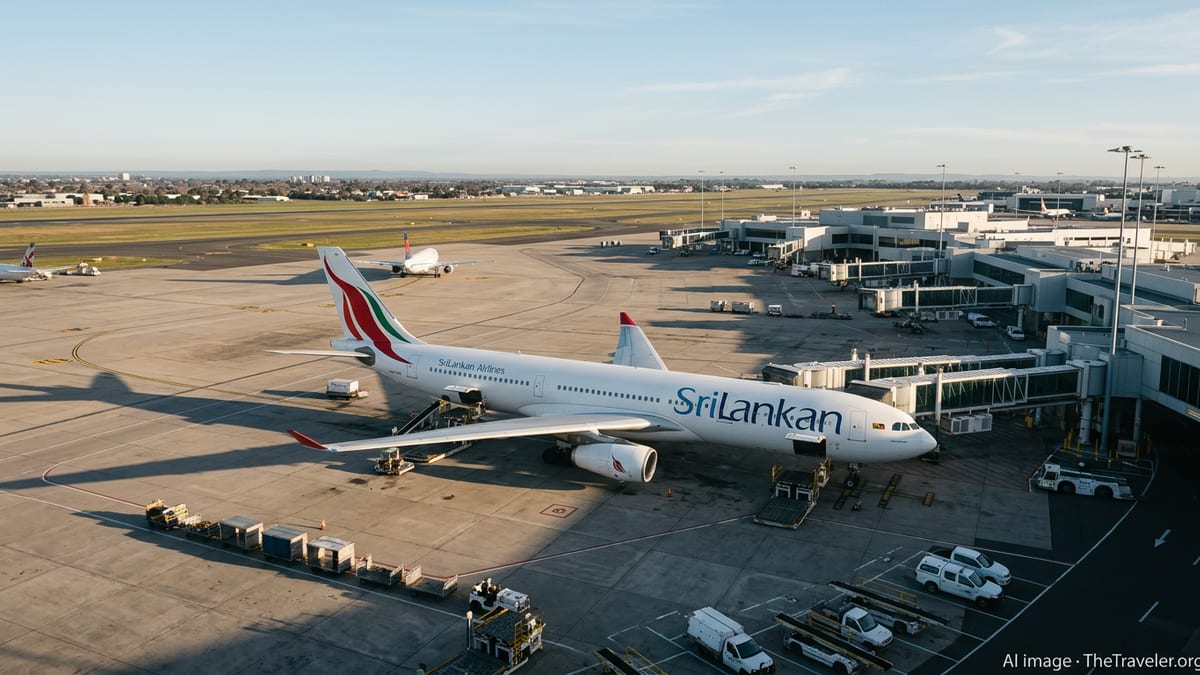
Colombo–Melbourne remains SriLankan’s flagship long-haul route into Australia, operated with widebody Airbus A330 aircraft. The increase to 10 weekly flights positions the airline to capture more of the fast-growing Sri Lankan diaspora market in Victoria, as well as Australian holidaymakers seeking a relatively short, single-stop journey into South Asia and beyond.
According to recent coverage in Sri Lankan media, the three additional weekly flights are scheduled to depart Colombo on Tuesdays, Thursdays and Sundays in the afternoon, arriving into Melbourne early the following morning. The pattern is intended to provide more choice in both directions for travelers balancing work schedules, school holidays and onward connections.
Industry analysis notes that SriLankan Airlines currently remains the only scheduled carrier operating nonstop between Colombo and Melbourne. The boosted schedule therefore consolidates the national carrier’s position on the route just as other airlines, including low-cost competitors, prepare to enter or expand in the broader Australia–Sri Lanka market.
Melbourne’s Role as a Southern Hub for SriLankan
Melbourne is emerging as SriLankan Airlines’ primary Australian hub, complementing its existing services to Sydney and reinforcing Colombo’s position as a mid-ocean connection point between South Asia and the South Pacific. The airline’s corporate information and recent filings underscore Australia’s status as one of its fastest-growing regional markets by revenue, with Melbourne at the center of that expansion.
The carrier’s strategy uses Colombo as a gateway for passengers originating in India, the Maldives and other parts of South Asia, funnelling them through to Melbourne on a single ticket. Network data compiled by aviation analysts shows that SriLankan serves more Indian destinations than many competing foreign airlines, enabling itineraries such as Chennai–Colombo–Melbourne and Mumbai–Colombo–Melbourne that bypass more congested hubs in Southeast Asia or the Middle East.
Melbourne’s significance is also amplified by broader aviation policy settings. Australian government registers of international capacity allocations show substantial available entitlements for services between the two countries, providing scope for SriLankan and any Australian carriers to scale up operations in line with demand. Within that environment, SriLankan’s move to increase flights appears to be part of a longer-term play to anchor itself as the default full-service option between Sri Lanka and Australia.
Observers point out that Melbourne Airport has actively promoted its role as a hub for South Asian and Middle Eastern carriers, leveraging Victoria’s large multicultural communities. The growth of SriLankan’s schedule fits this pattern, creating new options for passengers from Sri Lanka and India to connect onward to domestic Australian destinations on local carriers via Melbourne.
Competitive Landscape Shifts Around the Melbourne–Colombo Corridor
The expansion of SriLankan’s Melbourne schedule comes as the competitive landscape on Australia–Sri Lanka routes begins to shift. Recent announcements from low-cost carrier Jetstar outline plans for a new nonstop Melbourne–Colombo service from August 2026, which would introduce a budget option into a market previously dominated by full-service airlines and one-stop itineraries via Singapore, Kuala Lumpur or the Gulf.
Travel industry reports indicate that Jetstar expects to offer more than 100,000 low-fare seats per year on the new route, using Melbourne as its largest hub. While this service will not be operated by SriLankan Airlines, it is likely to influence pricing, capacity and traveler behavior on the corridor, further raising the profile of Colombo as a key South Asian gateway for Australians.
At the same time, SriLankan has been building out its wider connectivity through interline and codeshare agreements with carriers such as flydubai and Air Seychelles, providing additional one-stop options into Australia, including Melbourne, for passengers originating in the Middle East, Africa and the Indian Ocean. These partnerships complement the airline’s own metal on key trunk routes and underscore the strategic value of Melbourne as a downstream endpoint in multi-airline itineraries.
Aviation analysts suggest that the combined effect is a new era in Sri Lanka–Australia aviation, characterized by more direct services, greater airline choice and a wider range of price points. For SriLankan Airlines, responding early with higher frequencies and a strengthened presence in Melbourne may be crucial to maintaining market share as competition intensifies.
Tourism, Diaspora and Trade Ties Underpin Growth
The strengthening of air links between Sri Lanka and Australia via Melbourne is closely tied to tourism trends and the long-established Sri Lankan diaspora in Australia. Recent tourism statistics cited in local business media identify Australia as one of the fastest-growing sources of visitors to Sri Lanka, with travelers drawn to surf beaches, heritage sites and wildlife reserves, often combining leisure with visits to friends and relatives.
Improved air connectivity typically stimulates additional demand, and the move to 10 weekly flights is expected to provide more flexibility around peak travel periods such as school holidays, cricket tours and major cultural festivals. Travel agents in both countries have highlighted that early-morning arrivals into Melbourne, as scheduled for the new services, are particularly attractive for passengers wanting same-day domestic connections or full working days on arrival.
In parallel, the enhanced schedule provides a more robust link for business travel, educational migration and trade flows. Australia remains a significant destination for Sri Lankan students, and more frequent nonstop flights can help support the education sector, as well as niche segments such as high-end leisure, medical tourism in Colombo and SME trade between the two countries.
Observers note that Sri Lanka’s efforts to revive and reposition itself as a resilient tourism destination after recent economic challenges depend heavily on reliable, frequent air links from key source markets. Against this backdrop, SriLankan Airlines’ investment in additional Melbourne capacity is seen as both a commercial and symbolic step toward reinforcing Sri Lanka’s accessibility for Australian travelers.
Colombo’s Hub Ambitions in the Wider Asia–Pacific Network
SriLankan Airlines’ decision to channel more capacity through Melbourne is closely tied to Colombo’s evolution as a regional hub connecting South Asia with East Asia, the Middle East and the South Pacific. Aviation databases and the airline’s own network information show an extensive spread of destinations in India, the Gulf and Southeast Asia feeding into its long-haul routes, including those to Australia.
By increasing frequencies on the Colombo–Melbourne sector, the airline can offer tighter connection windows and more itinerary combinations for travelers moving between cities such as Delhi, Bangalore or Malé and Australian destinations accessed via Melbourne. For many passengers, particularly those from secondary Indian cities, this can reduce total journey time compared with routings through larger but more congested hubs.
Colombo’s emerging role is also being reinforced by international airline partnerships. Interline arrangements with carriers based in Dubai and the Indian Ocean expand the catchment area for SriLankan’s Melbourne flights beyond its own network footprint, positioning Colombo as one of several strategic stepping stones between Europe, the Middle East, South Asia and Australia.
As SriLankan Airlines prepares to lift its presence in Melbourne, industry observers view the route as a bellwether for the airline’s broader long-haul strategy. Performance on this corridor will likely influence future decisions about aircraft deployment, potential new Australian destinations and the balance between direct services and partnership-based connectivity across the wider region.