

More news on this day
As spring approaches in the Kashmir Valley, Srinagar’s Indira Gandhi Memorial Tulip Garden is again poised to become the focal point of a major tourism surge, with millions of tulips and a growing national spotlight drawing visitors to one of India’s most closely watched seasonal attractions.
Get the latest news straight to your inbox!
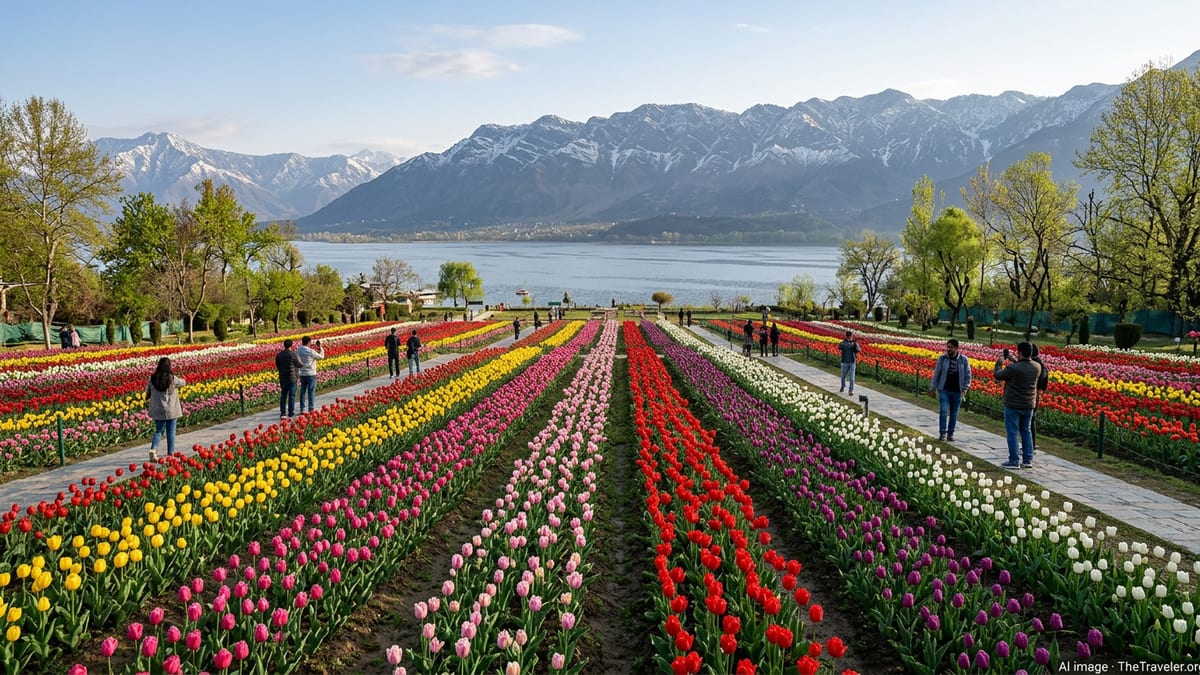
Asia’s Largest Tulip Garden Prepares for Peak Bloom
Perched on the foothills of the Zabarwan range overlooking Dal Lake, the Indira Gandhi Memorial Tulip Garden in Srinagar has emerged as a bellwether for spring tourism in Jammu and Kashmir. Recent seasons have seen the garden expand both in the number of flowers on display and in visitor footfall, turning what began as a local showcase into one of India’s most photographed spring destinations.
According to recent coverage, the 2025 season featured around 1.7 to 1.8 million tulips across more than 70 varieties, with large, carefully designed beds that created sweeping carpets of colour visible from the garden’s upper terraces. Reports indicate that current preparations build on those upgrades, with denser planting patterns and refreshed landscaping aimed at creating more immersive viewing corridors and vantage points for visitors.
The timing of the opening has become a key part of the spring calendar. In 2025 the garden opened on March 26 and ran for about a month, following the typical late March to late April window when the carefully staggered blooms are at their most vibrant. Travel advisories and tourism coverage for the upcoming season point to a similar March opening, with visitors urged to plan trips around the peak bloom period, when the highest number of varieties are in full colour.
The garden’s location, framed by snow-dusted peaks and the reflective waters of Dal Lake, remains central to its appeal. Travel writers and destination guides frequently highlight the setting as one of the most dramatic backdrops for a tulip display in Asia, combining European-style floriculture with distinctly Kashmiri landscape elements, including chinar trees and the tiered profile of a traditional terraced garden.
Visitor Numbers Signal a Tourism Boom
Visitor statistics from the 2025 season underline how central the tulip garden has become to Kashmir’s tourism narrative. Local media reports show that more than 8.5 lakh people visited the garden between March 26 and April 24, 2025, making it the busiest season since the garden’s inauguration. Over 4.4 lakh visitors arrived in just the first 15 days of the tulip show, with subsequent coverage noting that total footfall crossed 8 lakh before the gates closed for the year.
Daily visitor records were also rewritten. Reports from April 2025 describe a peak day when more than 81,000 people entered the garden, the highest single-day number on record. Weekend and holiday periods, including Eid-ul-Fitr, pushed numbers sharply upward, with tens of thousands arriving over just a couple of days. This intensity has reinforced the tulip garden’s status as a key indicator of how strongly travellers are returning to the Kashmir Valley each spring.
Travel and hospitality coverage links this surge to a broader rebound in domestic tourism to Kashmir, driven by improved air connectivity, aggressive social media promotion and a growing appetite for nature-focused, short-haul trips among urban travellers from across India. The tulip garden, with its clear seasonality and visually striking appeal, has become a natural anchor for these itineraries, especially for first-time visitors seeking a compact introduction to the region.
Local business reports also point to spillover benefits for Srinagar’s hotel sector, houseboats on Dal Lake, transport operators and small vendors. Many establishments now calibrate staffing and inventory around the tulip calendar, treating the bloom window as the unofficial start of the main tourist season that later extends into summer treks, lake tourism and visits to alpine meadows.
Millions of Blooms and a Social Media Magnet
The tulip garden’s appeal rests not just on its size but on the diversity and staging of its floral collections. Recent seasons have showcased upwards of 70 tulip varieties, ranging from classic reds and yellows to variegated and fringed cultivars arranged in bold blocks of colour. Reports indicate that planners continue to experiment with patterns, height variations and companion plantings to keep the display visually fresh for repeat visitors.
Photography has become central to the experience. Social media platforms flood each spring with images of brightly coloured beds stretching toward snow-lined ridges, often captured in the soft light of morning or late afternoon. Travel coverage notes that the garden’s layout, with its broad walkways and layered terraces, lends itself naturally to wide panorama shots as well as close-up macro images of dew-covered petals and textured blooms.
The digital visibility generated by this seasonal photo surge has, in turn, become a powerful marketing tool. Tourism features highlight how user-generated images and short videos have introduced the garden to audiences far beyond traditional travel readerships, particularly younger travellers looking for visually rich destinations that can be visited over a long weekend. The phrase “a million colours” recurs frequently in coverage, reflecting how the garden has come to symbolise the Valley’s transition from winter hush to spring vibrancy.
Staging also extends beyond the tulip beds themselves. Publicly available information points to the use of ornamental trees, curated viewpoints and improved circulation paths designed to manage crowds while preserving sightlines. Together, these elements help maintain the garden’s image as a carefully choreographed yet accessible public space rather than a purely ornamental display.
Managing Crowds and Protecting a Fragile Landscape
The rapid growth in visitor numbers has brought new pressures. As daily footfall peaks climb, local reports increasingly highlight the logistical challenges of crowd management, parking, and transport access along the approach roads skirting Dal Lake. On high-traffic days, visitors can encounter long queues at entry gates and busy viewpoints along the main terraces.
Environmental and planning commentary has also sharpened its focus on the need for sustainable tourism practices within and around the garden. Analysts point to the vulnerability of high-altitude ecosystems and the potential impact of large crowds on soil compaction, waste generation and surrounding water bodies. Discussions in local media and expert columns often emphasise better visitor awareness, careful routing of pathways and strengthened waste management as priorities for coming seasons.
In response to these pressures, coverage from recent years notes incremental improvements such as defined walking routes, additional signage and expanded facilities aimed at dispersing crowds more evenly across the garden. Public messaging frequently encourages visitors to respect flower beds, avoid trampling on lawns for photographs and adhere to designated paths, underlining a broader shift toward responsibility-focused tourism in the Valley.
Transport advisories published ahead of the season typically recommend planning visits during non-peak hours, especially for families and elderly travellers, and making advance arrangements for accommodation in Srinagar. These measures, observers suggest, are becoming increasingly important as the tulip garden continues to attract not only first-time tourists but also repeat visitors and organised tour groups.
Springboard for Wider Kashmir Travel
While the tulip garden is a destination in its own right, travel features increasingly portray it as the first chapter in a wider Kashmir itinerary. Many visitors use Srinagar as a base, combining a morning or afternoon among the tulips with boat rides on Dal Lake, strolls in the historic Mughal gardens and walks through the old city’s markets.
From this starting point, spring itineraries frequently extend to nearby hill stations and valleys as snow recedes from mid-altitude areas. Guides and tour operators often bundle tulip season with visits to Gulmarg, Pahalgam, Sonamarg and other scenic locations that begin to open up for trekking, cable car rides and riverside picnics. This layering of experiences has helped position Kashmir as a multi-day spring destination rather than a single-stop photo opportunity.
Industry commentary suggests that the tulip garden’s growing prominence has also nudged local businesses toward more curated experiences, from photography walks to food-focused tours that showcase Kashmiri cuisine alongside floral displays. The result is a more diversified spring tourism offering, with the garden acting as the visual and emotional trigger that draws travellers into the region.
As preparations for the next bloom gather pace, the Srinagar tulip garden appears set to once again paint the Valley in a million colours, reinforcing its role as both a symbol of seasonal renewal and a powerful driver of Kashmir’s evolving tourism economy.