

Alaska rewards the traveler who understands its scale. Pick the wrong home base and you can spend your days trapped in long transfers, missing the glaciers, wildlife, and wild landscapes you came to see. Choose the right one and suddenly everything feels close: day cruises to tidewater glaciers, bus rides into wild interior valleys, and quiet evenings watching alpenglow on the mountains from your lodge porch. In Alaska, where you stay is not a detail. It is the difference between a once-in-a-lifetime experience and a blur of buses and highways.
Why Your Base in Alaska Matters More Than You Think
The biggest mistake first-time visitors make is assuming Alaska works like other destinations, where you can pick a single major city and radiate out on quick day trips. On a map, Anchorage to Denali, or Anchorage to the Kenai Peninsula, looks manageable. On the ground, those drives can run four to five hours each way, and trains often take even longer. Travelers who underestimate those distances often discover that their carefully planned “quick side trip” quietly eats an entire day.
This matters because most visitors have limited time. Many summer itineraries run seven to ten days, and losing two or three of those to repetitive highway views instead of glaciers or wildlife is a real cost. You will still technically “see” Alaska from the window, but you may miss the slow, immersive experiences that make the state unforgettable: lingering at a quiet overlook, taking a late-evening walk under the midnight sun, or adding a last-minute hike because the weather turned perfect.
Another factor is how fragmented Alaska’s infrastructure is. A handful of national parks, such as Denali and Kenai Fjords, are connected to the road system. Others, including Glacier Bay, Katmai, and Lake Clark, are reached by boat or small plane. If you plant yourself far from the jump-off points for the experiences you really care about, you may find that tours are sold out, departure times do not mesh with long transfers, or the cost of repeated flights exceeds your budget.
Choosing the right area to stay is about matching your base with your priorities: wildlife, glaciers, hiking, culture, or a mix of all four. It is also about embracing depth instead of frantic breadth. In Alaska, it is usually better to explore one region very well than to skim three.
Anchorage: Flexible Hub or Time-Wasting Compromise?
Anchorage looks logical on a map. It is the largest city, with the biggest airport and the widest range of hotels, restaurants, and rental cars. Many itineraries start and end here, which makes it tempting to stay put and attempt a hub-and-spoke approach. Used strategically, Anchorage can indeed be an excellent two- or three-night base for day trips to nearby highlights on the road system and short flights to more remote areas.
Within a few hours of Anchorage you can reach coastal scenery along Turnagain Arm, the resort town of Girdwood, or the trailheads and viewpoints of Chugach State Park. It is also a jumping-off point for day trips by air to bear viewing in Katmai or Lake Clark, and for some flightseeing tours that skim the flanks of Denali. For travelers who want a taste of urban amenities alongside nature, Anchorage offers museums, breweries, and coastal bike paths, all with mountain backdrops.
Where Anchorage becomes a problem is when visitors try to use it as their only base while also expecting to see Denali, Kenai Fjords, and perhaps even Glacier Bay or the Arctic. Driving to Denali National Park from Anchorage typically takes about four and a half hours in good conditions, and longer if you factor in construction, weather, or stops. Returning the same day means eight to ten hours in transit for a few hours at the park entrance. Similarly, Seward, the gateway to Kenai Fjords National Park, is roughly a two-and-a-half-hour drive in each direction. Doing that as a day trip just to squeeze in a long glacier cruise is technically possible but leaves little margin for error if traffic, weather, or tour timings shift.
If you have a week and insist on sleeping in Anchorage every night, you will likely spend more time shuttling than exploring. Instead, think of Anchorage as an arrival and regrouping point. Stay a night or two at the start to adjust, pick up your car, and explore nearby parks. Then move your base closer to the places you most want to experience, rather than forcing those places to become long, exhausting side trips.
Denali: When Basing Too Far Away Costs You Wildlife
Denali National Park is one of Alaska’s great icons, yet it is surprisingly easy to visit it poorly. The park road runs deep into a vast, undeveloped landscape, and private vehicles are restricted after the first stretch. Most visitors see Denali by boarding a park-run shuttle or a narrated bus tour that drives along the park road, scanning for bears, moose, caribou, Dall sheep, and sweeping mountain views. In peak season those buses can take six to twelve hours round-trip, depending on how far they go.
Because of this, where you stay the night before and after your park day matters enormously. Some travelers choose to stay in Anchorage or Fairbanks and attempt to pair a long drive or train ride with a same-day bus trip deep into the park. On paper it might work: a morning drive, an afternoon tour, an evening return. In reality, it is punishing. You will be up early, stressed about making your check-in time at the park bus depot, and likely exhausted long before the bus returns. Wildlife sightings feel rushed when your mind is on the long journey back to your distant hotel.
A far better approach is to stay close to the park entrance or along the corridor from Healy to Cantwell. Lodges and small hotels in this area put you within a short drive or shuttle ride of bus departures, visitor centers, and short hikes near the entrance. You can book a long bus trip into the park on one day and leave a second day open for shorter walks, rafting, or simply watching the light change on the hills. This proximity makes it easier to be flexible, rescheduling if weather closes in or if a road closure or construction affects the day you had planned.
Another subtle trap involves staying in towns that are charming but too distant to be practical for Denali. Talkeetna, for instance, is a character-rich town roughly halfway between Anchorage and Denali, known for flightseeing trips around the mountain and a lively small-town atmosphere. It can be an excellent base for flights and rafting on the Susitna River. But if you try to use Talkeetna as your gateway for a full-length Denali bus tour, you will be looking at hours of road time on top of a very long day inside the park. The result: less patience for watching wildlife, fewer stops to photograph the tundra, and a higher chance you cut the experience short just to get back on the highway.
Kenai Peninsula: The Difference Between Passing Through and Settling In
The Kenai Peninsula, south of Anchorage, is one of Alaska’s most rewarding regions for travelers who want a concentrated mix of mountains, fjords, fishing towns, and accessible glaciers. Yet many visitors barely scratch its surface because they stay too far away. The peninsula is within day-trip distance of Anchorage, but only in the most technical sense. Each transfer in or out eats hours that could have been spent on the water or trail.
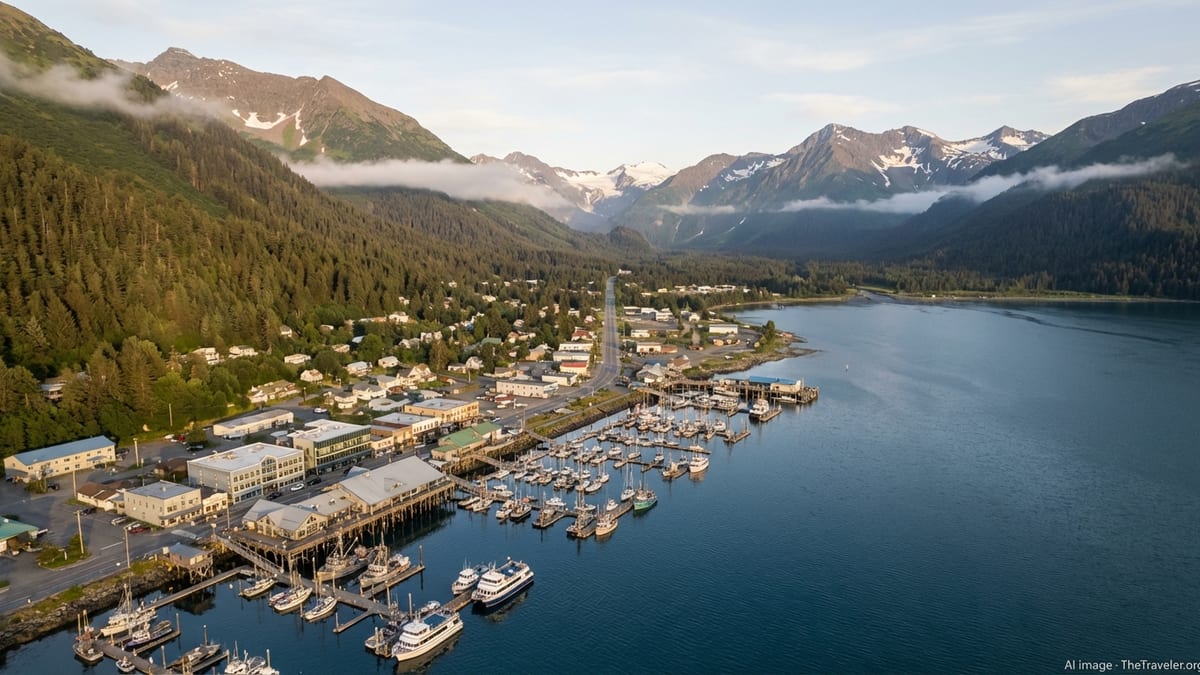
Seward, at the terminus of the Seward Highway, is the main base for exploring Kenai Fjords National Park. From its harbor, day cruises head into a maze of fjords to view tidewater glaciers and marine wildlife, and a short drive from town leads to the trailhead for Exit Glacier, one of the state’s most accessible glaciers reached by road. Seward is also a classic harbor town in its own right, with fishing boats, murals, and waterfront walks. Treating it as merely a cruise departure point on a rushed day trip from Anchorage means missing quiet early-morning light in the harbor, evening strolls along Resurrection Bay, and the flexibility to choose a cruise or hike based on the weather that day.
Homer, on the southwestern edge of the Kenai Peninsula, offers yet another coastal character: long beaches, the famous Homer Spit, and views toward the volcano-dotted skyline across Kachemak Bay. It is a natural base for fishing, sea kayaking, and water taxis to remote lodges or trailheads in Kachemak Bay State Park. Because Homer is about a four- to five-hour drive from Anchorage, it does not lend itself to day trips. Travelers who try that often arrive tired, squeeze in a single quick activity, and immediately turn around. Spending at least two or three nights in Homer transforms it from an exhausting out-and-back into a relaxed seaside stay with time for weather delays and spontaneous explorations.
Even within the Kenai Peninsula, your choice of town shifts your experience. Soldotna and Kenai sit on or near salmon rivers and can work well for anglers who prize fishing over fjords. Cooper Landing, at the confluence of major highways, has river access and centrality but lacks the deep-fjord scenery of Seward or the long beaches of Homer. To avoid missing the “best part,” decide whether your priority is boat-based glacier viewing, oceanfront life, river fishing, or a mix, and base yourself accordingly instead of defaulting to whichever town looks largest on the map.
Inside Passage & Southeast: Cruise Bubble vs Independent Bases
Many visitors see Southeast Alaska from a cruise ship and never spend a night in the coastal communities that anchor the Inside Passage. The result can be a shallow, compressed impression of towns like Juneau, Sitka, and Ketchikan. You see the docks and a few streets crowded during port hours, then sail away just as the day’s light gets soft and the crowds recede. If your dream is to stand on a ship’s deck watching glaciers calve, that trade-off may be acceptable. But if you want to feel the rhythm of coastal Alaska, consider where you spend your nights.
Juneau, the state capital, is reachable only by air or sea, yet it functions as a regional hub for glacier flights, whale watching, and hikes in Tongass National Forest. Staying in Juneau itself gives you multiple days to time your visit to Mendenhall Glacier, book whale-watching trips in the rich feeding grounds nearby, or squeeze in a last-minute flightseeing tour when the peaks finally clear. If you instead stay on a ship that glides in and out on a fixed schedule, you may miss your chance when fog delays flights or whales are most active at times that do not align with ship excursions.
Smaller communities like Sitka and Ketchikan reward travelers who check into local inns or cabins and simply live there for a few days. You can wake early, walk the docks without crowds, and linger in local cafes. You gain the option to take half-day trips that do not justify a full cruise excursion slot, like short hikes to totem parks or low-key kayaking sessions in sheltered coves. Using these towns purely as brief cruise calls can deliver postcard scenes, but it rarely yields the deeper sense of place that comes from choosing them as your base.
On the other hand, trying to use one Southeast town as a hub for several others can backfire. Distances on the water are long, weather can disrupt ferries and small planes, and schedules are not built around the needs of individual tourists. If your heart is set on Glacier Bay, for example, you will need to align your stay with Gustavus or an organized cruise that includes it, rather than assuming you can easily hop there on a whim from Juneau or another port. In Southeast, the choice is less about road time and more about aligning your base with the key fjords and bays you hope to visit.
Remote Parks & Wild Corners: When “Wrong Area” Means Not Going at All
For many travelers, Alaska’s greatest allure lies in its remotest corners: wide river valleys in Gates of the Arctic, the ash-filled landscapes of Valley of Ten Thousand Smokes in Katmai, or the giant icefields of Wrangell St. Elias. Reaching these places often requires small planes, boats, or a combination of both, plus at least one night near a specific jumping-off town like King Salmon, Kotzebue, Bettles, or McCarthy. If you base too far from those access points, logistical friction grows until the trip quietly drops off your list.
This is where “wrong area” often translates into never making it at all. A traveler might dream of watching brown bears catch salmon at a famous falls, but end up staying only in Anchorage and Seward, telling themselves they will book a day trip “if the weather is good.” When the forecast turns mixed and the effort of arranging last-minute flights feels high, that dream quietly fades. Had they committed to a night or two in the staging town, with flights tentatively booked and local operators within walking distance, the odds of actually standing on the viewing platform would be far higher.
Even in road-linked wild areas, bases matter. Wrangell St. Elias National Park, the largest in the United States, has road access via the Edgerton Highway and a gravel extension into the historic mining towns of McCarthy and Kennicott. Staying in a distant town and attempting to dash in and out in a single day can mean most of your time is spent on gravel roads and parking lots rather than among the old mine buildings and glaciers. Overnighting in or near those communities, by contrast, lets you join guided glacier walks, mine tours, or flightseeing trips that require early starts or flexible timing.
When planning for remote parks and wild corners, work backward from the experience you want. Identify the closest practical jumping-off town, research how flights or boats operate from there, and commit to staying nearby for long enough that you can absorb weather delays or schedule changes. In these regions, agility is everything, and agility comes from sleeping in the right place.
How to Choose the Right Area for Your Alaska Priorities
If staying in the wrong area means missing the best part, the solution is to align your bases with your priorities from the very beginning. Start by listing what you truly want out of the trip, not what looks impressive on a map. Is your dream to watch whales and glaciers from a small boat, to see big land mammals on open tundra, to hike among alpine ridges, or to simply sit with a view and feel very far from home? Once you know your must-haves, you can match them with the regions that deliver them most efficiently.
For glacier and marine wildlife lovers, that often means at least two or three nights in a coastal base such as Seward or Juneau, where day cruises and whale-watching tours depart the harbor. For those focused on big mammals on land and wide-open vistas, staying near Denali’s entrance or in a small town positioned for tundra hikes along the Parks Highway provides the best odds. If your priority is variety without constant repacking, consider splitting your time between just two bases, like Anchorage plus Seward, or Anchorage plus the Denali area, instead of adding a third or fourth distant town.
Season and daylight also matter. Summer days are extraordinarily long, which can make extended activities feel more manageable, but it is still wise to avoid stacking a long bus ride or day cruise on top of hours of driving. Shoulder seasons in May or September bring fewer crowds and, at times, northern lights, but some tours run less frequently and weather can be more volatile. Choosing bases that keep you close to core experiences, rather than relying on long same-day transfers, builds in the buffer you need when a storm blows in or a tour changes schedule.
Finally, consider your own travel style. Some people enjoy road-tripping and do not mind several hours of scenic driving to and from a base each day. Others find that kind of repetition draining and would rather settle into one or two places deeply. Be honest about which person you are. In Alaska, your comfort and energy levels will shape how fully you can appreciate what is outside the window, whether that is a glacier face collapsing into the sea or a moose browsing in the willows just off the road.
The Takeaway
The core truth of traveling in Alaska is simple: the state is larger, wilder, and more logistically complex than it first appears. Staying in the wrong area does not necessarily mean disaster, but it almost always means trade-offs you did not intend. Hours lost to highways, tours rushed or abandoned, and big dreams postponed for “next time” all trace back to where you chose to sleep.
The right base, by contrast, makes the best parts of Alaska feel close and achievable. It puts the boat harbor, the park bus depot, or the floatplane dock within easy reach. It allows for slow mornings and spontaneous evenings, for lingering when the light is good and retreating when rain moves in. It gives you enough flexibility to adapt when weather or wildlife calls for a change of plan.
When you plan your Alaska journey, do not start by circling every famous name on the map. Start by asking which few experiences matter most, then choose bases that bring those within easy reach. In a place defined by distance and wildness, where you stay is not just a logistical choice. It is the key that unlocks the Alaska you came so far to find.
FAQ
Q1. Can I base my entire Alaska trip in Anchorage and do day trips?
It is possible but rarely ideal. Distances are long, and you will spend significant time driving or on trains instead of exploring. Using Anchorage for one or two nights, then moving closer to Denali, the Kenai Peninsula, or Southeast hubs usually leads to a richer experience.
Q2. How many bases should I plan for a 7 to 10 day Alaska trip?
For most visitors, two main bases work best, occasionally three if they are well connected. For example, you might split time between Anchorage and Seward, or between the Denali area and a coastal town, rather than trying to add a different town every night.
Q3. Where should I stay if my top priority is seeing Denali and wildlife?
Plan to stay near the Denali National Park entrance or in nearby communities along the Parks Highway. This keeps you close to the park buses, visitor centers, and trailheads, and avoids pairing long drives with an already full day in the park.
Q4. What is the best area to stay for glaciers and marine wildlife?
Coastal bases like Seward on the Kenai Peninsula or Juneau in Southeast Alaska work well. From these towns you can join day cruises to tidewater glaciers and whale-watching tours without adding long overland transfers.
Q5. Is Talkeetna a good base for visiting Denali National Park?
Talkeetna is an excellent base for flightseeing around Denali and enjoying a small-town atmosphere, but it is too far for a comfortable same-day bus trip deep into the park. If you want to ride the park road buses, stay closer to the park entrance.
Q6. Should I stay overnight in Seward instead of doing a day trip from Anchorage?
Staying at least one night in Seward is strongly recommended if you plan to take a Kenai Fjords day cruise or hike around Exit Glacier. It reduces travel fatigue, gives you flexibility with weather, and lets you actually experience the harbor town rather than just its parking lots.
Q7. How do I choose a base if I want to visit a remote park like Katmai or Lake Clark?
Identify the nearest staging town or air taxi hub, such as Anchorage or a smaller community used by local operators, then plan to stay there for at least a night or two. This gives you better odds of flying when weather cooperates and enough time to adjust if conditions change.
Q8. Are cruises a bad way to experience Alaska compared to staying in towns?
Not necessarily. Cruises are effective for seeing coastal scenery efficiently, but they limit your time ashore and tie you to fixed schedules. Combining a cruise with a few nights based in a town like Seward, Juneau, or another port can balance broad coastal views with deeper local experiences.
Q9. What if I enjoy long scenic drives and do not mind distance?
If you genuinely like driving, you can keep one base longer and accept more time behind the wheel. Even then, it is wise to avoid pairing four- or five-hour drives with intensive full-day tours, and to allow buffer days in case of weather or road construction.
Q10. How far ahead should I book lodging in the areas closest to major parks?
In popular summer months, it is prudent to book lodging near Denali, the Kenai Peninsula towns, and Southeast hubs several months in advance. Options near park entrances and harbors are limited and fill early, especially for peak dates and properties with strong views or easy access to tours.