

More news on this day
Thousands of airline passengers across the United States were stranded on Tuesday, February 24, as a powerful winter storm that buried Boston and much of the Northeast triggered hundreds of cancellations and delays at Logan International Airport, disrupting flight schedules in New York, Washington D.C., Chicago, Los Angeles, Fort Lauderdale, and beyond.
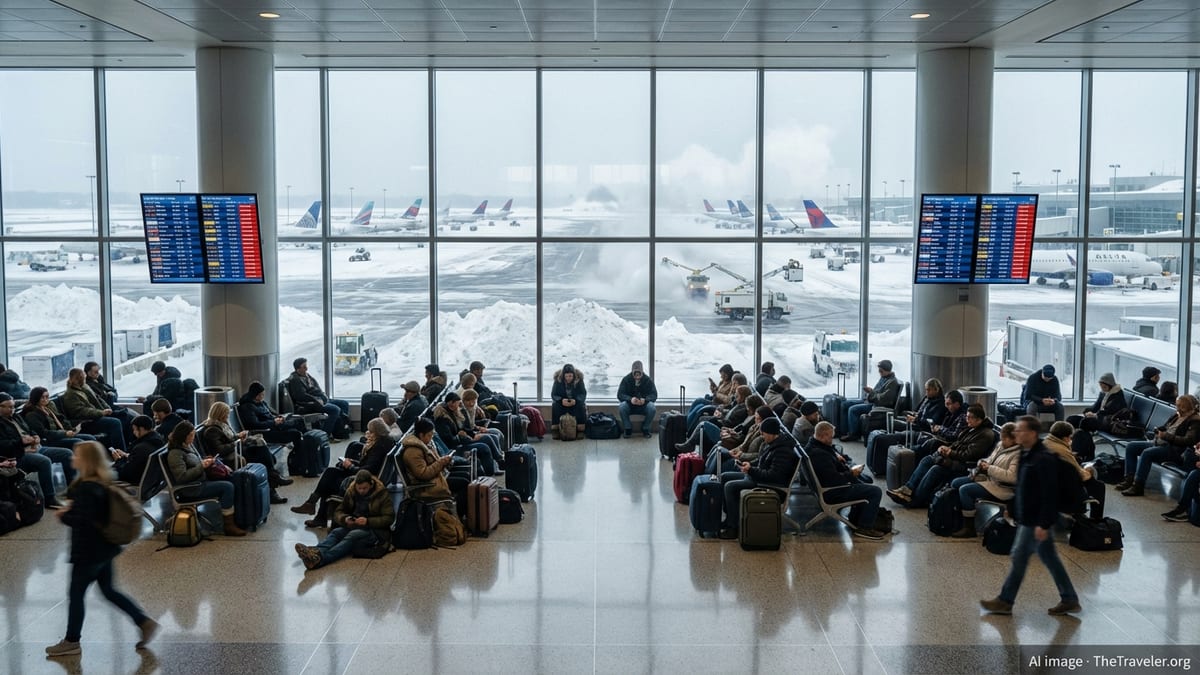
Logan Ground Operations Choked by Blizzard Aftermath
Boston Logan International remained one of the hardest-hit airports in the country on Tuesday, still digging out from a historic nor’easter that dropped more than a foot of snow on the airfield and brought wind gusts near hurricane force. While runways were gradually reopened, airlines kept large portions of their schedules grounded as they worked through de-icing backlogs, crew reassignments, and gate congestion that began during Monday’s near shutdown of operations.
By early morning, flight boards at Logan were dominated by red cancellation notices and rolling delays, with around half of all departures scrubbed or pushed back, according to flight-tracking data. JetBlue and regional carrier Republic Airways, both heavily reliant on Boston and other Northeast hubs, led the disruption, while Delta, United, American, and other major carriers also pared back service.
Massport, the authority that runs Logan, warned travelers that although the storm’s heaviest snow had ended, operational recovery would be slow. Officials urged passengers not to head to the airport without confirming their flight status and to expect longer lines at check-in and security as airlines gradually rebuilt their schedules.
Ground teams faced the dual challenge of clearing snow and ice from taxiways and stands while also repositioning dozens of aircraft that had been left out of sequence by Monday’s sweeping cancellations. The result was a tightly constrained operation in which even minor hiccups cascaded into further delays.
Ripple Effects From Boston to New York, D.C., and Chicago
The bottleneck in Boston quickly reverberated through the broader U.S. air network. Aircraft and crews scheduled to rotate from Logan to other major hubs were out of place, forcing airlines to cancel or delay flights far from New England even as skies cleared. Passengers at New York’s LaGuardia and JFK, Washington Reagan National, and Chicago O’Hare encountered disruptions tied back to grounded planes in Boston.
With many of Monday’s flights already wiped out, carriers had loaded Tuesday schedules with rebooked travelers, leaving little slack when additional cancellations hit. At New York airports, where near-total shutdowns had occurred a day earlier, operations improved but remained fragile, with missed connections and rolling delays common on routes to and from Boston.
In Washington D.C. and Chicago, morning operations showed fewer outright cancellations but were still peppered with late departures as airlines waited for inbound aircraft from the Northeast to arrive. Gate agents spent much of the day rerouting travelers through alternate hubs such as Atlanta, Dallas, and Charlotte to bypass the lingering chokepoints at Logan and other storm-affected airports.
Business travelers heading to key Northeast corridors reported multi-leg journeys and overnight stays as direct options vanished. Some road warriors turned to Amtrak and regional buses where service had resumed, but limited capacity and earlier weather-related rail suspensions meant not everyone could find a seat.
Transcontinental Routes and Florida Gateways Also Hit
The disruption extended well beyond the storm zone as long-haul and sun-bound flights felt the knock-on effects of stranded crews and equipment. Transcontinental services linking Boston and New York with Los Angeles and other West Coast hubs saw a wave of cancellations and multi-hour delays as carriers prioritized shorter-haul recovery flying and crew duty-time limits kicked in.
At Los Angeles International, clusters of delayed inbound and outbound flights to Boston, New York, and Washington left terminals crowded with passengers trying to salvage vacation and business plans. Some travelers were offered reroutes through mid-continent hubs, while others accepted hotel vouchers or opted to postpone trips altogether.
Florida gateways, including Fort Lauderdale, were also caught in the storm’s wake. Aircraft normally cycling between New England and South Florida were stuck on snowy ramps in Boston or New York, reducing available capacity for winter-weary travelers heading south. Delays on popular leisure routes prompted long lines at customer service desks as families sought alternate flights to beach destinations and cruise departures.
Airlines attempted to smooth the disruption by issuing weather waivers that allowed free rebooking over several days. However, with seats on later flights quickly snapped up, many passengers found that the earliest available alternatives were days away, complicating hotel reservations, rental car bookings, and tour departures.
JetBlue, Republic, and Major Carriers Struggle to Rebuild Schedules
JetBlue and Republic Airways, both heavily concentrated in the Northeast, again ranked among the most affected operators on Tuesday. JetBlue, which had already canceled the majority of its flights on Monday, continued to scrub a large share of its Boston departures and arrivals as it attempted to reposition aircraft and give crews mandated rest after marathon storm operations.
Regional operator Republic, which flies feeder services for larger brands including American and United, saw numerous cancellations on shorter regional routes linking Boston with mid-size cities across the Northeast and Mid-Atlantic. These regional disruptions added another layer of complexity for passengers relying on connections to mainline transcontinental or international flights.
Delta, United, and American also logged significant cancellations and delays, particularly on routes touching Logan, LaGuardia, Newark, and JFK. While their nationwide networks provided more flexibility to reroute passengers, the depth of the Northeast disruption meant even these large carriers had limited options to absorb stranded travelers at peak times.
Many airlines operated so-called recovery flights, extra or upgauged services deployed once conditions improved, to help clear passenger backlogs on key routes. Yet with aircraft in short supply and weather still affecting some operations with high winds and residual de-icing needs, it was clear that normal schedules would not fully return until midweek.
What Travelers Can Expect Through Midweek
Although the storm system was forecast to move offshore by late Tuesday, travel experts warned that the operational hangover would persist for at least another 24 to 48 hours. The process of repositioning planes and crews, accommodating passengers who had already been rebooked multiple times, and slotting in missed flights is expected to stretch into Wednesday and potentially Thursday on the busiest routes.
At Boston Logan and other key hubs, travelers were advised to build in extra time for check-in and security, and to be prepared for sudden gate changes and rolling departure-time adjustments as airlines fine-tuned their recovery plans. Those with flexible itineraries were encouraged to consider off-peak flights or alternative airports to improve their chances of getting out.
Customer-service hotlines and airline apps remained under heavy strain, with long hold times and limited availability of same-day alternatives. Travel advisors recommended that passengers use multiple channels simultaneously, including mobile apps, airport kiosks, and in-person ticket counters, and to keep essential items such as medications, chargers, and a change of clothes in carry-on bags in case of unexpected overnight stays.
For thousands of stranded passengers from Boston to Los Angeles, the blizzard underscored how quickly a single weather event in a key hub can ripple across the country’s tightly wound air network. As aircraft finally began to push back from Logan’s snowy gates on Tuesday afternoon, many travelers were simply hoping that their next boarding call would be the one that finally stuck.