

More news on this day
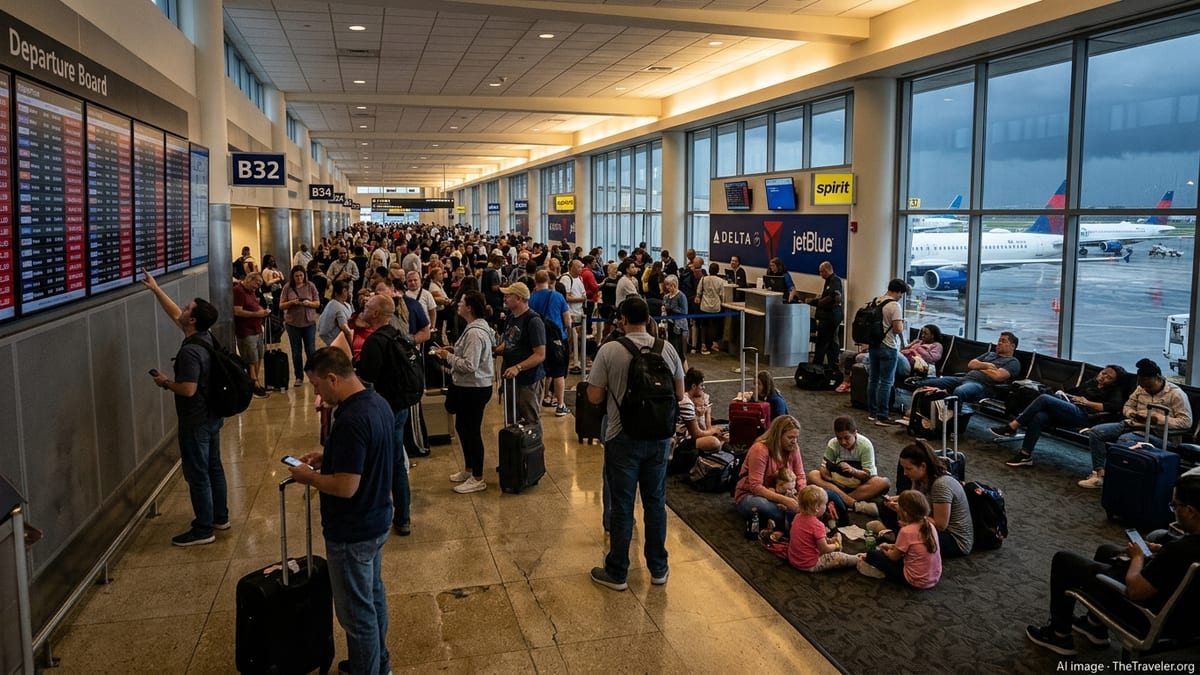
Travelers at Orlando International Airport faced long lines, crowded gate areas, and rapidly changing departure boards as Delta Air Lines, Spirit Airlines, and JetBlue Airways suspended 16 flights and logged well over 100 delays, disrupting major domestic and international routes and stranding passengers across North America and Europe.
Get the latest news straight to your inbox!
Severe Weather and System Strains Converge on Busy Orlando Hub
Publicly available flight-tracking data for late March 2026 show a sharp spike in cancellations and delays at Orlando International Airport, with Delta, Spirit, and JetBlue among the most affected operators. The combined suspension of 16 flights and more than 100 delays unfolded during one of the spring travel period’s busier stretches, amplifying the impact on holidaymakers and business travelers alike.
Reports indicate that the disruptions coincided with unstable weather patterns across large swaths of North America, including remnants of a powerful March storm system that had already battered other regions. Thunderstorms and low cloud ceilings across central Florida, together with knock-on effects from earlier weather further north, left airlines working to reposition aircraft and crews while keeping within strict safety and crew-duty limits.
Operational pressures at Orlando can be particularly acute for carriers such as Delta, Spirit, and JetBlue, which each operate dozens of daily departures at the airport. Recent airport statistics for February 2026 list all three among the leading carriers by seat capacity, underscoring how problems affecting even a fraction of their schedules can cascade quickly across route networks.
The result for travelers on this latest day of disruption was a familiar pattern: rolling departure-time pushes, sudden gate changes, and clusters of cancellations as airlines trimmed schedules once it became clear that weather and congestion would persist into the night.
Major Routes Hit: From Calgary and London to Atlanta and Austin
The ripple effects from Orlando’s disruption spread far beyond central Florida. According to publicly accessible schedules and tracking data, affected flights included services linking Orlando with key hubs such as Atlanta and Austin, as well as longer-haul and connecting itineraries touching Calgary, London, Nashville, and other major markets.
Delta’s broad domestic network meant that issues at Orlando quickly intersected with operations at its established hubs. Delays on Orlando to Atlanta legs, for instance, affected onward connections to cities across the Midwest and Northeast, while selected cancellations forced passengers to rebook through alternative routings or travel on later days.
JetBlue’s mix of point-to-point domestic routes and transatlantic services also left some travelers bound for London and other international destinations facing missed connections and overnight stays. Even when the specific transatlantic sectors operated from airports outside Florida, disruptions on Orlando feeder flights reduced the number of travelers able to reach those departures on time.
Spirit, which uses Orlando as a significant leisure gateway, saw delays and cancellations hit popular links serving both U.S. and Canadian cities, including connections that would normally flow passengers toward Calgary and Western Canada via partner and interline arrangements. For travelers on tight vacation schedules, the prospect of losing a full day in transit added to the frustration.
Passengers Confront Crowded Terminals and Limited Rebooking Options
Accounts shared across social platforms and travel forums painted a picture of crowded concourses, long customer-service queues, and families camping out near gate areas as the disruption unfolded. Many travelers described spending hours at Orlando before learning that their flights had been delayed multiple times or ultimately cancelled for the night.
Publicly available information on airline rebooking policies suggests that passengers on the grounded flights were offered a combination of same-carrier re-accommodation, travel credits, and, in some cases, hotel or meal support depending on the nature of the delay and the fare type purchased. However, when storms and air-traffic constraints reduce the overall number of flights able to depart, open seats on later services can be scarce, limiting the options available.
Spring schedules at Orlando already run close to capacity during peak hours, and when a cluster of flights is removed from the timetable, it can take days rather than hours to fully absorb displaced travelers. This was evident in reports of travelers being rebooked not just to later same-day departures but to flights one or two days out, particularly on high-demand routes to major hubs and vacation destinations.
For those attempting to salvage connecting itineraries involving Calgary, London, Atlanta, Austin, Nashville, and other downline cities, the challenge was even greater. Missed long-haul departures or final evening flights often meant that even when travelers eventually left Orlando, they still faced overnight stops and complex rerouting before reaching their final destinations.
Orlando’s Role as a Leisure Gateway Magnifies the Impact
As one of the United States’ busiest leisure airports, Orlando International serves as a critical access point for theme parks, cruise departures, and convention traffic. Greater Orlando Aviation Authority data for early 2026 show that carriers such as Delta, Spirit, and JetBlue together account for a significant share of daily departures and seats at the airport, reinforcing Orlando’s reliance on their operations for both domestic and international connectivity.
When disruptions occur at such a heavily leisure-oriented hub, the consequences tend to be broadly felt. Families often travel in larger groups, making rebooking more complicated, while many itineraries are built around fixed check-in times for cruises or nonrefundable theme-park reservations. A missed evening flight from Orlando to a hub like Atlanta, for example, can cascade into a missed early-morning departure to London or Calgary and, in turn, lost days on expensive trips.
The airport’s terminal layout also plays a role. Recent expansions, including the newer terminal facilities used by some international and low-cost carriers, have added capacity but created a more segmented passenger experience. When weather or air-traffic flow programs force operations to slow or pause, pockets of crowding can emerge quickly in specific concourses, particularly those serving carriers with dense schedules such as Delta, Spirit, and JetBlue.
Travel-community discussions have highlighted these dynamics repeatedly, noting that spring and summer afternoon departures from Orlando are especially vulnerable to thunderstorms and ground stops. The latest wave of cancellations and delays fits into that broader pattern of operational stress centered on peak leisure-travel windows.
What Travelers Can Expect in the Coming Days
Based on patterns observed during previous large-scale disruptions at Orlando and other major U.S. airports, the immediate effects of this incident are likely to linger for at least several days. Aircraft and crews displaced by cancellations need to be repositioned, and some flights in subsequent days may operate with limited standby availability as airlines prioritize re-accommodating affected passengers.
Published guidance from airlines and aviation regulators underscores that weather-related disruptions are treated differently from issues within an airline’s direct control. While carriers often provide travel credits or fee waivers following large operational events, obligations regarding hotel stays, meals, and cash refunds can vary substantially depending on the underlying cause and the type of ticket held.
For travelers with upcoming departures from Orlando on Delta, Spirit, or JetBlue, publicly available advisories suggest checking flight status frequently in the 24 hours before travel and considering flexible same-day options where possible. Morning departures tend to be less exposed to Florida’s convective weather patterns, and rerouting through less congested hubs can sometimes improve reliability, even if the journey includes extra connections.
As Orlando moves through the busy spring travel season, this latest wave of cancellations and delays highlights the vulnerability of high-volume leisure hubs to a combination of severe weather, air-traffic constraints, and tightly scheduled airline networks. For many travelers stranded in the terminal, the episode has become another reminder that even seemingly routine hops to Atlanta, Austin, Nashville, Calgary, or London can quickly unravel when conditions deteriorate at one of the country’s most in-demand airports.